
LSU's wearable defense
LSU researcher is turning data from football players into an early-warning system for heatstroke.
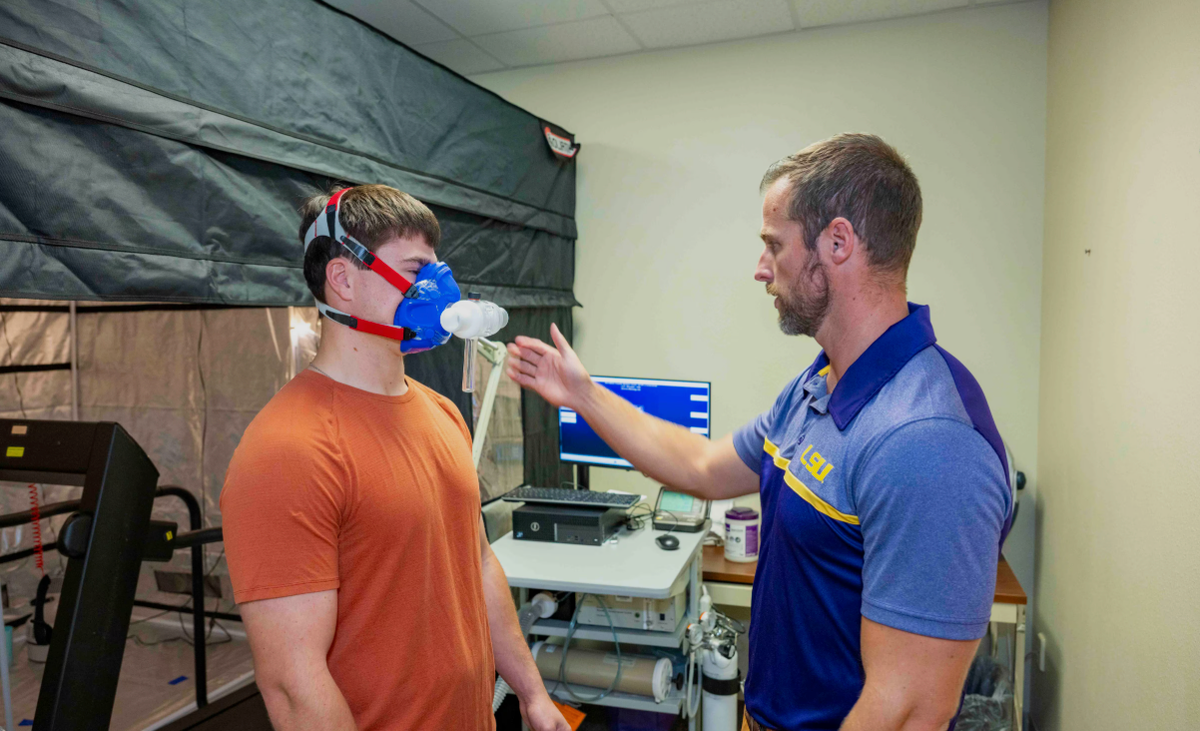
An LSU Health Systems researcher is using sensors to measure the effects of heat on football players, with the goal of creating wearable devices that can warn of heat-related illnesses before they occur.
Why it matters: Heat can kill with little warning, and the danger isn’t limited to athletes playing intense games under the summer sun. A device that signals an impending health crisis is becoming even more valuable as climate change makes summers and falls hotter.
The details: LSU researcher Cory Coehoorn is leading the project with a $210,000 Collaboration in Action Program grant administered by LSU in partnership with Our Lady of the Lake Health. He's collaborating with Dr. Travis Currie, a sports medicine doctor at FMOL Health.
- Coehoorn will place sensors on high school football players this fall, including some in Baton Rouge.
- The sensors will monitor heart activity, body temperature and other vital signs, while equipment around the stadium collects environmental data, including wet-bulb temperatures.
- Coehoorn tells RedEye the data will be fed into an algorithm designed to predict and ultimately prevent heat illness in high school football players.
Between the lines: The most valuable part of the work isn’t building the wearable device. It’s writing the algorithm and figuring out how to turn streams of data into a reliable warning.
The bigger picture: Coehoorn already has data from firefighters. Football players will expand the dataset, followed by farm and construction workers.
- The research could reveal whether one universal algorithm can protect athletes, firefighters and people who work in the heat, or whether each group needs its own.
- The technology may eventually require even more specific math models. An offensive lineman, for example, experiences a game differently from a quarterback.
What’s next: Coehoorn says the research could lead to commercial wearables for athletes and people who work in heat, creating a potential international market.
The bottom line: An LSU researcher is tackling a problem that could save lives while producing technology with real commercial value, a promising sign for a university system that has struggled for decades to bring its research to market and capture the financial benefits.