Table for one
Congress wants to bring order to college sports by limiting athlete compensation and movement without athletes being allowed in the room.

Cosmo Kramer, of Seinfeld fame, would take one look at today's world of big-money college sports and declare, “Let's face it, without rules...there's chaos.”
Saying there are no rules is a stretch. Enforcing them is another matter. What rules do exist are routinely challenged, inconsistently enforced or just a friendly state court judge away from becoming pointless.
Billions of dollars are flowing through a big-business enterprise governed by a jumble of NCAA regulations, state laws, court rulings and legal settlements.
A growing chorus, led by former LSU and Alabama coach Nick Saban, is singing “Serenity now!” and pushing Congress to do something the NCAA and its university members haven't been able to do themselves: Enact enforceable national rules.
What's at stake is who gets to dictate how the billions upon billions of dollars—driven overwhelmingly by college football and, to a lesser degree, men's basketball—get divided.
Why it matters: The bipartisan Protect College Sports Act would function in some ways like college sports' version of a collective bargaining agreement—with one enormous difference. The athletes aren't collectively bargaining and don't have a seat at the table.
The details: The bill would give athletes significant new rights and protections. But it also would give schools and conferences greater authority—and legal protection—to limit athletes' earning potential while leaving the salary demands of coaches and administrators largely untouched.
- The Senate passed the bill 77–22 last week.
- It now faces a much tougher path through the House, which won't return until after November's elections.
Talking points: The legislation would establish a federal right to NIL compensation, strengthen scholarship and medical protections, regulate agents and set national standards for transfers, eligibility and athlete compensation. It would also...
- Protect women's and Olympic sports.
- Give the NCAA, schools and conferences greater legal protection to enforce rules that repeatedly have been challenged in court.
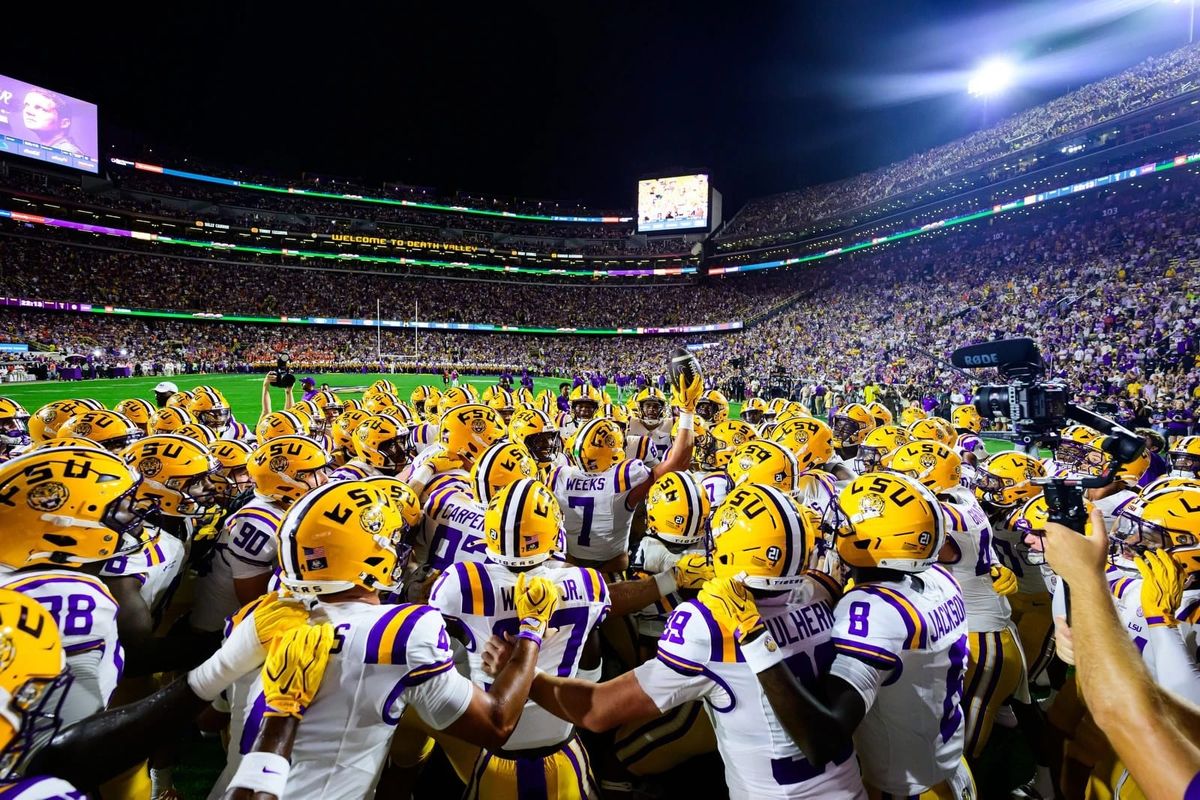
Same game, different rules: Consider how the legislation would impact two prominent LSU stars: quarterback Sam Leavitt and coach Lane Kiffin.
- Leavitt faces a salary cap. His school-funded compensation is subject to limits, and after his first transfer, he would generally have to sit out a season on any subsequent transfer. In short, ending the current world of annual free agency.
- Kiffin faces no salary cap. His $13 million salary remains largely between LSU and whatever Kiffin's agent can negotiate. He's free to change schools every year if he likes once the season ends, provided someone is willing to cover any buyout.
- Both work in the same college football economy.
By the numbers: LSU's own spending illustrates how unusual that economy has become.
- LSU is spending at least $30 million annually on Kiffin, his assistants and football's expanding front office and support operation.
- The school is paying roughly $15 million this year to LSU's football roster through RevShare.
- Name another major sport where coaching staffs earn more than the players. We'll wait...
- College football may be semi-pro on the field. There's nothing semi-pro about the money surrounding it.
Free market days: College football spent decades embracing the free market for coaches. Salaries soared, coordinators crossed into seven figures and programs built increasingly large recruiting, personnel and administrative staffs.
- The push for federal economic guardrails intensified as court decisions, NIL and eventually direct revenue sharing allowed athletes to participate more fully in the money generated by their labor.
- Professional sports impose financial restraints, too. The NFL has a salary cap and rules governing contracts and player movement. Its players collectively bargain those restrictions with management.
- College athletes are not part of the current negotiating process—at least not as it relates to compensation and freedom of movement.
Stop the insanity: Supporters say financial stability is necessary to preserve the sports that football and men's basketball subsidize.
- LSU provides a useful example. Baseball, women's basketball and gymnastics have passionate followings and compete nationally, but each costs more to operate than it generates in revenue.
- Tiger sports teams not named football or men's basketball lost a collective $36.7 million in fiscal 2025.
- The legislation includes protections designed to preserve those opportunities.
The bottom line: No one is suggesting college athletics doesn't need enforceable rules, and the Protect College Sports Act contains meaningful new protections for athletes. But when the answer to all your questions is money, it's notable that the athletes who make these billions of dollars possible aren't invited to the negotiating table.
Additional reading:
 JR Ball