LSU scientists see stars
LSU scientists advance work could unlock some of the universe’s secrets.
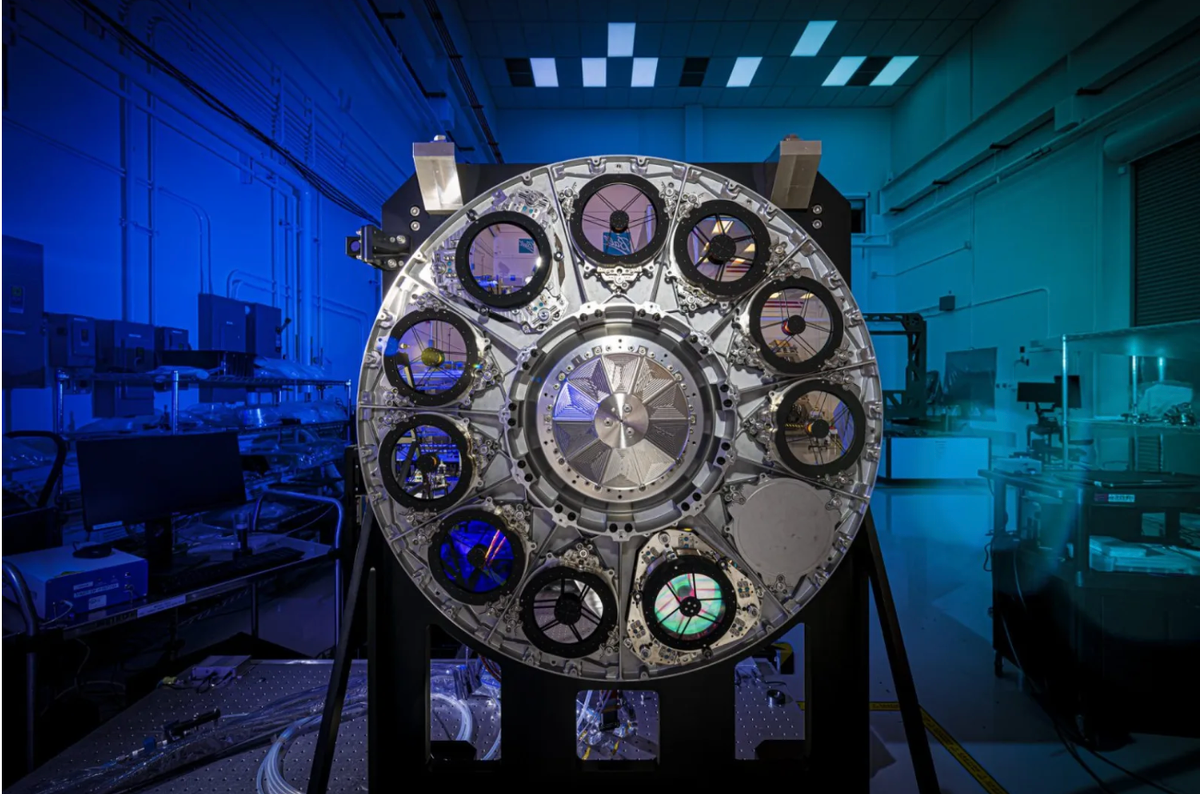
NASA’s Nancy Grace Roman Space Telescope launched Sunday morning, beginning a million-mile journey to its new home in space.
From an orbit near the second Sun-Earth Lagrange point, or L2, Roman will map billions of galaxies, study dark energy and dark matter and hunt for planets beyond our solar system.
Two LSU scientists helped give the mission a head start.
Assistant professor Matthew Penny and postdoctoral researcher Himanshu Verma contributed to new images from the European Space Agency’s Euclid telescope. Together, they provide the clearest visible-light view yet of the Milky Way’s crowded center, and a map scientists can compare with Roman’s future observations.
Roman will search that same region for planets by watching for distant stars to briefly brighten. The effect happens when the gravity of a closer star, and sometimes a planet orbiting it, bends and magnifies the distant star’s light.