Williams resets the City-Brooks debate
BREC's new leader makes his case by relying on numbers that don't always agree with him.
New BREC Superintendent Brooks Williams has spent his first weeks on the job writing. His latest essay runs five pages and some 3,500 words. It tackles the question that's consumed BREC all year: City-Brooks Park.
Why it matters: Williams inherits a park decision that could top $100 million, and how he frames the situation matters. It'll shape how much room BREC has to change course before adopting a final plan.
Managing expectations: Williams spent eight years as city manager of the small Texas town of Ferris before this job. That background runs on budgets, bond ratings, and operational accountability. His early moves at BREC track with it.
- His first 5-page essay treated deferred maintenance as a management failure.
- Next was a public apology, owning outright an open-meetings violation that occurred before his arrival.
- This message on City-Brooks Park is the first test of that same instinct—full costs, honest tradeoffs, own the mistake—on the parish's most contested piece of ground.
Skewed numbers: Williams doesn't defend BREC's outreach. He writes the agency should have caught the demographic gaps sooner. He says BREC should stop "simply celebrating how many responses" it received.
- The park's defining survey drew 1,084 responses. They skewed 85% White and 7% Black.
- 43% of respondents reported household income above $150,000.
- 89% were nearby residents or regular users. 96% had visited the park.
- A June public meeting ran from 5:30 to 7 p.m., with Williams conceding the window worked against anyone getting off a job, sitting in traffic, or picking up kids.
Spinning the numbers: The same dataset does two jobs in this essay. Williams treats it as authoritative in one argument and unreliable in the next, depending on which claim he's making.
- He leans on the age breakdown to counter one claim—that young residents got shut out. Williams suggests adults 25 to 44 were actually overrepresented. But he sidesteps the point those in that demographic are making: not that they weren't asked or didn't participate, but that their views have largely been ignored.
- He then discredits the survey a few paragraphs later, citing its racial and income skew to argue BREC can't trust it to represent the rest of the parish.
- Williams is right that the data is flawed, but rather than calling for a scientific survey or dismissing the result altogether, he draws conclusions from numbers that BREC has acknowledged were stacked and not representative of the community.
- The stacking wasn't just racial and economic—it was geographic. The park's east side, wealthier and whiter, dominated the survey. The west side, home to Brooks Pool and a Black, lower-income neighborhood, was underrepresented in both survey windows.
The price tag: BREC discussed a $30 million to $50 million range as recently as July.
- Williams now puts the full vision above $100 million, plus a separate $20 million arts center.
- His own standard, set weeks earlier: unfunded projects get "phased, resized, or delayed." City-Brooks Park is the test.
Lower your expectations: Williams draws a hard line under what the park can actually fix.
- City-Brooks Park can't raise wages, fix schools, reduce crime, or explain why Louisiana loses young professionals, he writes.
- What it can do, he argues, is show what kind of institution BREC intends to be—one willing to admit mistakes and measure its own results.
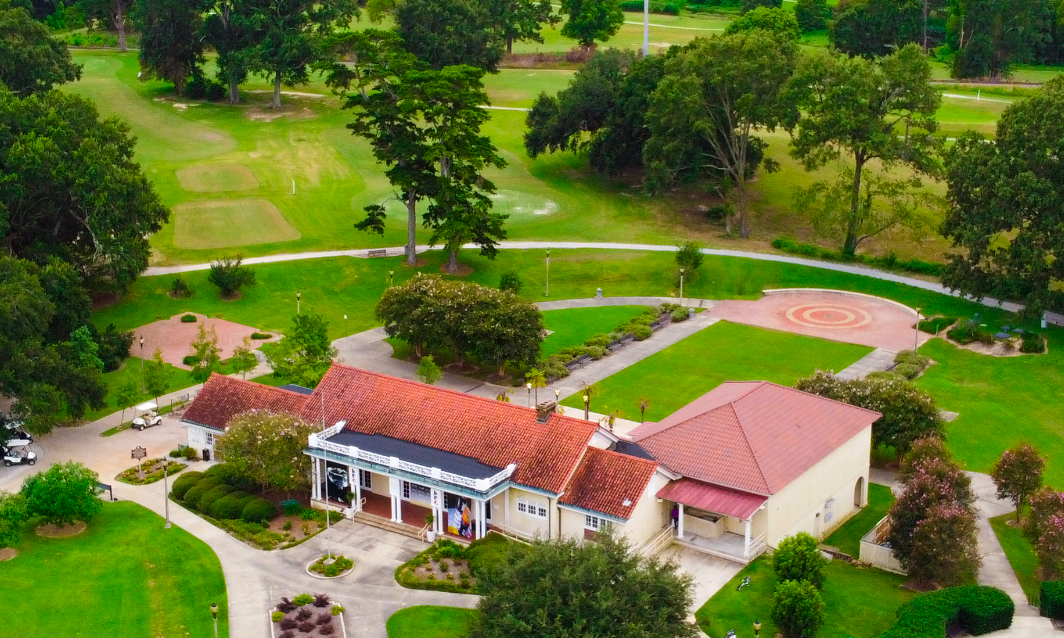
No thumb on the scale: Williams doesn't tip his hand on the future of the City Park Golf Course.
- History doesn't settle it, he writes—the course has been there since 1926. Neither does novelty. A slick new concept drawing doesn't win by default either.
- Both sides get held to the same test: what it costs, who uses it, and whether it can be maintained 20 years out.
Chill out: Whether by design or instinct, Williams is offering something for everyone while making the case for all sides to take a breath.
- Restoring a bit of calm is the right move, especially since Williams is smart enough to know that temperatures will rise again once lasting decisions get made.
The bottom line: Williams is making it clear there's a new sheriff in town and that he's well aware of both the challenges and possibilities he inherited. He's scoring points with transparency and accountability. Whether that's enough to calm the emotions, build trust and come up with a workable City-Brooks plan is the harder question. The good news: At least people is passionate about the park.