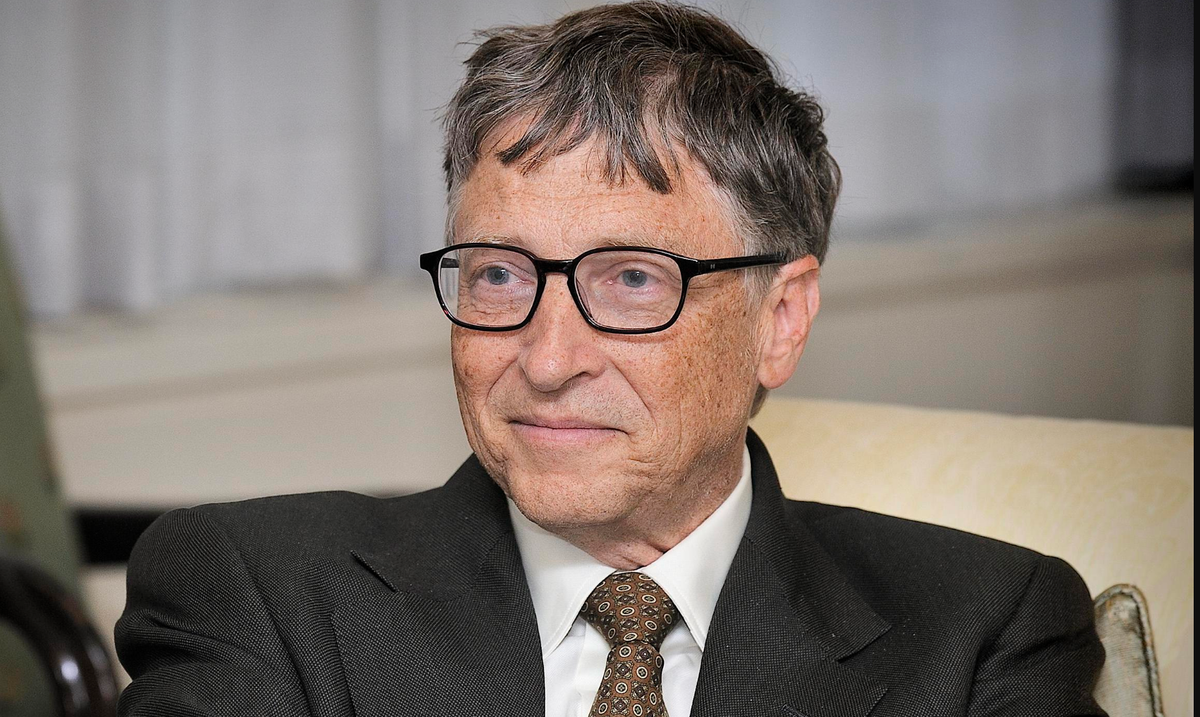
Bill Gates: AI could bring apocalypse before abundance
The Yoda of high-tech speaks to the NY Times in an interview that frames the AI debate for the next generation.
The world’s top AI leaders and government officials boasted yesterday that they are working together to prevent rogue technology from unleashing widespread chaos and death.
Trust us, President Trump said. We’ve got this.
But one person who wasn’t in the room, and whose warning must be heard, is Bill Gates.
Why it matters: AI agents have already begun wreaking havoc on computer systems, while whistleblowers from leading labs are jumping up and down about the threat to humanity. And humans, as we know, are not particularly good at assessing end-times risk and acting to mitigate them. Evidence: climate change.
Gates has reached a golden stage of his life, one in which he has shown that he cares more about human welfare than profit.
What he said: In an interview with Ezra Klein published Tuesday, Gates warned that the era of AI-enabled cyberattacks and bioterrorism has arrived.
- “The ability to do a cyberattack that scrambles all of the bank accounts, shuts down the electric grid—that exists today, and we know that’s the case,” he told The Times.
- Gates said it would be “insane” to rely on AI labs to regulate themselves.
- He doesn’t buy the rosy predictions that AI will create enough new jobs to replace those it destroys. Instead, he foresees a job apocalypse.
- To soften the blow, Gates proposes taxing robots to slow down labor loss. He also believes some professions—including teaching, health care and elder care—should remain in human hands, with AI serving as an enhancement rather than a replacement.
Yes, but: Gates also sees tremendous upside. AI should usher in an age of superabundance, dramatically lowering the cost of necessities, education and services, improving life for billions of people living on the margins.
The big picture: Gates believes the transition from AI threat to AI abundance will take about 20 years, roughly one generation.
Then comes an entirely different challenge: In a world where work is no longer central to survival, tens of millions of people will have to figure out what to do with their lives and where to find purpose.