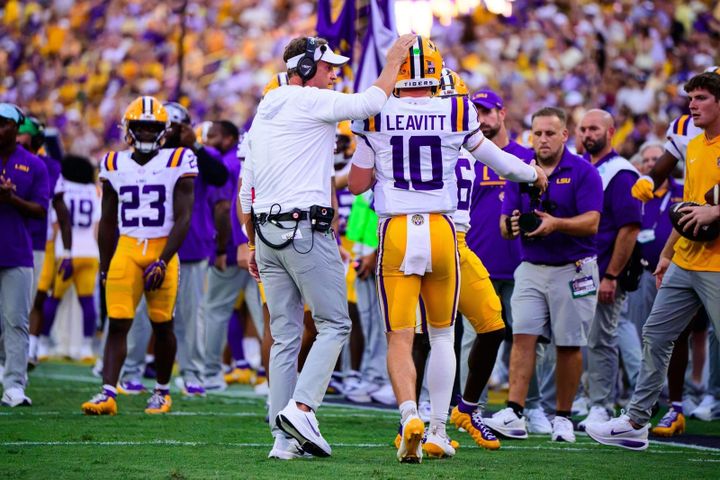
Is Lane Kiffin a great coach?
In his new book, Jared Diamond offers a few keys for coaching to win. Kiffin is not measuring up in one of the criteria, but its early in the game.
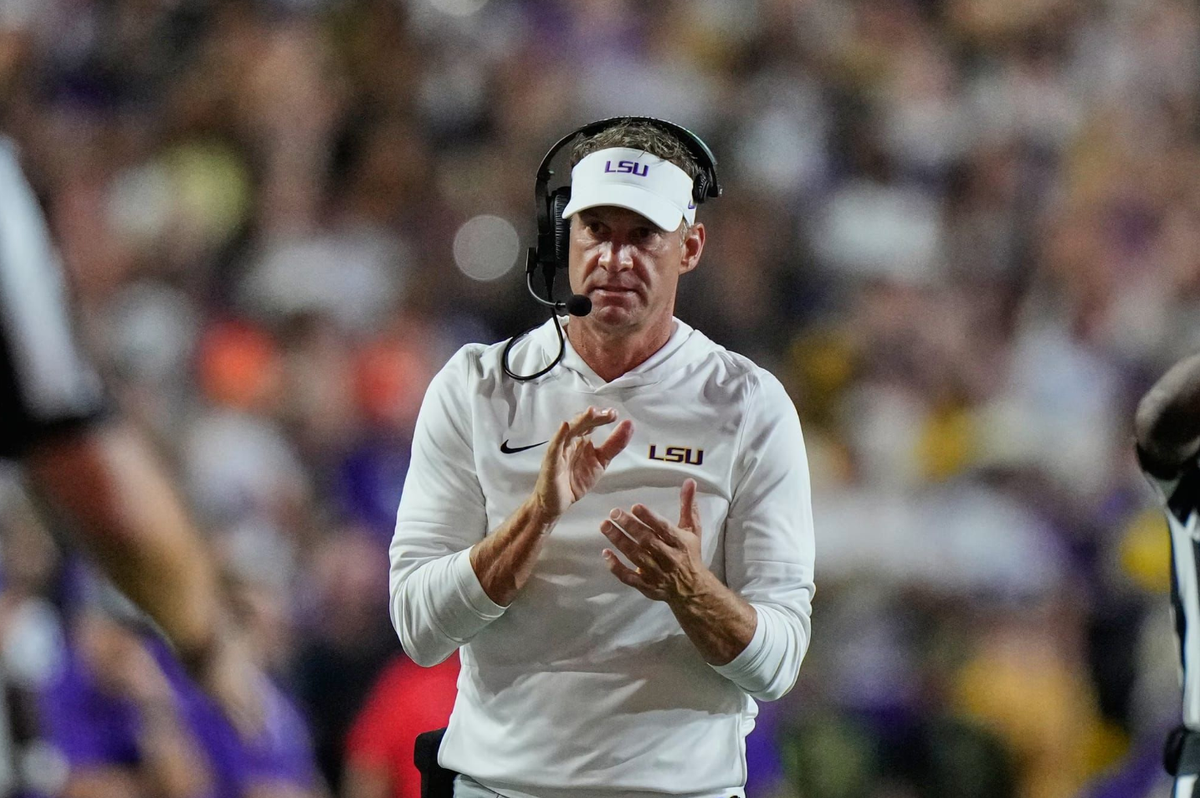
Is there an objective way to spot an exceptionally good coach, or an exceptionally bad one? Jared Diamond poses that question in his new book, Profits, Prophets, Coaches, and Kings: (When) Do Leaders Matter?
Why it matters: LSU is 6-3, and 3-3 in the SEC, under first-year coach Lane Kiffin. The losses came to Ole Miss, Kentucky and Alabama, and fans are already grading him.
Driving the news: Diamond, the UCLA geography professor emeritus best known for Guns, Germs, and Steel, devotes a section of his new book to coaches. Sports is a good lab for studying leaders, he argues, because the score is posted every week.
What Diamond says:
- The gold standard: Diamond singles out John Wooden, who won 10 NCAA titles at UCLA, seven of them in a row. He ranks Wooden as possibly the greatest American sports coach of modern times.
- By wins alone, Nick Saban belongs in that conversation too, with seven national titles, including LSU's in 2003.
- Most coaching is fuzzy. Results hinge on talent, money, facilities and timing. Research Diamond cites finds coaches explain only about 21% to 31% of the differences in team success.
- Firing is often the wrong fix. A team that fires a losing coach usually improves the next year, but so does a team that keeps one. That's regression to the mean, not the new coach.
- And it's expensive. Schools keep paying a fired coach through the end of his contract. LSU paid $54 million to buy out Brian Kelly's contract and $91 million to hire Kiffin for seven years.
- What separates coaches: Diamond expected coaches to differ in how often they run or pass. They don't; most settle on the same mix. Studies find they differ a lot in something else: how well they train players not to fumble or draw penalties, a key to winning games.
By the numbers: RedEye tested Diamond's idea against all 52 SEC conference games played this season through Nov. 7.
- Turnovers tracked wins. In 39 games, one team had the better turnover margin. That team won 33, about 85%.
- When the gap was two or more turnovers, the team with the better margin won 23 of 26.
- Penalties didn't. Winners had fewer penalty yards in 26 games and more in 24, with two ties. That's a coin flip.
- Even lopsided flag counts didn't decide games. When one team had at least 40 more penalty yards, the cleaner team won only 4 of 10.
Then vs. now: Kiffin's LSU team takes fewer penalties than his last Ole Miss squad but gives the ball away more often.
Zoom in: Interceptions are the main leak. Nine of LSU's 13 giveaways were picks; four were lost fumbles.
- In SEC play, LSU has the second-fewest penalty yards per game, 39.8. Yet it has won the turnover battle in only one of six league games, the 35-6 win over Texas A&M.
- In its three losses, LSU was even in turnovers against Ole Miss and −2 against both Kentucky and Alabama.
- Ole Miss's margin last year was still negative, 11th in the SEC. It won anyway by rarely giving the ball away.
Yes, but: The sample size is small. Each SEC team has played only six or seven league games this season.
Two-part test: Diamond names fumbles and penalties. In the SEC, penalty yards barely predicted winners, and that's the part LSU is passing.
The bottom line: Good coaches cut mistakes, and in the SEC the mistake that costs games is the turnover. Kiffin's LSU has cleaned up its flags; ball security is the grade that's still out.
Diamond's advice is to be patient. A coach who wins 70% of his games is no Wooden, he says, but "be satisfied" and don't buy him out. LSU is at 67%.