Homeownership, with a climate surcharge
Home insurance isn’t just rising in Baton Rouge. It’s pushing some people to leave.
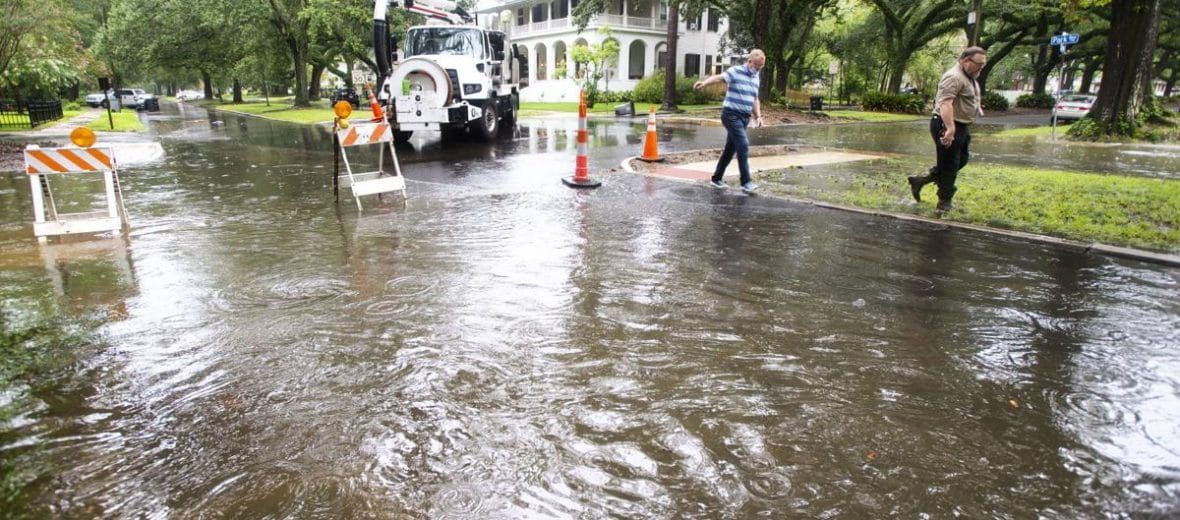
Home insurance isn’t just rising here. It’s redefining what it means to own a house.
Why it matters: Louisiana residents face some of the nation’s steepest homeowner insurance burdens, a signal that climate risk is reshaping real estate faster than policy can keep up, according to the latest Realtor.com analysis.
By the numbers:
- Baton Rouge ranks 5th nationally for insurance costs relative to home value.
- The median EBR premium: $4,672 a year—about 2% of a home’s worth.
- New Orleans is even higher: 3.6%, roughly $8,300 a year.
- The U.S. metro average: just 0.8% of a home's worth.
- Be glad you don't live in the Miami area, where $22,718 is the highest in the nation, or 3.7% of home value.
The bigger picture: Across the Gulf South, risk and affordability are colliding.
- Every home in Baton Rouge and New Orleans sits in a “severe or extreme” hurricane wind zone.
- Flood maps underestimate danger—nearly 2 million homes nationwide face high flood risk but sit outside FEMA’s “high-risk” zones.
- Typical policies exclude floods and carry hurricane deductibles up to 5% of a home’s insured value. That’s $20,000 out-of-pocket on a $400,000 house.
Zoom out: One in four U.S. homes—worth $12.7 trillion—faces severe or extreme risk from floods, hurricanes, or wildfires. But the heaviest costs fall on Southern markets where homes are cheaper and storms hit harder.
The takeaway: For Baton Rouge, climate risk isn’t a future problem. It’s a line item—folded into every mortgage, every sale, every hard conversation about staying or leaving.