Booster shot?
SpaceX has succeeded, but the company must deliver a new rocket to fulfill Elon Musk's ambition for the Louisiana spaceport.

Elon Musk’s vision for a sprawling SpaceX complex on the Louisiana coast is breathtaking. But Musk’s ambitions have often moved faster than his companies can deliver.
Why it matters: Louisiana is making a major economic-development bet that SpaceX can diversify an economy long dominated by oil, gas and petrochemicals. Whether the project becomes an engine for Louisiana depends on SpaceX's ability to deliver an unfinished rocket and secure demand for its use.
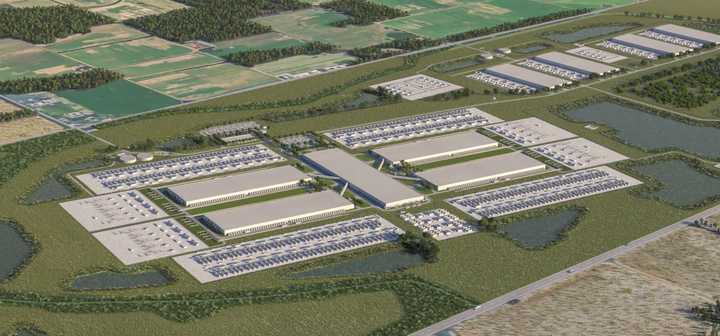
The details: SpaceX says it will invest $100 billion in “Starbase, Louisiana,” a Vermilion Parish complex that could become the world’s largest launch facility.
- Plans call for five launch complexes, each with two launch pads and a propellant farm.
- Construction is expected to begin in 2027, with the first Starship launch targeted for as early as 2029.
- Louisiana Economic Development projects 3,000 direct jobs, and 8,000 indirect.
Give credit: Gov. Jeff Landry and his economic-development team landed one of the world’s most sought-after industrial projects. Louisiana’s abundant natural gas, waterside location, favorable launch geography and deepwater access mattered. So did the administration’s ability to close the deal.
The big picture: SpaceX is not a speculative startup. It has fundamentally changed the launch business.
- Its filings show Falcon launches rose from 134 in 2024 to 165 in 2025. But 122 of those missions last year carried SpaceX’s own Starlink satellites rather than payloads for outside customers.
- In other words, much of SpaceX’s launch demand comes from SpaceX itself.
Follow the money: The company’s space division reported $4.1 billion in revenue and a $657 million operating loss in 2025, compared with a $21 million profit a year earlier.
But the reason matters: Research and development spending in the division climbed to about $3 billion as SpaceX accelerated work on Starship.
Meanwhile, its Starlink internet division generated $11.4 billion in revenue and $4.4 billion in operating profit, according to SpaceX’s prospectus. SpaceX is using profitable, fast-growing Starlink to finance an enormously expensive rocket-development program.
The Starship question: Louisiana’s spaceport is designed around Starship, not the proven Falcon 9.
- SpaceX says Starship will carry more than 100 metric tons to orbit, enabling larger Starlink satellites, lunar missions, Mars expeditions and even data centers in space.
- After 13 integrated test flights, however, SpaceX's Starship has not demonstrated the complete operating system on which its Louisiana vision depends.
- The company is progressing, including the first intact ocean recovery after its 13th test.
The Tesla example: Musk has a history of being right about technology’s direction and wrong about its timetable.
In 2015, he predicted Tesla would have a fully autonomous car in about three years. More than a decade later, Tesla has begun a limited rollout of driverless robotaxis, but the “Full Self-Driving” software sold to owners still requires active supervision.
Waymo, meanwhile, reported 15 million fully autonomous rides in 2025 and said in early 2026 that it had surpassed 500,000 weekly rides.
The bottom line: SpaceX makes a lot of money. SpaceX is also SpaceX’s largest customer, launching its Starlink satellites. But the Louisiana spaceport is counting on demand from Elon’s dreams of colonizing mars and data centers in space, both of which are dubious ideas. SpaceX will likely develop a coastal spaceport, but its scale will depend on overcoming big technical hurdles and attracting sustained outside demand.