
Wildflowers in the median
Grass is growing fast in public spaces. Some cities are going "No Mow." Could it work here?
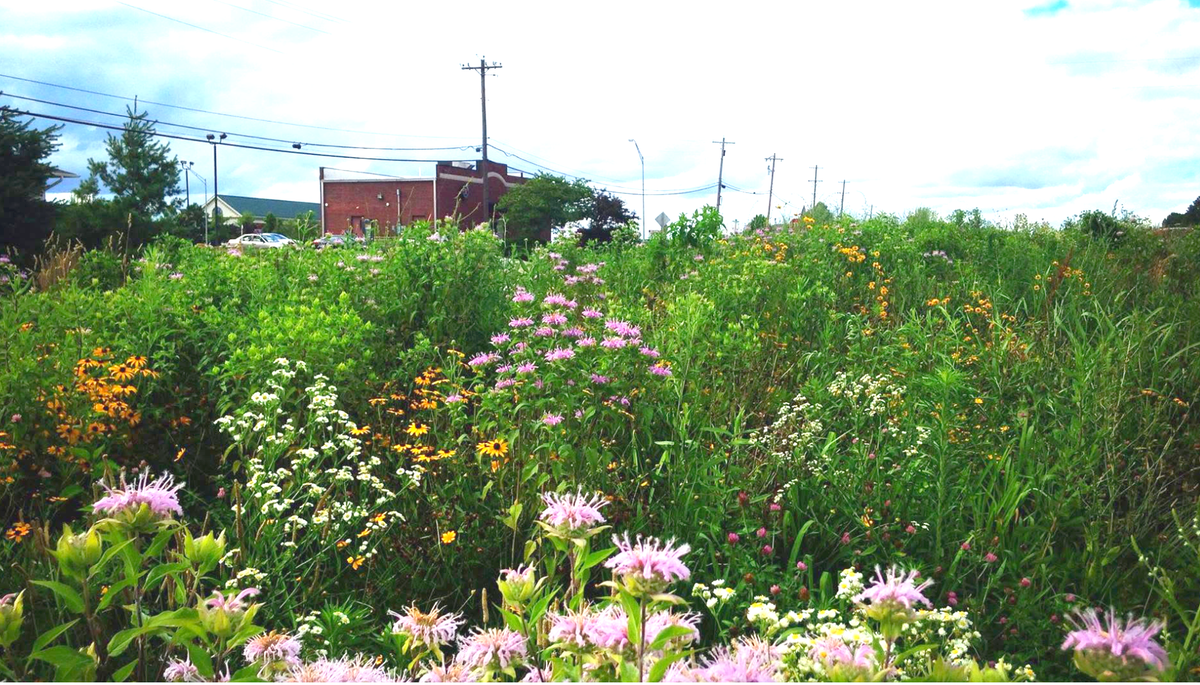
Heavy rains are turning public grass into a small jungle, leaving mowing crews scrambling and residents calling the city-parish to complain.
Some cities are trying another approach: mowing less and replacing turf with native plants and pollinator gardens. Baton Rouge would need to experiment before planting them widely, but the idea deserves a test.
Why it matters: Grass is the easy default for medians and other public spaces. But mowing costs money, burns fuel and creates emissions.
Pollinator gardens can also be far prettier. In the Garden District, public corners have been transformed into small habitats where bees, butterflies and other insects can eat.
The details: Columbia, Missouri, began converting about 26 acres of roadsides and medians from mowed turf into native prairie in 2020.
The effort grew from a 2019 pilot project that created “No Mow Zones” along selected roads.
Columbia estimates the program saves the city as much as $280,000 a year.
The Baton Rouge angle: Plants grow with unusual enthusiasm in south Louisiana, which could make pollinator gardens harder to manage here, says Sage Roberts Foley, executive director of Baton Rouge Green.
But harder does not mean impossible.
“It would seem harder here, but that is not a reason not to try,” Foley says. “In Louisiana, we would have to find our own way.”
The catch: Native gardens can look unruly while the plants are becoming established. Some residents will see a future habitat. Others will see weeds and file a 311 complaint.
Columbia anticipated that problem and paired its program with public education. Baton Rouge would have to do the same.
Bottom line: The parish does not need to surrender every median to the bees. But a few carefully chosen experiments could reveal whether less mowing would save money, reduce emissions and make Baton Rouge a little more beautiful.