Where the dancing horses went
For two decades from 1927, children in Baton Rouge’s City Park paid a nickel to ride hand-carved horses beneath a pagoda roof. A brass organ wheezed; riders reached for a brass ring to try and win a free ride.
Then the carousel vanished.
Its 54 horses had traveled before. The carnival ride came from Spanish Fort, a New Orleans amusement park, brought by Bartholomew Murphy, an Irish woodcarver who had worked for Charles I.D. Looff, a celebrated carousel builder. All the horses had flowing manes, jewels and loud paint.
Murphy’s family ran the ride and stored its horses above their quarters during the school year, according to Baton Rouge sources. After he lost the concession in the early 1940s, the carousel was sold to Harry Batt, later famous for Pontchartrain Beach. Its animals went into storage and were eventually dispersed. Some may now turn on New Orleans City Park’s carousel; others entered private collections.
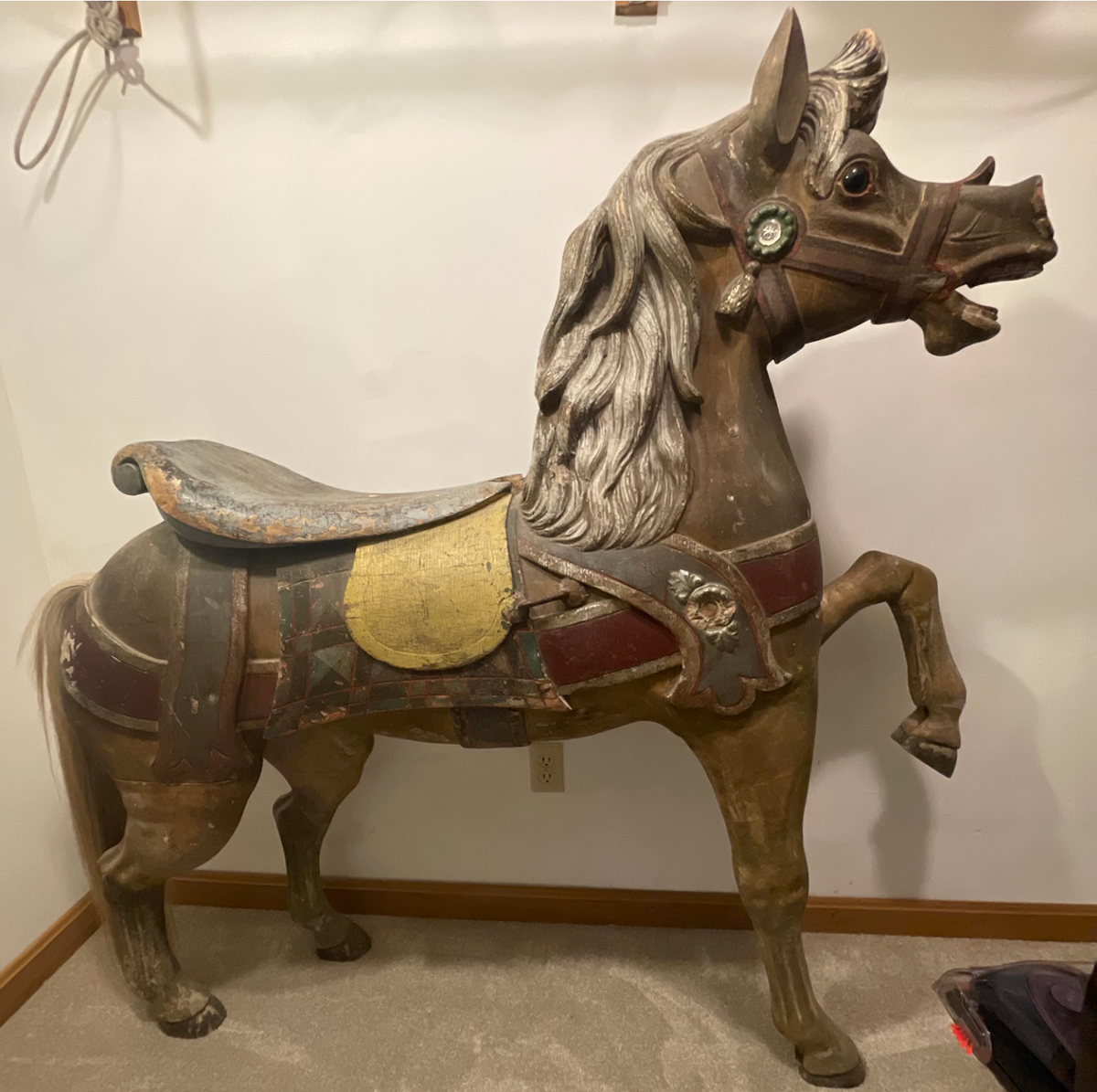
None, BREC says, can be found in the park system's possession. But RedEye located a possible survivor for sale online: a nearly five-foot-tall stationary Looff horse, with a checkerboard saddle blanket, starburst jewels and old paint. Its documented route—Spanish Fort, Baton Rouge, Pontchartrain Beach, private hands—is plausible, though not certain.
The asking price is $10,500. One of City Park’s flying horses is available for a ride back to Baton Rouge.