
Walk this way
Baton Rouge ranks high for walking but not for biking. Implementing the bike and pedestrian plan would greatly benefit the city.
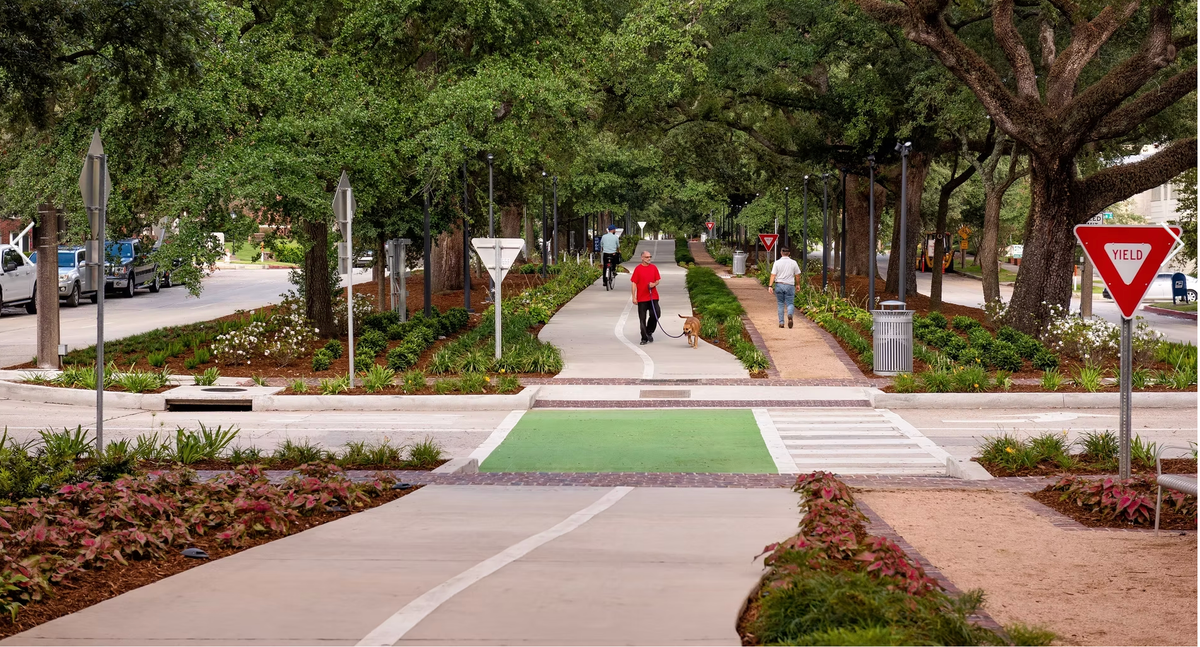
Baton Rouge has something to celebrate when it comes to walking. Among the nation’s 100 largest cities, the state’s capital ranks 14th in pedestrian miles per person, according to a report from Streelight, which provides mobility information to municipalities. But the same report ranks Baton Rouge near the bottom for bike riding.
Why it matters: Walking and biking give residents affordable ways to reach jobs, services, schools, transit, and recreation. They support physical and public health, strengthen local economies, reduce emissions and traffic, and improve mobility for people who cannot or do not drive.
By the numbers: People here walk an estimated 256 miles per person each year, well above the report’s national benchmark of 150 miles.
- The reasons: Baton Rouge has a large college student population that moves on foot, and an active community of runners and walkers. A poverty rate double the national average means many people walk because they can't afford vehicles.
A caveat: Because our city is spread across a large area, we rank only 56th in walking miles per square mile. In other words, we walk a lot, but that activity is dispersed across our sprawling city.
Yes, but: Our biking numbers tell a different story. Baton Rouge ranks 79th in biking miles per person and 88th in biking miles per square mile. At just 13 biking miles per person annually, our walking mileage is nearly 20 times higher.
Why it matters: The gap suggests that Baton Rouge residents are willing to move without motoring, but biking may not yet feel safe, convenient or connected enough to become a regular choice.
What we can do: The parish has a pedestrian and biking master plan, and has slowly built sidewalks and bike lanes. Getting serious about that plan would boost cycling by building a network of lanes, closing gaps between existing paths, creating safer street crossings and connecting neighborhoods to schools, parks, jobs, shopping and transit.
These improvements would benefit pedestrians, too. Better crossings, calmer streets, shade, lighting and more connected sidewalks would make walking safer and more inviting, especially in areas where residents already walk but infrastructure has not caught up.
The bottom line: Walking is a Baton Rouge strength, and it can still be improved. Biking has some distance to travel. Strengthening both would expand mobility, reduce the number of car trips on our roads and improve the health and wellness of our people.