Sidewalks don't have to end
Baton Rouge is building sidewalks. Denver offers a model for building—and maintaining—many more.
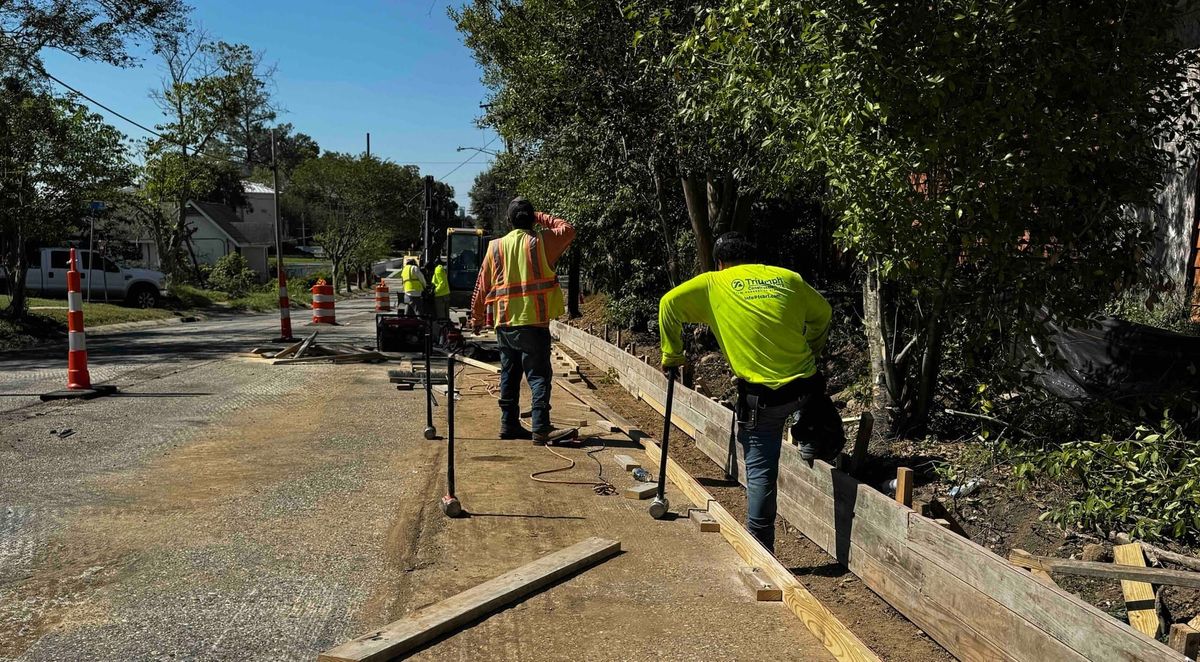
Baton Rouge is known as a city where the sidewalks end. But that’s beginning to change as MovEBR, the parish’s $1 billion-plus infrastructure program, builds new sidewalks and retrofits older neighborhoods.
Why it matters: Sidewalks are more than concrete. Federal research has linked sidewalks on both sides of a street to an 88% reduction in crashes involving pedestrians. Other studies link walkable neighborhoods to more physical activity and greater interaction among neighbors, providing people with a safer way to exercise, reach nearby destinations and foster social connections.
The details:
- Property owners are technically responsible for sidewalk repairs in Baton Rouge. But enforcement is rare, leaving many sidewalks to deteriorate.
- Developers once routinely skipped sidewalks to save money, though waivers have become harder to obtain.
- MoveBR is building or improving sidewalks along Terrace Avenue and Goodwood Boulevard and in Broadmoor.
- The state is spending millions to add sidewalks along Florida Boulevard, with the goal of reducing pedestrian deaths on the busy corridor.
But, wait: There isn’t enough money to retrofit every neighborhood without sidewalks, such as Southdowns, while also repairing sidewalks that have been neglected for many, many years.
A solution: One of RedEye’s first stories spotlighted Denver, the first city in the nation to approve a property tax dedicated to building and maintaining sidewalks. For an average annual fee of about $150 per home or business, the city took on work that had long been the responsibility of property owners.
The bottom line: Denver has shown that residents are willing to pay for sidewalks. That’s worth exploring here: Neighborhoods willing to tax themselves for crime prevention districts could put some of that same civic energy toward creating safe places to walk.