
When art earns its keep
Baton Rouge already loves public art; it can ask it to do more.
A crown in Detroit doubles as an air monitor. A quilt in Iowa acts as a water filter. Baton Rouge has neither—yet. But it could.
Why it matters: Baton Rouge has real stormwater problems and consistent challenges measuring air quality in the North Baton Rouge industrial corridor. The city also has a proven love for public art—and other cities are showing how one could fix the other.
The blueprint: Four different approaches, one shared idea—art that works instead of just decorating.
- A floating quilt sculpture in Iowa City pulls nitrates out of pond water using algae-filled buoys made from recycled buckets.
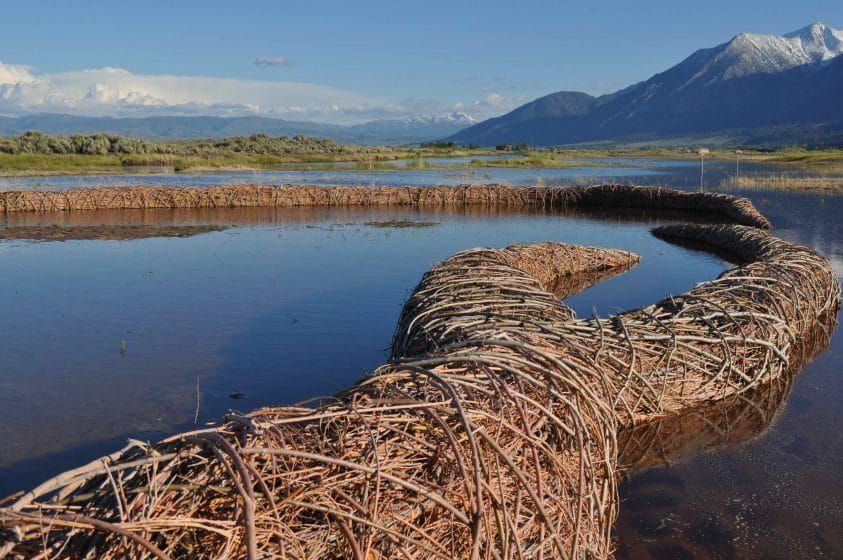
- A 360-foot woven willow sculpture at a Nevada nature preserve anchors soil and slows floodwater along a riverbank—then takes root and grows into part of the bank itself.
- A gold crown sculpture in Detroit tracks air pollution near an auto plant, its lights flashing when quality drops.
- Reflective cooling murals in New Haven have shaved up to 10 degrees off pavement temperatures on sunny days.
Closer to home: Baton Rouge isn't starting from zero on this—the conversation about art as infrastructure has already begun, just not the follow-through.
- The Walls Project is already blending art and sustainability locally, running eco-art workshops at Baton Roots Farm that turn reclaimed materials and farm-grown pigment into art.
- The Arts Council of Greater Baton Rouge and ULI Louisiana spent last summer running roundtables to build art into Plan Baton Rouge III, explicitly framing culture as infrastructure rather than decoration—including ideas for using art to cool downtown's hottest, least walkable blocks.
- North Baton Rouge gets a smaller test of the appetite July 24, when the city opens applications for artists to redesign the airport entrance and the underpass along Scotlandville Parkway. Decorative, not functional—but proof the money and the will exist.
The next step: What's missing is not art made from reclaimed materials, but art that does the reclaiming itself—a sculpture that filters runoff before it reaches a ditch, or tracks emissions near a plant instead of dressing up the fence line around it.
The bottom line: Baton Rouge doesn't lack environmental problems or public art ambition—what's missing is the idea to point them at each other.