
Purple and gold, and politically mixed
Research shows that fandom connects people as much as religion does.
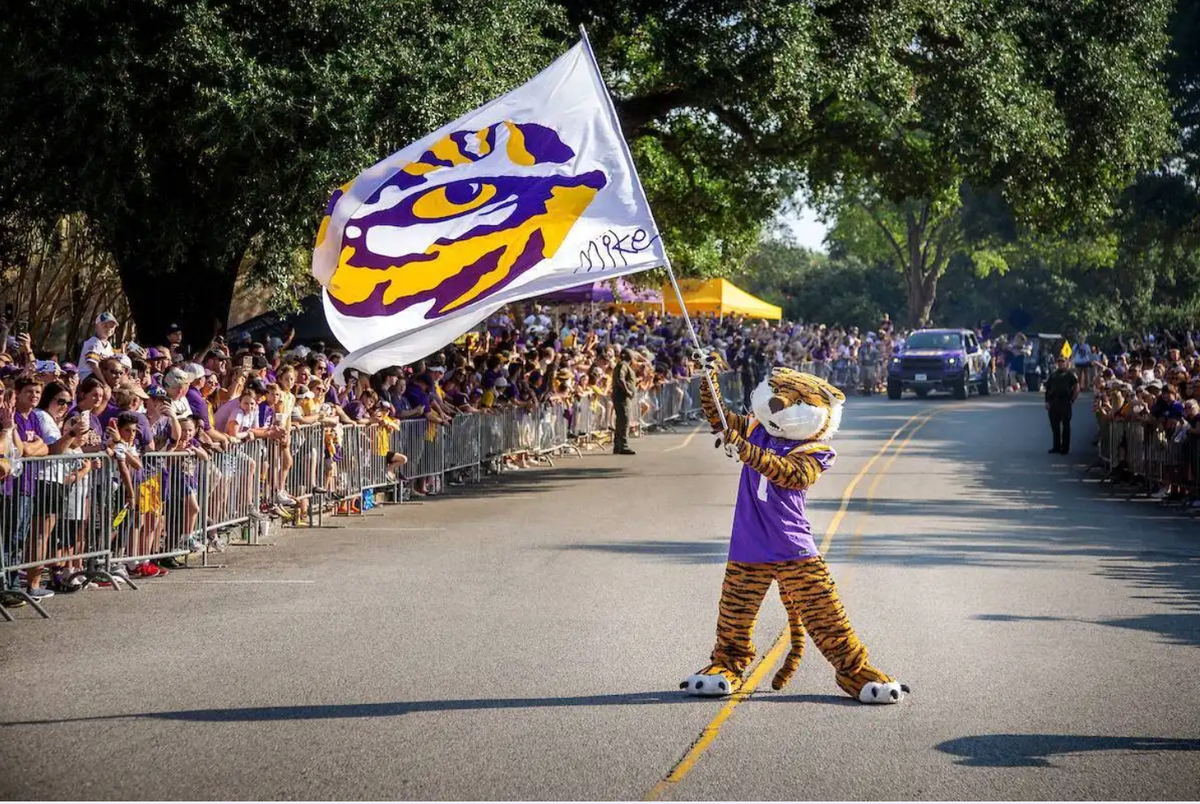
At an LSU football game, there is no Democratic blue or Republican red. Fans are all purple and gold—and now researchers say what LSU followers already know: Fandom can beat partisanship and create a better civic setting.
Why it matters: The midterm elections coincide with college football season, with LSU playing Texas and Alabama right after the elections are decided. That’s a chance to view our politics through the lens of sports and aim for something better than candidates bickering over who is more conservative or liberal.
Driving the news: Researchers surveying more than 50,000 Americans found that every NFL, Major League Baseball and major college football fan base is politically diverse, according to the researchers' essay.
- Even the most conservative NFL fan bases include plenty of Democrats, and the most progressive include plenty of Republicans.
- Stadiums, another study found, are among America’s most politically integrated public spaces.
The big picture: Politics has become a “mega-identity,” increasingly shaping where Americans live, what they watch and even whom they date. That makes it easier to reduce the other side to a caricature rather than see the whole person.
Shared fandom pushes the other way.
In experiments pairing political opponents, learning that both supported the same team increased personal warmth and willingness to interact. The effect was stronger than sharing a race, education level or home region — and roughly equal to sharing a religion.
The bottom line: This fall, an LSU touchdown against Texas or Alabama won’t end America’s political divisions. But celebrating it together might remind us that the person in the next seat is more than a vote.
For a few hours, we’re all on the same side, and that can be a beginning of engagement about other aspects of life, such as building a better parish for the future.