Show your work
City-Parish government keeps asking for more money. It should first check whether the current money works.
Baton Rouge doesn't know what it's buying—or whether it's worth it.
That's not meant as an insult. It's a structural problem—one that makes every budget fight harder, every tax vote more contentious and every round of cuts more damaging than it needs to be.
Why it matters: Every budget cut, every reduction in service, every tax pitch and every fee hike the city-parish puts before Baton Rouge residents rests on a foundation nobody bothered to build—an honest accounting of what government services actually cost to deliver and what residents get in return.
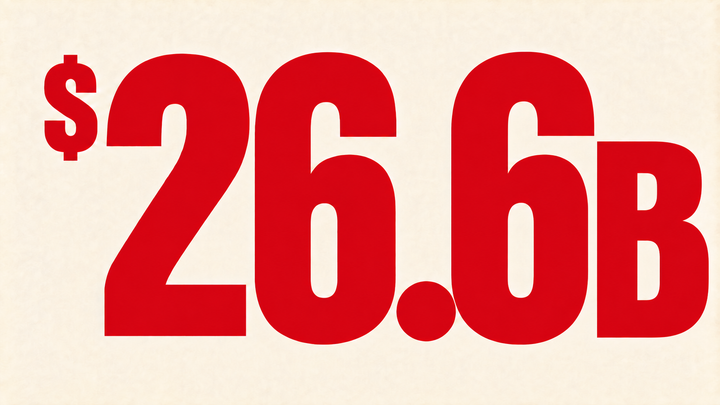
The accounting gap: The 2026 city-parish government budget tells you how much it spent last year ($1.1 billion) and how much it wants to spend in the fiscal year ahead ($1.15 billion).
- It doesn't tell you what that spending bought, what it cost to deliver each service or whether the return justified the investment.
- That gap isn't a minor accounting quibble—it's the reason city-parish government keeps reaching for the same blunt tools when the money runs short.
Possible solution: The concept is called activity-based costing. Cities that use it know the true, fully loaded cost of each service: labor, overhead, equipment and administration.
- Indianapolis figured it out. When cuts are required, they make surgical choices.
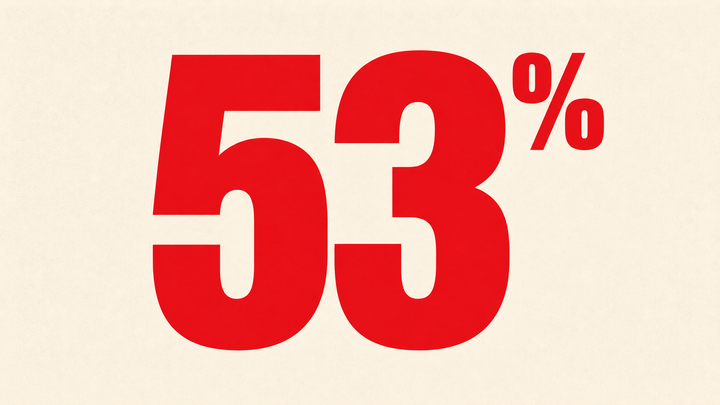
- Baton Rouge applied an across-the-board 11% reduction to nearly every department in its 2026 budget. That method treats first responders, a public works crew and juvenile court employees the same way.
The cost structure: The '26 budget restricted 71% of total funds to dedicated purposes before a single discretionary decision was made. Inside the General Fund, public safety alone accounts for roughly 55%—leaving a narrow band of spending to absorb any revenue shock.
- The employer pension contribution rate alone runs nearly 37% of payroll—a figure set by actuaries, not elected officials.
- Those costs don't move when revenue drops. Headcount does.
- When St. George's incorporation removed roughly $50 million in revenue, 420 positions were eliminated—not because the city-parish knew which services to cut, but because people were the only lever available.
The ROI problem: Knowing what a service costs is only half the question. The other half is whether the return justifies it. A service can be accurately priced and still be a bad investment—or a good investment being delivered at the wrong scale.
- The city-parish has no systematic way to evaluate whether outcomes justify the spending. It measures inputs—dollars allocated, positions filled—not results.
- The DA's office illustrates the cost of ignoring ROI in both directions. The parish is constitutionally required to prosecute crimes, yet it starved the office responsible for doing so. Moore lost roughly 30 attorneys in 16 months. The case backlog grew. The return on whatever the city-parish did spend on public safety eroded.
- A parish that resists new taxes has an even greater obligation to demonstrate the return on existing ones. That case has never been made here because the numbers to make it have never been calculated.
The process problem: Earlier this year, a retirement-benefit restructuring generated enough savings to fund the largest police pay raise in the department's history, with money left over for raises in other departments.
- The outcome isn't the issue. Police recruitment and retention are a legitimate crisis.
- The question is why those savings weren't visible before the crisis forced the analysis.
- The answer: nobody was doing the analysis.
- The city-parish's own 2025-2035 Strategic Plan lists across-the-board cuts as a practice to avoid and recommends using outcome-based budgeting. The 2026 budget did the opposite.
The Big Picture: The city-parish structure is fractured—independent taxing authorities, dedicated millages and incorporated suburbs that use parish services without fully funding them.
- Baker, Central, St. George and Zachary collectively represent 33% of the parish population but contribute none of their sales tax revenue to the coroner, courts, district attorney or parish prison—all constitutional offices that serve the entire parish.
- Voters rejected a dedicated property tax for the district attorney's office in 2025—a function the parish is constitutionally required to fund. Moore has since filed a lawsuit, arguing that the city-parish's $7.4 million allocation makes it virtually impossible to operate, in opposition to his $22.6 million request.
- Tax resistance here isn't only ideological. It reflects a legitimate distrust that new money will be spent wisely when there's no real accounting of what the old money is buying.
Here in the real world: The levee trail from downtown to L'Auberge opened to fanfare, expanded through MovEBR funding and now has potholes, broken lighting and a maintenance structure split across four agencies with no single accountable owner.
- BREC, meanwhile, is selling off dozens of parks it can no longer afford to maintain—properties added over decades without an honest accounting of their long-term operating cost.
- That's not a trail problem or a park problem. It's a cost-accounting problem.
Absent efficiency models and honest cost accounting, the default government response is predictable: propose a tax or impose a fee. So, too, is the response of voters in a parish with deep tax resistance and distrust of city-parish government.
The Bottom Line: Until the city-parish can answer what each service costs to produce and what residents get in return, every budget fight will end the same way—cut everyone a little, protect the biggest payrolls and hope nobody asks for proof it worked.