
What if LSU tackled poverty?
Carnegie Mellon’s $3 billion gift offers a blueprint, and LSU already has the pieces.
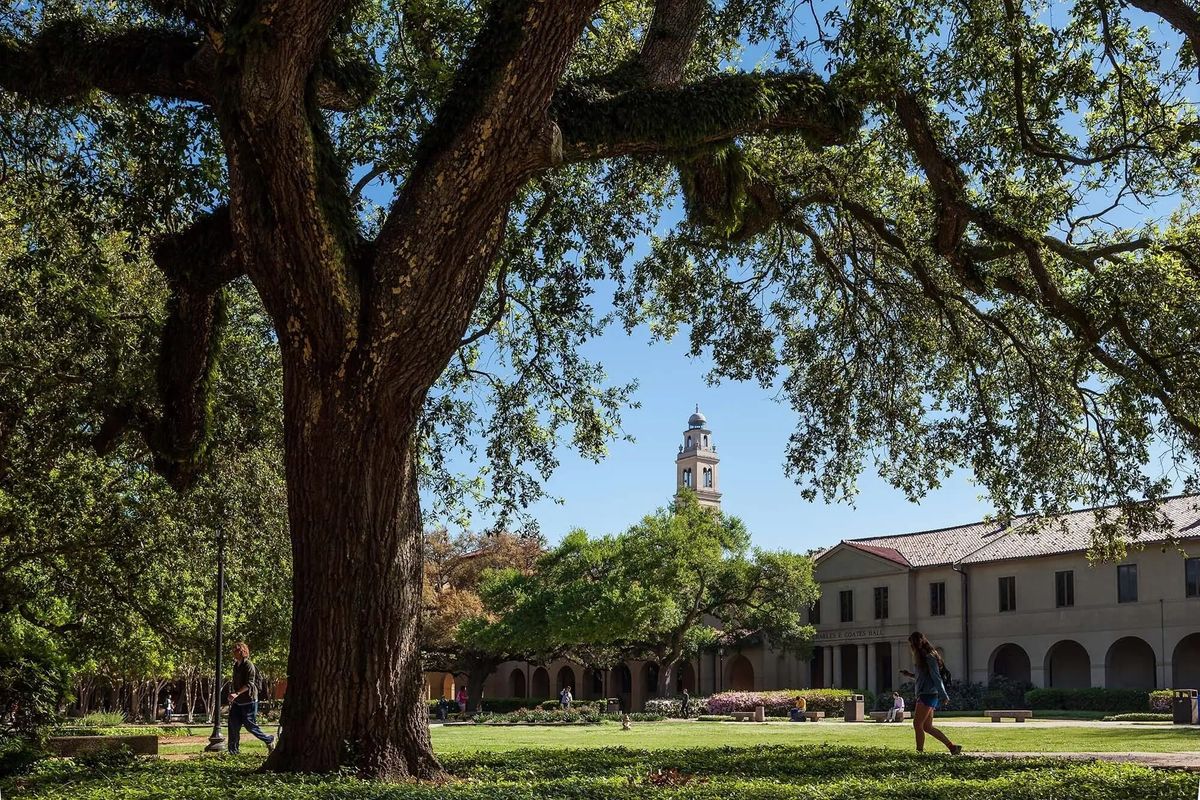
What if LSU took on Louisiana's toughest challenge—an embarrassingly high poverty rate?
What if LSU could do that while still pursuing its top-50 research ambitions?
An all-in LSU flagship commitment to tackling this state’s biggest societal anchor could not only help turn those research aspirations into reality, but also make Louisiana and Baton Rouge a better, safer and more vibrant place to live.
Why it matters: Poverty is the one problem nearly every other Baton Rouge problem traces back to, and LSU is the only institution here with the brainpower and the incentive to go after it.
The genesis: Carnegie Mellon recently landed $3 billion to build a university around problems instead of majors. LSU doesn’t need a billionaire to borrow the idea—only a decision about which problem to pick.
- Ken Griffin’s gift sends $2 billion to a new Miami campus organized around challenges—health, energy, national security, manufacturing—instead of academic majors.
- LSU launched a center in 2018 to tackle the state’s most pressing challenges, and a current RedEye writer wrote a column at the time suggesting it pick poverty.
Why poverty? Schools, health, crime, a thin workforce—pretty much every Louisiana problem traces its roots back to poverty.
- Louisiana’s three-year poverty rate is the highest in the nation.
- One in four people in the city of Baton Rouge lives in poverty—25.7%—about where it stood in 2018.
- The number of people in poverty in East Baton Rouge Parish has grown by about 35% since then, Census estimates show.
The payoff: LSU playing an active role in moving the poverty needle would not only boost its home state, but its research and innovations could be embraced by other cities, states and countries. Moreover, such bold initiatives tend to attract world-class researchers.
- Michigan has run a poverty initiative since 2016.
All hands: Every LSU college, school and research center has a role in this fight across the university system, and LSU President Wade Rousse could delegate those responsibilities. For example:
- The business school could carry neighborhood entrepreneurs from idea to business plan to capital, and LSU Law’s Stutes clinic—already free for small businesses that can’t afford a lawyer—could handle the legal side.
- Education could test new teaching models for kids from low-income neighborhoods, with the lab school as a ready-made classroom, and build curriculum for adults preparing to leave prison.
- The School of Music, which already sends student teachers into Baton Rouge classrooms, could test whether music helps kids from low-income neighborhoods learn math.
- Social work and psychology could study family dynamics and design new support systems, built with the neighborhoods and cultures they serve.
- Nursing and medical students could staff neighborhood clinics as part of their rotations, faculty could study whether better access changes health outcomes, and Our Lady of the Lake, LSU’s partner since 2013, is the obvious host.
- Pennington Biomedical could build on its food insecurity research, and the state’s only public school of public health could track whether any of it moves the numbers.
- The AgCenter has run poverty programs for years; landscape architecture could redesign urban hardscapes and plant inner-city gardens, and engineering and construction management could take on affordable housing.
- Computer science could build the apps and data tools to show what’s working.
- Southern University, flagship of the nation’s only HBCU system and a neighbor in Baton Rouge, is the obvious partner for shared research and the federal and foundation dollars that follow.
The bottom line: LSU is the state’s flagship institution and the system has audacious research goals. Nothing could demonstrate LSU's value more than learning how to tame poverty.