
Louisiana's AI bet
The state is attempting to diversify again. The deals are getting done, and the markets will ultimately decide if the investments will pay off.
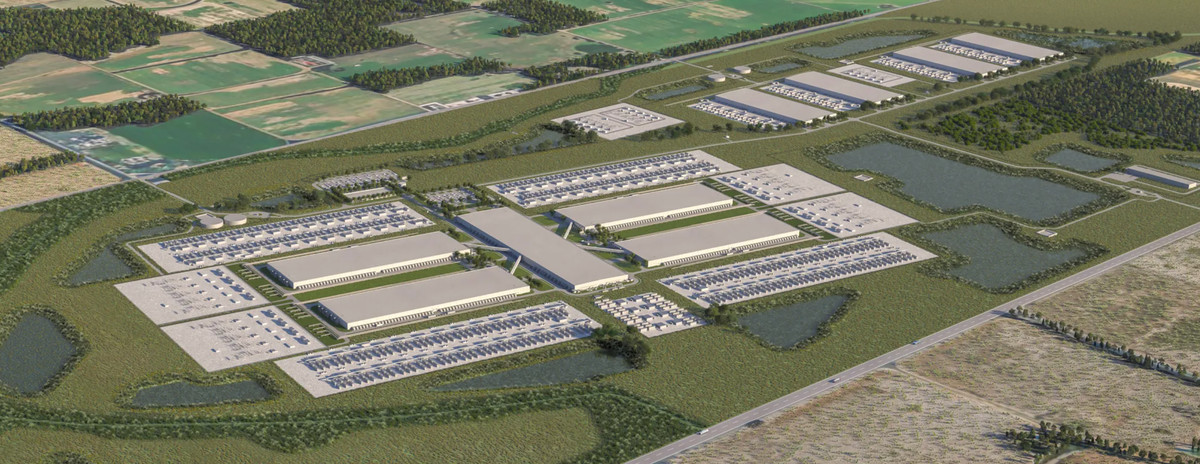
Meta is more than doubling the size of its data center in Richland Parish, bringing thousands of temporary construction jobs, and about 1,000 permanent ones, and getting a public subsidy likely measured in the billions.
Why it matters: Louisiana has spent decades trying to diversify beyond oil, gas and petrochemicals. Data centers offer a new economic engine, though one that consumes enormous amounts of electricity and produces relatively few permanent jobs.
The details: Mark Zuckerberg’s Meta says it will invest $40 billion to expand its Hyperion data center, more than doubling the project's size in rural northeast Louisiana, the company announced yesterday. The original announced investment two years ago was $10 billion. About 7,500 workers will build the center and 1,000 will work there after its completion in 2036.
The bigger picture: AI companies such as OpenAI and Anthropic are spending heavily to build capacity and capture market share, even as many of their services remain free or priced below the cost of providing them. The bet is that customers will become dependent on AI, allowing companies to raise prices later.
Meanwhile, the bears see a familiar technology boom: too much money, too much capacity and too many promises. AI has been pitched as a path to curing diseases and transforming civilization. However, much of its current use involves producing emails and summaries, and search results that older technology already handled more cheaply.
The tax incentive: Under Gov. Jeff Landry, the state passed laws that exempt sales taxes for data center construction, equipment and other expenses. On a project this large, those breaks amount to several billion dollars.
Meta will also receive local property tax incentives, though those are relatively modest because the complex is being built on lower-value rural land. Plus, Meta qualifies for state money to cover 20% of the cost of qualified, high-paying jobs for a period of time.
On the flip side, the data center is being built in a poor part of Louisiana, which had little prospects for other businesses. And the company is paying tens of millions of dollars in local taxes every year, which support education, safety and infrastructure.
The Meta angle: AI remains a risky business, but Meta carries less risk than a startup betting everything on a chatbot.
The company already operates Facebook and Instagram, two enormous international businesses that require vast computing power. That makes it more likely that Meta’s data centers—and the natural-gas plants Entergy plans to build to power them—will remain busy over their lifetimes.
The Louisiana angle: Richland Parish is suddenly busy with construction workers, contractors and businesses serving them. That activity could continue for a decade and produce a significant short-term boom.
But construction crews eventually move on. Once Hyperion is built, the enormous complex will employ 1,000 people. The parish now has a civilian workforce of 8,000 people.
The bottom line: Louisiana is making a multibillion-dollar bet that temporary construction work, a small number of permanent jobs and a new industrial sector will justify the public cost. Meta is making an even larger bet that the world’s demand for computing power—and cat memes—is bottomless.