
Fairways and unfair pasts
BREC’s new chief confronts City-Brooks Parks racist history, outlines vision for park system under his leadership.
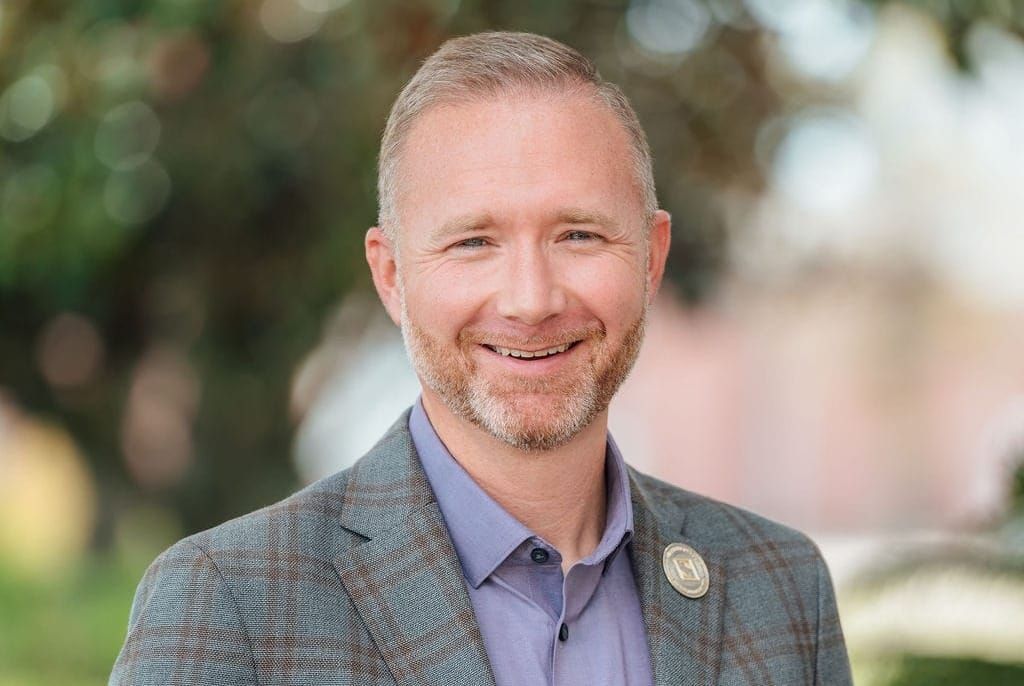
Six weeks into the job, new BREC Superintendent Brooks Williams used a public meeting on the City-Brooks concept plan to argue that residents cannot debate the park's future without confronting its whole past.
Williams said people bring very different histories to the same property. For one family, City Park is where a parent taught a child to golf. For another, it is where access once depended on skin color. He recounted that in 1953, six Black men were turned away from the golf course and sued for the right to use public facilities; that Brooks Park's pool served Black residents excluded elsewhere; and that in 1964 BREC closed its pools two days ahead of court-ordered desegregation, with the City Park pool never reopening.
BREC discriminated against people it was meant to serve, Williams said—but that history can't be used to tell Black residents what they should want today, nor to dismiss those who value the golf course.
He also pressed a hard fiscal reality: keeping something as-is, changing it, and building new all carry costs, and whatever BREC builds it must maintain for decades. That means using resources for their highest use—asking where the system underuses what it already owns, and where better programming might accomplish more than construction ever will.
- Below are Brooks’ complete opening remarks for the final public meeting on the City-Brooks Park Master Plan, held Thursday, Sept. 17.
Well, good evening.
I'm glad that you all are here. I've been at BREC now for about six weeks, and so that makes me newer to the conversation than most of you all are.
I've spent those weeks listening, reading, asking questions, and more than anything, trying to understand why this conversation has become such a difficult one for us to have.
I think part of the answer is that people are not just arguing about a park plan or have opinions about a park plan. They're bringing very different experiences of the same place into this conversation that we're having.
For one person, City Brooks may be where a father taught a son or a daughter to play golf. There's a history in that, and I think there's family in that, and there's something worth preserving in that conversation.
Another family can look at the very same public property through a completely different history, because there was a time in Baton Rouge when whether your father could take you to play golf at City Park, or whether your family could swim in its pool, depended on the color of the skin.
In 1953, most of you know six black men were turned away from City Park's golf course and went to court for the right to use public recreational facilities. Brooks Park pool served black residents who were excluded from City Park schools. In 1964, BREC closed its public pools two days before federal court ordered desegregation, and City Park pool never reopened.
BREC discriminated against people it was supposed to serve, and I bring that up because tonight, if we're going to talk about City-Brooks, and what it has meant to this community, then all of its history has to come in with us. We cannot celebrate one family's memory while unintentionally leaving out another family's experience simply because it might be a little bit more difficult for us to talk about.
I can read history and I can understand it intellectually as most of you can, and we know that what happened was wrong. But I'm not going to know what it was like for a father to explain to this child why they could not swim in that pool or play at that golf course.
At the same time, those six black men went to court because they wanted to play golf. Their story cannot honestly be used to tell black residents what they should want City Brooks to become today, and it cannot be used to say the golf course should go.
And acknowledging BREC’s history does not make someone who wants the golf course to stay any less of a valuable opinion. People are allowed to value golf and value its history. They're allowed to want more programming, greater access, more open space, or some combination of all of it.
And residents are entitled to disagree with one another about those things, just like everybody else is. For me, this is one of the most important lessons in the entire conversation that has been taking place over the last several weeks.
BREC does not get to decide which people have the right memories, which people have the right history or which people have the right vision for the future. Our job is to hear them, including the people who may not have been heard very well, and then make responsible decisions about a public resource that belongs to all of us.
And that brings us to something BREC needs to be willing to say about the process that we've undertaken. We have learned from it. There are things that we could have done better in this process. There are people and perspectives we should have worked harder to reach. There are places where we could have explained things better, and questions that we could have asked sooner.
And I don't say any of that to diminish the hard work that has gone into this process by a lot of people. I say it because BREC has to be capable of correcting itself, and I think we are. If we miss something, we need people who are willing to tell us, which I can tell you from social media and the emails that I have received, we have plenty of people who are willing to tell us.
And if better information changes our thinking, I think that's good. I don't think we need to be in the business of defending something harder just so that we can prove that we can make it right.
Ultimately, getting better is what connects this conversation to something much larger in our parish than City Brooks. There is a serious conversation taking place right now about the future of Baton Rouge and East Baton Rouge Parish. How do we become a community where younger families want to build their lives here? How do we keep families who are already here raising children? What are the things that make someone choose this community in the first place, but then choose to stay in this community permanently.
Parks are a part of that answer. I do not believe they are the answer, but I believe they are a part of it. Our schools are a part of it. Our public safety is a part of it. Jobs, neighborhood, transportation, culture, and everyday experiences of raising families are a part of it.
BREc has a role to play in it, and we're going to take that role very seriously. That's why I believe it would be foolish to dismiss the possibilities at City Brooks simply because change for us can be uncomfortable.
I also believe it would be equally foolish to convince ourselves that every good idea has to happen at City Brooks, or that one park is somehow going to determine the future of the parish, and that's really what this entire concept has been about.
Before we decide what we should be, we have to give ourselves permission to wonder what could be, and that's what this process is. You put ideas on paper so people can see them, question them, change them, combine them with something better, or decide if they make sense at all.
A concept plan is not a commitment. By its very nature, it has not been fully phased. It gives us something to react to, so that the better questions that we ask can lead to better decisions for us as a community,
We operate a parish-wide park system. So those questions don't stop at City Brooks for us. These are the questions I want us asking throughout. Where are we underusing what we already own? Where could better programming accomplish more than construction ever will? Where should we invest, and where are we continuing to do?
Simply because we've always done it that way, keeping something exactly as it is has a cost. All of you know changing it has a cost. Building something new has a cost, and whatever we do, somebody is going to have to maintain that five years from now, 10 years from now, and 20 years from now, and that has to be a part of our decision.
And throughout all of this, I don't think we can forget the people who are easiest to miss because BREC belongs to all of them too.