Sasaki's conservancy call
A new nonprofit could run City-Brooks Park, University Lakes and Wampold Beach—if BREC, LSU and the city-parish agree.
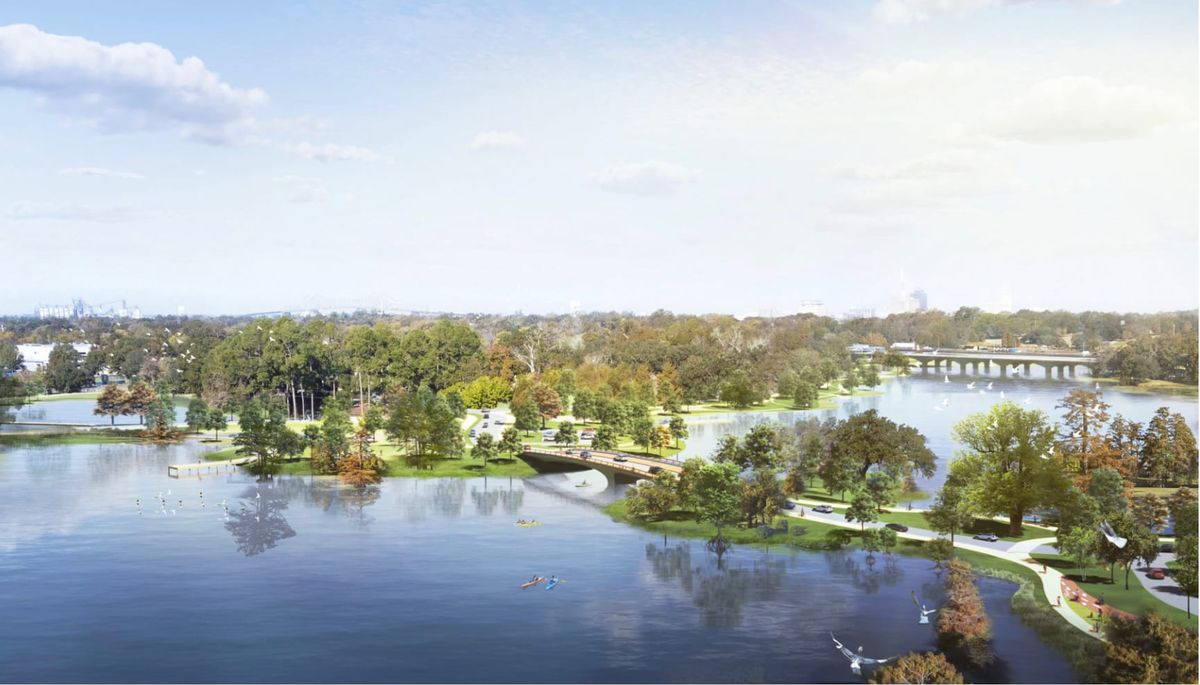
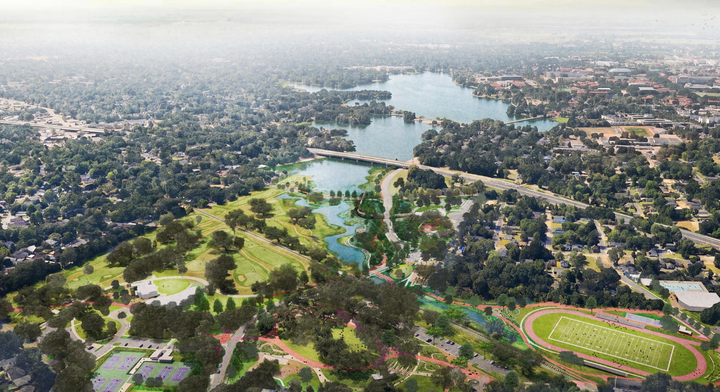
Sasaki is recommending that a conservancy be created to manage City-Brooks Park, University Lakes and Wampold Beach for the next quarter-century. If Baton Rouge thought the park debate was contentious, expect fireworks as the three public agency landowners now decide whether to say yes.
A BREC official is already offering a cautionary warning, telling RedEye the 91-page report and projected commitments are Sasaki's recommendations, not decisions.
Why it matters: Conservancies have a miles-long track record managing public assets across the country and in Louisiana, but this is Baton Rouge, so there's squeamishness about the prospect of BREC, LSU and the city-parish handing day-to-day control of three quality-of-life public assets to a newly created nonprofit.
The ask: Sasaki's finalized governance memo recommends a new 501(c)(3) conservancy, created through a single Cooperative Endeavor Agreement among BREC, LSU and city-parish government.
- BREC, LSU and the city-parish would then sign an auto-renewing 25-year lease, handing the conservancy authority over funding, maintenance, programming, security and capital investment.
- The agencies get a performance check-in every five years.
- Land ownership remains with BREC, LSU and the city; the conservancy is an operating manager.
Where they stand: BREC has tipped its hand. LSU hasn't.
- BREC officials have signaled a preference for the conservancy model.
- LSU President Wade Rousse is being lobbied by politicians and boosters on both sides, while Rob Stuart, who heads University Lakes LLC, the LSU Foundation subsidiary running the lakes project, has stayed publicly noncommittal.
Who runs it: A 23-person board, split into two tiers, would decide how the conservancy does business.
- Tier 1, seven members with veto power, would include the mayor-president, two Metro Council members, a BREC Commission member, the BREC superintendent, the LSU president and a state appointee.
- Tier 2, 16 members, would include the Knock-Knock and Baton Rouge Gallery directors, a philanthropy-focused seat—with BRAF named as the example—LSU and city representatives, and eight rotating neighborhood and at-large seats.
- Neither Friends of City Park nor any single neighborhood association holds a permanent seat on the board—the four neighborhood seats rotate.
Star treatment: Three existing operators inside City-Brooks Park would get their own carve-outs under the proposal, and none would transition on day one.
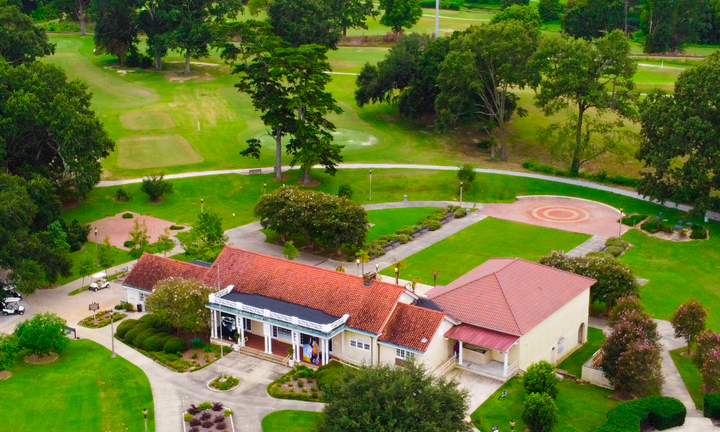
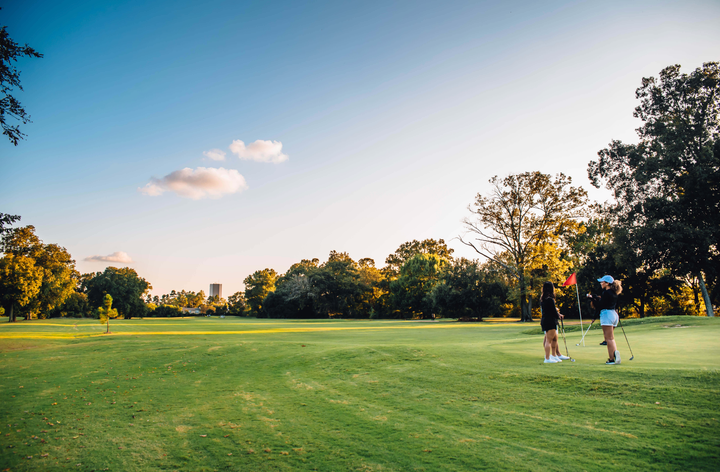
- The golf course would keep running as-is short term, with a private operator eyed long term to grow revenue.
- Knock-Knock would keep its building rent-free. BREC would finish HVAC repairs first, then hand over the surrounding grounds.
- Baton Rouge Gallery's expansion continues under BREC; the conservancy would eventually replace BREC as its counterparty.
The money: Sasaki recommends $1.6 million a year in base funding—50% from BREC, 25% from LSU, 25% from the city-parish—but nobody's agreed to pay it yet.
- The report lists "solidifying financial commitments" as its first unresolved action item, targeting a decision by early 2027.
- BREC already spends close to $1 million a year on the park, barely moving the needle on its recommended share. LSU and the city-parish, both under $100,000 today, would see real increases.
- Beyond that base, the model leans on earned income, a hoped-for endowment, grants and, eventually, a taxing district the report calls unrealistic.
- No bank, fund manager or financial institution is named anywhere to hold or invest the money.
The timeline: Under Sasaki's proposed phasing, nothing here moves fast.
- An executive director would be hired within the conservancy's first three years, with full City-Brooks maintenance (minus the golf course) following after that.
- A first completed capital project isn't projected until year five at the earliest.
- Real independence from BREC, LSU and the city-parish wouldn't arrive until year 10 or later.
Why supporters back it: This isn't exactly an untested model and there's a solid operational and fiscal rationale for it.
- One team, one focus: For years, no single entity has been fully responsible for City-Brooks Park or the Lakes—supporters argue a conservancy's dedicated staff ends the pattern where upkeep falls through the cracks of three-way ownership.
- It's worked elsewhere: Houston's Hermann Park, New Orleans' City Park, Oklahoma City's Scissortail Park, Atlanta's Piedmont Park and Lafayette's Moncus Park all used the same model to turn underfunded public parks into destinations, without privatizing the land itself.
- More money, not more taxes: The pitch is a conservancy can pull in grants, endowments and earned income that a government agency generally can't, expanding what's offered without raising what taxpayers already pay.
Critical minds want to know: Conservancies managing public assets are common across the country, but in Baton Rouge, "conservancy" has somehow become a four-letter word.
- One project or two: City-Brooks Park and University Lakes began as separate efforts—BREC's own FAQ calls them "three distinct but closely related efforts," now merged into one conservancy.
- Money and transparency: Nobody's committed to the $1.6 million funding target yet, and the report's own promise of financial disclosure is only "voluntary alignment" with public-records law, not a requirement.
- BRAF: The foundation gets two mentions—once on the steering committee, once as an example pick for a board seat—and nowhere else.
- The golf course: There are no protections preventing the conservancy from eventually altering or closing the course.
- The legality: An objection already circulating is whether a Cooperative Endeavor Agreement alone can hand public-asset management to a nonprofit—even BREC's own counsel calls it untested.
The bottom line: This isn't a fight over a park design or enhancing a lakes system. It's a decision about who holds the keys to them for a generation. Sasaki has delivered its verdict, but the decision rests with BREC, LSU and the city-parish.