
Baton Rouge is spread out, spread thin
Baton Rouge has become one of America’s most sprawling cities, spending decades pushing outward one subdivision and strip mall at a time, swallowing vast amounts of land without adding many more people.
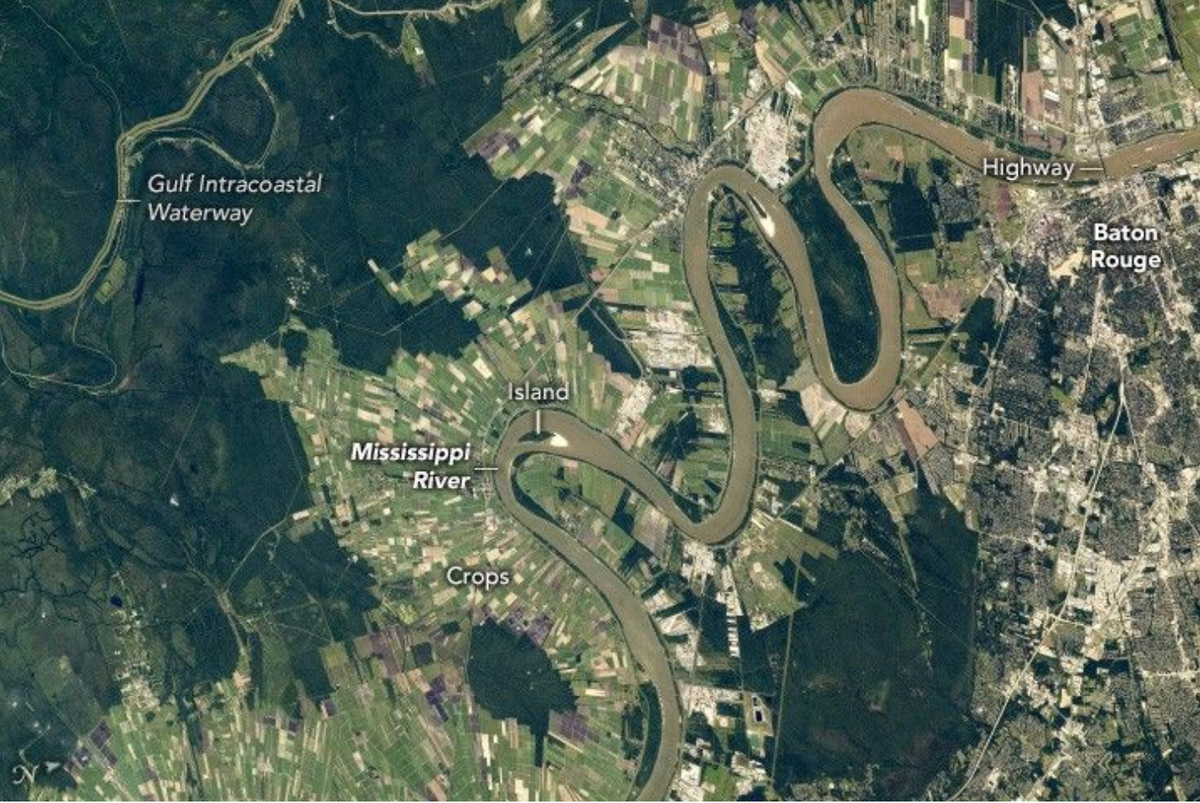
Baton Rouge has become one of America’s most sprawling cities, spending decades pushing outward one subdivision and strip mall at a time, swallowing vast amounts of land without adding many more people.
Now there's a report card for it. Johns Hopkins Bloomberg School of Public Health’s sprawl index ranks the Baton Rouge metro area as the second-most sprawling in its population tier: 500,000 to 1 million residents. Fayetteville, N.C., won the top dishonor.
Why it matters: Cities that spread thin instead of building densely pay for it in real, measurable ways—higher energy costs, worse health outcomes, more social isolation, and fewer opportunities for kids. Johns Hopkins researchers also pushed back on the familiar pro-sprawl argument that density makes housing unaffordable. When you factor in transportation and energy costs alongside housing, compact cities come out ahead, researchers calculated.
How they measured it: Johns Hopkins built the index around four dimensions—residential and employment density; how well neighborhoods mix homes, jobs, and services; the strength of downtowns and urban subcenters; and the connectedness of the street network. Baton Rouge underperforms on all four, dragged down by its own sprawl and that of Ascension and Livingston.
By the Numbers
- Baton Rouge metro: 2nd most sprawling in the 500K–1M population category. The metro includes surrounding parishes.
- Parish-level rankings (out of 995 nationally): West Baton Rouge Parish came in at 150—surprisingly compact relative to its neighbors. East Baton Rouge ranked 636. Ascension came in at 821. Livingston Parish landed at 984—nearly the bottom of the entire country.
- Orleans Parish, for comparison, ranked 19th least sprawling parish in the nation. New Orleans is built vertically and is hemmed in by low-lying areas.
What They're Saying: "Baton Rouge has disinvested in itself," Josh Brooks, an LSU and MIT-trained urban planner who leads the City Park master plan, said after a recent conversation with local media. "The population hasn't really grown in decades, but, geographically, we've just spread out. And that just means less resources to spend on the land and infrastructure that has to be managed."
The good news: Baton Rouge has not ignored sprawl entirely.
Government Street and Mid City are the clearest example. The road diet turned a fast corridor into something more walkable, safer and more useful. The Baton Rouge Health District is trying to retrofit itself for people, not just cars. The apartment boom near LSU is putting more people where the city already exists.
Downtown matters as well. So do City Park and the lakes. Make those places better, and more people will want to live around them.
What a fix looks like: Researchers and planners point to a toolkit of changes that don't require tearing anything down—just building and retrofitting smarter from here:
- Street connectivity: Require new developments to follow connected grid or semi-grid patterns. Fewer cul-de-sacs. Fewer gated subdivisions that dump all their traffic onto one arterial road.
- Green mobility corridors: Linear parks, greenways, and protected cycling routes that connect neighborhoods to each other and to commercial centers.
- 15-minute neighborhoods: Plan so that schools, groceries, healthcare, and recreation are reachable within a 15-minute walk or bike ride.
- Small business incentives: Reduce permitting costs and streamline approvals for local shops and services in residential areas. Walkable neighborhoods need things to walk to.
- Parking reform: Eliminate or reduce minimum parking requirements, which currently mandate that huge portions of urban land sit empty most of the day. Shared parking is cheaper and should be implemented.
- Co-located public facilities: Put schools, libraries, health clinics, and community centers together in mixed-use developments. The new Southeast Branch Library in Rouzan is a local model worth replicating.
- Retrofitting suburbs: Add pedestrian and cycling cut-throughs, secondary streets, and mid-block crossings to break up the superblocks that make existing neighborhoods so hard to navigate without a car.
The bottom line: None of this requires Baton Rouge to become New Orleans or New York. It just requires, more often than not, choosing to build in ways that serve the people already here rather than subsidizing the next wave of outward expansion. The ranking shows a problem, but it also offers a map. The directions are right there.