Walking without worry
Baton Rouge is perilous for pedestrians. City and state officials are trying to make it safer. Here are a few more ways to keep walking from becoming an act of faith.
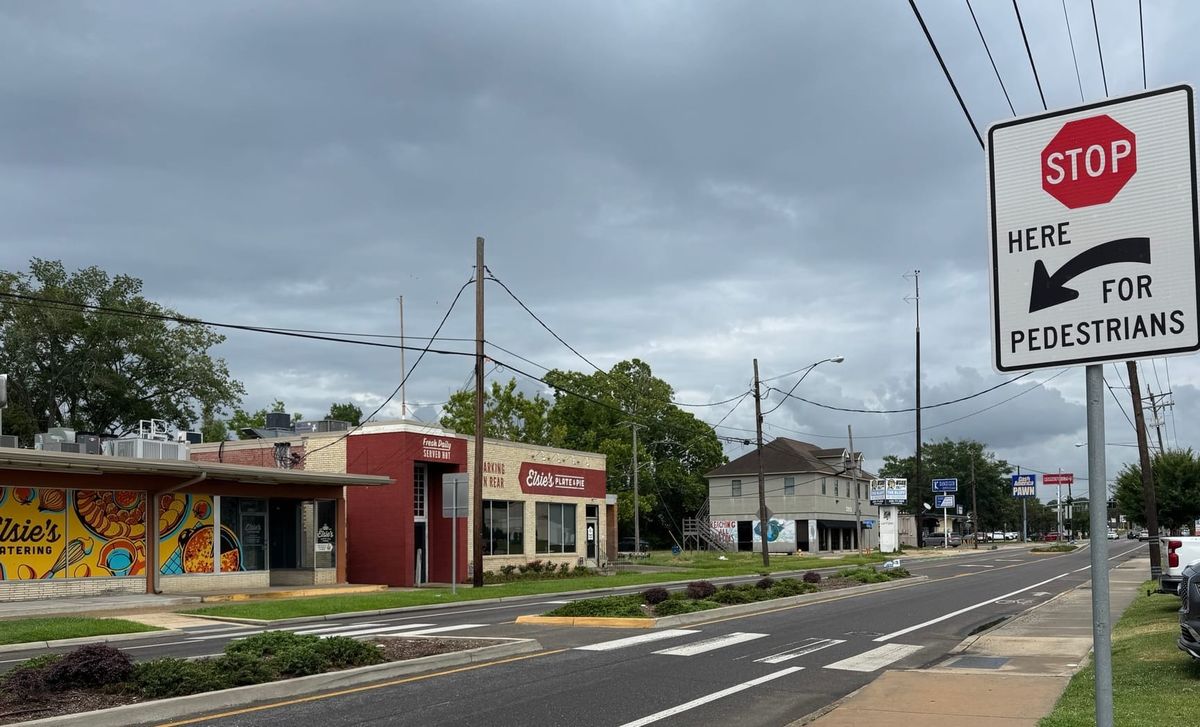
Baton Rouge remains one of the most dangerous cities in America for doing a thing most of us learned as toddlers: walking.
Why it matters: People should be able to walk to a store, a school, a bus stop or a neighbor's house without worrying that a vehicle will hit and kill them. That ought to be enough. But there is a civic argument, too. Safe walking gives people another way to move around the city. It improves daily life, especially for people who do not drive. And it can reduce traffic by turning some short car trips into foot trips.
By the numbers:
- Baton Rouge ranked No. 5 among U.S. cities for pedestrian deaths per 100,000 residents in 2024, according to a Smart Growth America report issued this month. Only Memphis, Albuquerque, Bakersfield, and Tucson ranked higher.
- Louisiana ranked second among states for pedestrian deaths per 100,000 residents. New Mexico was first. Arizona was third.
The reasons:
- The deadliest roads are often wide, fast, multi-lane state corridors built to move cars and cargo. Think Florida Boulevard.
- Nearly two-thirds of fatal pedestrian crashes happen where there is no sidewalk. About 76% occur after dark.
- Bigger vehicles make the problem worse. Pedestrian deaths involving SUVs jumped 81% in the most recent period studied.
- Alcohol is a factor in 40% of fatal pedestrian crashes.
The Baton Rouge angle: Give the city and state some credit. Both have started putting real money into walking infrastructure.
- Sidewalks have been repaired and new ones are being built. An example: Florida Boulevard is getting sidewalks from near downtown to Airline Highway, along with safer crosswalks.
- Baton Rouge also lowered speed limits in residential areas to 25 mph.
- Government Street has been reworked for safety, and crashes there have gone down.
- Baton Rouge is building complete streets as part of its MovEBR infrastructure plan.
What could help: The U.S. Department of Transportation points to several fixes that cities have used to reduce pedestrian deaths and crashes.
- Start with left turns. Downtown Baton Rouge allows left turns from one-way streets. That can be dangerous because drivers often look right for oncoming traffic when turning left, missing pedestrians crossing with the light.
- More road diets, replicating the Government Street example. Converting a four-lane road into three lanes—one lane in each direction, plus a center turn lane—can cut total crashes by 19% to 47%.
- Raised crosswalks, which combine a crossing with a speed hump, can reduce pedestrian crashes by 45%.
- Pedestrian refuge islands give walkers a safe place to pause halfway across a wide road.
- Raised medians on busy multi-lane roads can reduce pedestrian crashes by nearly 50% on roads carrying 15,000 vehicles a day.
The bottom line: Baton Rouge has started to treat walking safety as a real problem. Now it needs to treat it like an urgent one. Because a city where walking is safe gets a healthier population, less traffic as people walk more, and the benefits of good design.