
The ugly truth about watermelon
Choosing a ripe watermelon requires old wives’ tales, farmer wisdom and a willingness to admit you don't know better.
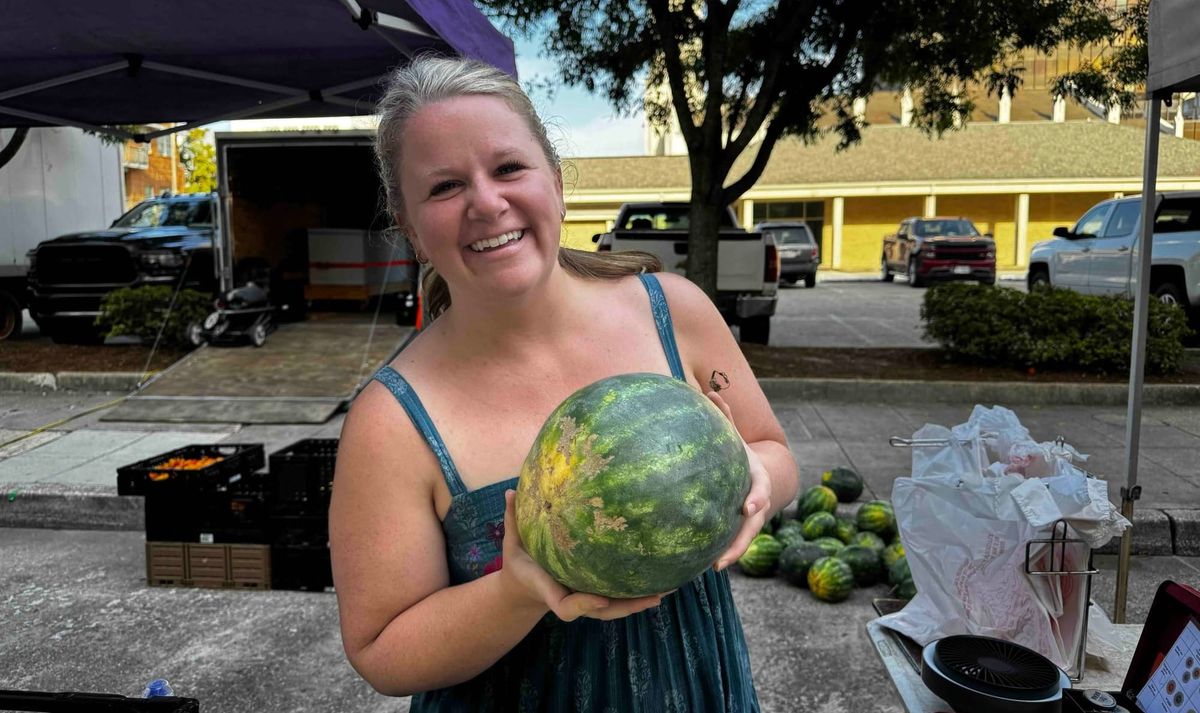
The watermelon keeps its secrets.
A mango or pineapple will tell you when it’s ready. You can smell the sweetness before you cut it open. Strawberries practically announce themselves by color.
But a watermelon just sits there like a green safe, daring you to crack the code.
To choose watermelons, we turn to old wives’ tales and grocery-store theater. Some people thump them, listening for a deep, hollow sound that supposedly signals a good melon. Others lift one melon after another, looking for the one that feels heavier than its size. In watermelon country, heft is hope.
So how do farmers choose?
“The uglier, the better,” said Hannah Kelly of Living Acres farm, who was selling seedless watermelons for $8 apiece Saturday at the Red Stick Farmers Market.
She worked through the pile to show off the signs. The bottom, known sweetly as the “belly button,” should be small. The best melons often carry brown webbing across the rind, those rough little scars that look like flaws but are a signal of sweetness.
Our advice: Stop pretending you know what you’re doing. Let the farmer at the market, or the person selling from the back of a pickup, choose for you. The experts know.