The spam politicians won't ban
Campaigns are blowing up smartphones with text messages. You may hate them, but the evidence suggests they work.
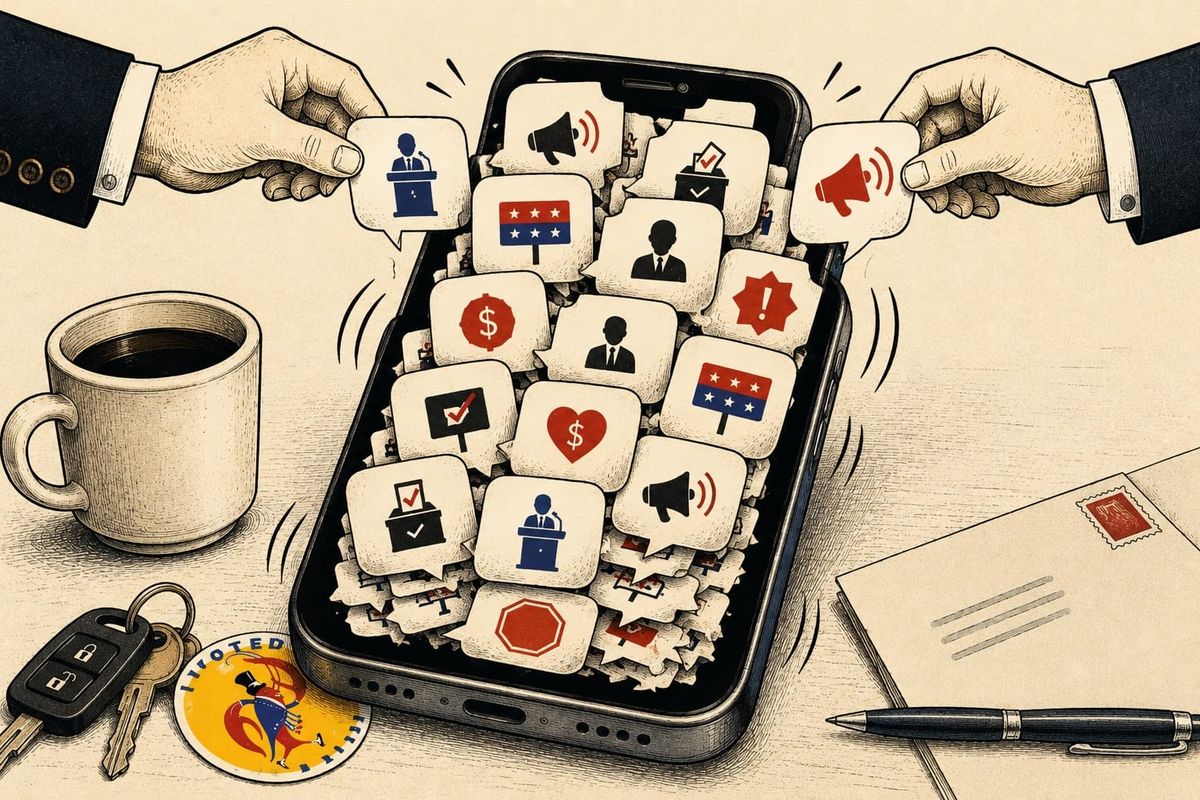
What the … ding?!?! Why are we—ding!—being assaulted with so many—ding!—text messages from—ding!—from political candidates, PACs and advocacy groups, and can anything be—ding!—done about it?
Why it matters: Baton Rouge smartphone owners have been inundated with text messages this campaign cycle, now the preferred messaging battleground. The people making us nuts are the same ones who could stop it, and they chose not to.
- Your number was never really private, the texts are cheap and they work.
- The legal off-ramp that could fix this was written by the very people sending them.
A numbers game: Two pipelines feed the machine.
- First, voter registration records are public in most states—registering to vote is, functionally, signing up to be contacted.
- Second, data brokers aggregate information from hundreds of sources and sell it to campaigns for pennies per name. What you drive, where you browse, what you buy—all of it gets packaged and sold.
- Campaigns didn't build this system. They just showed up with a credit card.
The math is ruthless: Studies report an open rate of 98% for text messages, with responses typically coming within 3 minutes.
- Email open rates hover around 20%.
- Americans received 16 billion political texts in 2022—a 158% increase from the prior year—while political calls dropped 57% over the same period. The 2024 cycle blew past that, with an estimated 25 billion texts sent before Election Day alone.
- Old-school mailers still arrive, but they've been lapped badly. Texts are faster, cheaper and harder to ignore.
Can you stop it? Sort of. Replying STOP to a legitimate campaign should remove you from that organization's list entirely—not just that number.
- But PACs and shadier operations are a different story. As one call-blocking CEO put it, spammers often have "a whole bunch of different numbers they use"—blocking them one by one is whack-a-mole with no end.
- You can also report unwanted texts by forwarding them to 7726 (SPAM).
- Don't click links in political texts. If you want to donate, go directly to a candidate's official website.
The big picture: The reason none of this is truly fixable comes down to a cozy legal carve-out.
- Political campaign texts are exempt from the National Do Not Call Registry—the same consumer protection politicians routinely tout as a win for constituents.
- The loophole exists because campaigns use volunteers' personal phones to send texts directly to voters, which the FCC classifies as person-to-person messaging and therefore outside the tightest regulations.
- It's legal, it's intentional and the people who benefit from it write the laws.
The bottom line: There's not much you can do—ding!—but be thankful the field was thinned this past weekend—ding!—and the constitutional amendments settled … ding!