The health care hustle
Health care costs aren't rising as fast as you might think. So why is your insurance bill going through the roof?
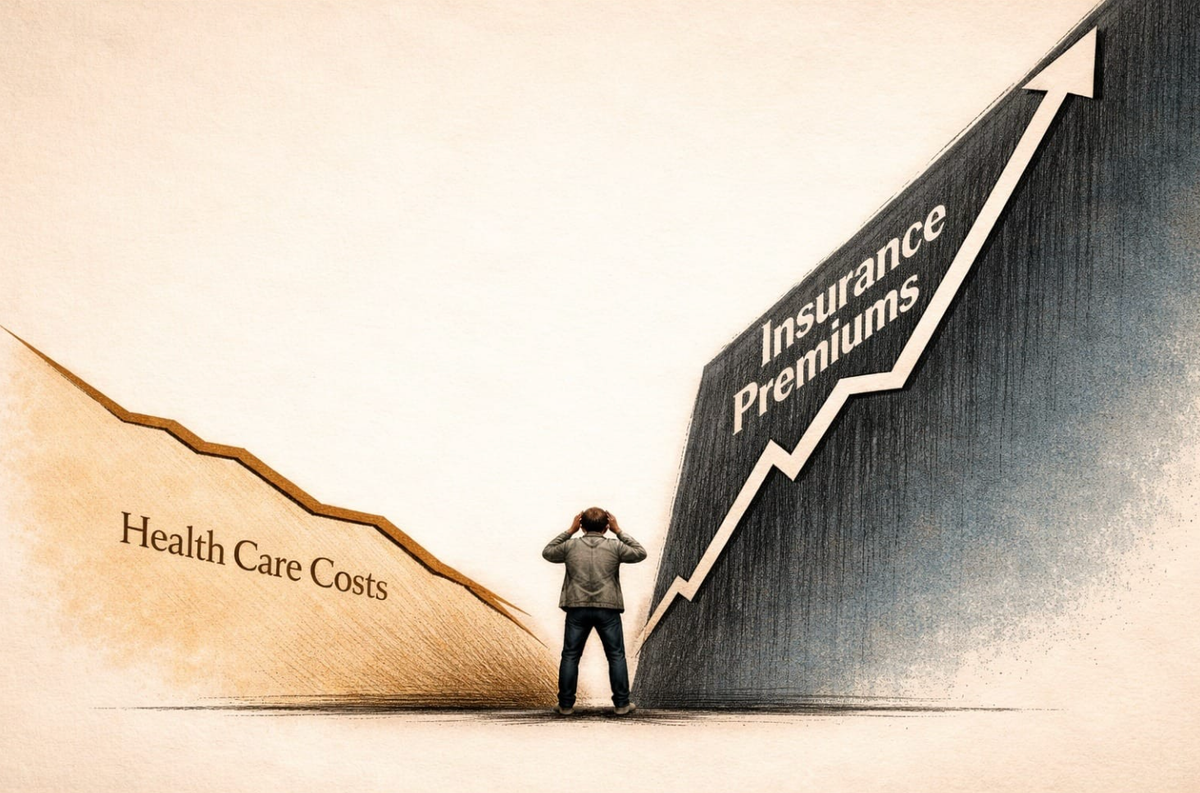
A sentence I never thought RedEye would write: Health care costs aren't rising as fast as you might think. So why is your insurance bill going through the roof?
The short answer: those are actually two different things. Whether you get coverage through your job or buy it on your own, you already know the difference. You felt it when this year's bill arrived.
The big picture: The U.S. spent more than $5 trillion on health care in 2024—about 18% of the economy. That sounds enormous, and it is. But government forecasters predicted it would be nearly $1 trillion higher by now. A new Brookings study called the slowdown "unprecedented historically." No 14-year stretch since 1960 has seen slower growth in medical spending relative to the overall economy.
So what's working? Two things, mostly:
- Treatments are getting better and cheaper at the same time. Outpatient surgery replaced expensive hospital stays. Generic drugs replaced brand-name drugs. Better medications are preventing costly illnesses before they start.
- As Brookings economist David Cutler puts it: "Treatments that are less difficult on the body turn out to be less difficult on the wallet."
Your premium is a different story. The system-wide slowdown is real. What's hitting your wallet is something else—actually, several things at once.
Insurance through your job: You're not imagining it. Total health benefit cost per employee is expected to rise 6.5% on average in 2026—the highest increase since 2010.
- Family premiums have grown about 25% over five years. And your employer is passing more of that cost to you.
- Nearly 60% of employers will make cost-cutting changes to their plans in 2026—up from 44% in 2024. Those changes generally mean raising deductibles and other cost-sharing provisions.
- Translation: Even if your premium stays flat, you're paying more out of pocket every time you actually use your insurance.
Buy your own coverage: The hit is harder. Louisiana saw an overall average premium increase of 23.7% for 2026. And for the nearly 300,000 Louisianans who rely on ACA marketplace plans, the federal subsidies that kept premiums manageable expired at the end of 2025.
- During 2025 open enrollment, 96% of Louisiana marketplace enrollees qualified for federal subsidies averaging $593 a month—reducing the average net premium to about $50 a month.
- That math no longer exists. A 60-year-old couple in the Baton Rouge area earning $85,000 could see their annual premiums jump more than 300%.
So what's driving all of it?
- Hospitals got big. Really big. Over the past two decades, hospitals bought up other hospitals, doctors' offices and clinics. Now they have enormous leverage when negotiating rates with insurance companies. Those higher rates get passed to employers—and then to you.
- Ozempic and its cousins. Weight-loss and diabetes drugs like Ozempic are wildly popular and wildly expensive. Prescription drug spending rose 9.4% on average among large employers in 2025. That cost gets spread across everyone's premiums.
- Tariffs, of all things. Medical equipment and drugs often come from overseas. New tariffs are making those more expensive, and insurers are passing the cost along.
Honest summary: The health care system as a whole is slowly getting its act together. But your insurance bill is getting hit by hospital leverage, a drug revolution, a federal policy reversal and basic market math—all at the same time. Those are harder problems, and nobody's really solving them yet. Congress created part of this mess. Congress could fix part of it.