LSU's Black enrollment boom
African Americans are nearly 20% of total enrollment. To make that so, the university got out of its own way.
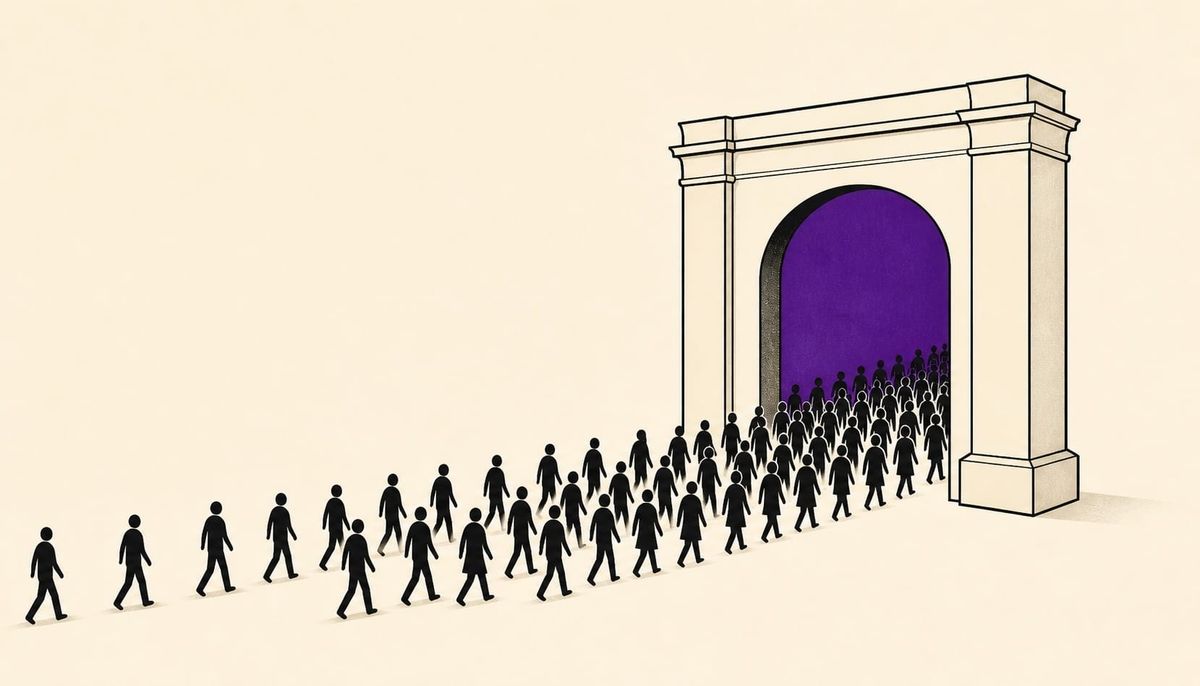
Enrollment of African American students at LSU has quietly become one of the more remarkable stories in Louisiana higher education—and one that's gone largely untold.
Why it matters: A diverse student body makes a university smarter and better equipped to produce graduates who can lead in the real world. For Baton Rouge, more students at LSU means more economic activity, more talent, more cultural weight. That's true regardless of who those students are.
The state of play: LSU communications did not respond to calls or emails requesting comment, including outreach to the head of enrollment. Like many universities, LSU has gone quiet as Gov. Jeff Landry administration intensified its attacks on DEI programs. This story relies on public enrollment data and background conversations with LSU staff.
By the numbers:
- LSU's Baton Rouge campus had more than 6,600 Black students in spring 2025—more than double the 3,219 enrolled in spring 2015.
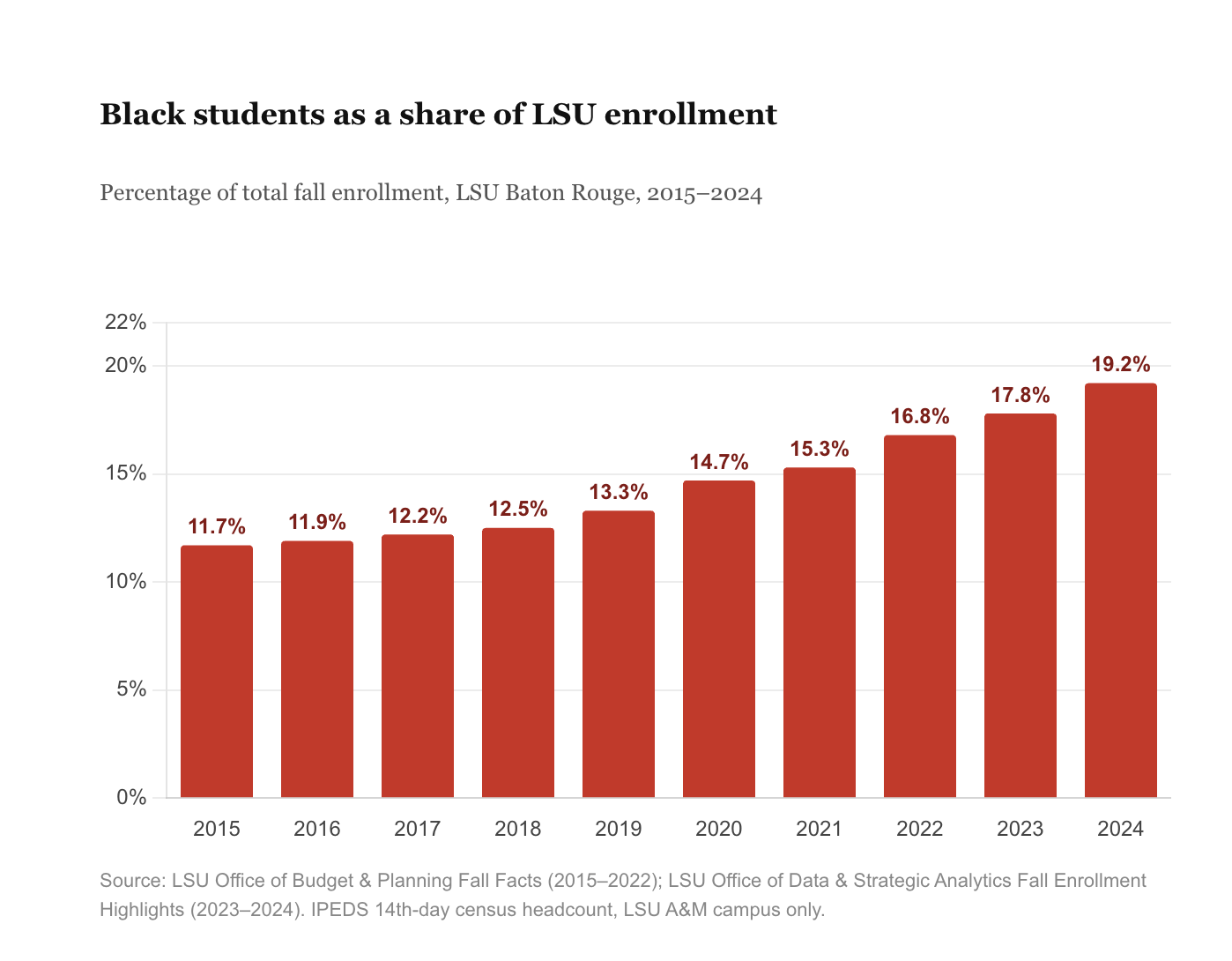
- Black students made up 19.2% of total enrollment in 2024, up from 11.7% in 2015.
- That's a shift from roughly 1 in 9 students to nearly 1 in 5 in less than a decade.
The backdrop: LSU is now at record enrollment, topping 41,000 students on the Baton Rouge campus. For years, the university lagged behind peers like Alabama, which had built sophisticated enrollment operations while LSU improvised. That changed when former enrollment director Jose Aviles brought discipline and intentionality to recruiting. The university needed tuition revenue. Enrollment followed.
What happened: LSU started doing what other universities had been doing for years—actively recruiting high schools with predominantly Black student populations. No secret initiative. No special program. Just the standard machinery of enrollment, applied with purpose.
A longtime professor put it plainly: LSU got out of its own way. It set aside a racist past not necessarily to do the right thing, but to do the normal thing.
Meet one student: Jaheim Scott grew up in Coral Springs, Florida, watching LSU football on television. He wanted to leave home for college and had Michigan on his list. But a campus visit to Baton Rouge changed the calculus—the energy, the live tiger, the scale of it all.
He landed at LSU for reasons both practical and personal. "A beautiful campus, affordability and the opportunities here," he said. LSU offered more financial aid than competitors. He could play lacrosse, a sport he'd loved in high school. The law program appealed to him; he's studying political science with law school in mind. And the university stayed on him throughout the process—following up and keeping him on track with paperwork.
What's interesting: Scott doesn't think the growing number of Black students at LSU is a particularly big deal. He doesn't dwell on the fact that LSU recently had a Black president-chancellor. That may be exactly the point. LSU may have made it feel normal to be here.
That former chancellor, William Tate, now leads Rutgers, and he picked Aviles to turnaround enrollment there.
The bottom line: LSU didn't engineer a diversity initiative. It opened the door wider and started recruiting like it meant it. Black enrollment followed.