
LSU goes boom
Soaring enrollment is a chance for the parish to grow in population, as Tuscaloosa did with Bama
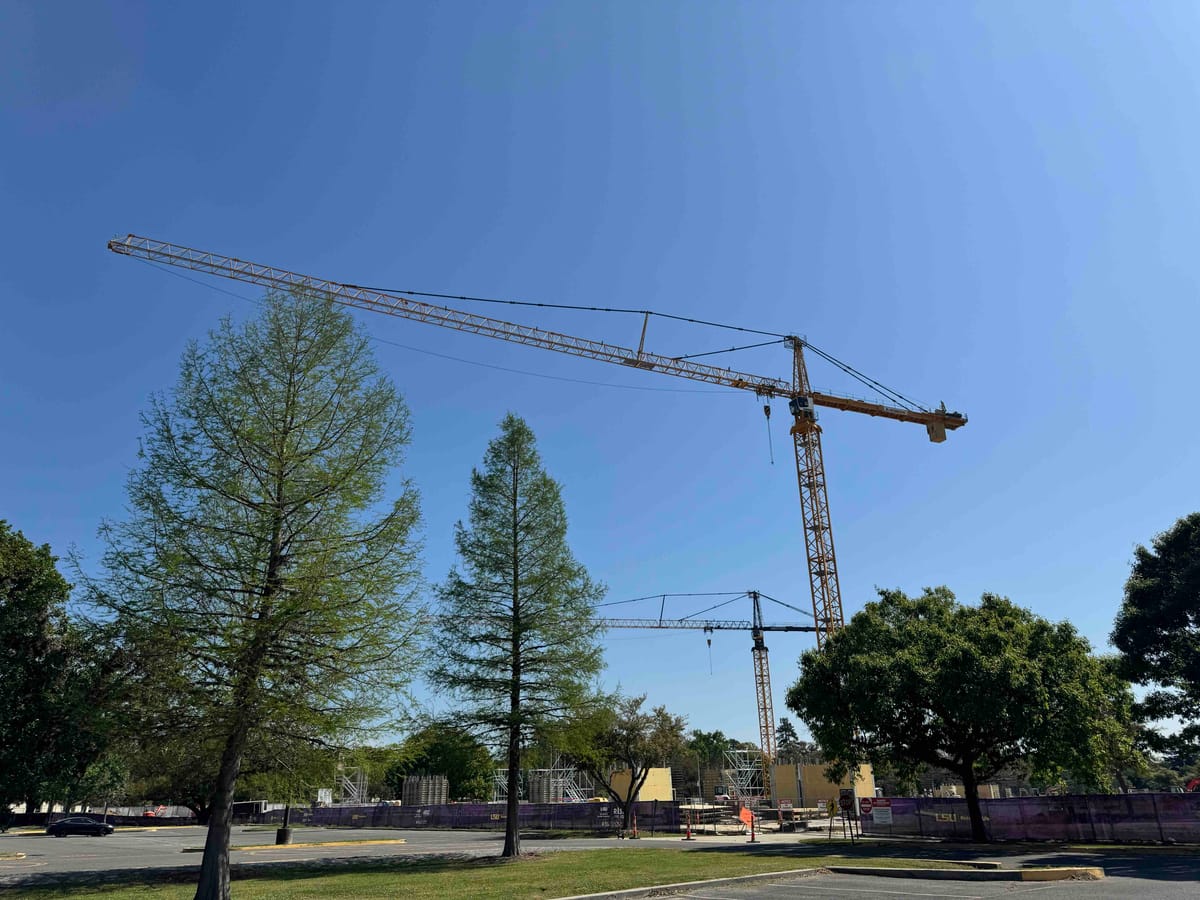
A rule of thumb: Want to know where growth is happening? Look for cranes in the sky. By that measure, LSU is helping drive one of Baton Rouge’s clearest economic booms. The question is whether the city will leverage it to prosper.
The details: LSU set another total enrollment record in fall 2025. Enrollment has risen every year since 2016, with the sharpest growth from 2019 to 2025. Over that stretch, the student body grew 36.6%, reaching 43,385.
What changed: Athletics helped. Winning football, women’s basketball, gymnastics and baseball teams have made LSU more visible. So have celebrities like Livvy Dunne. High school juniors and seniors notice where the energy is, and LSU has said that winning teams draw students, particularly from the cold Northeast.
But the bigger shift was less glamorous: LSU got serious about enrollment. The university understood that attracting more out-of-state students meant more tuition revenue, which could be used to strengthen the institution.
The Nick Saban of enrollment: LSU brought in José Avilés to modernize its enrollment strategy, and much of the growth came during his tenure. His results turned heads. He later boosted enrollment at Temple and was recently hired by Rutgers to do the same.
One more thing: LSU also changed admissions. It moved away from relying only on test scores and GPA, opening the door to more applicants at the Ole War Skule. Countering complaints, LSU has offered data showing that student performance did not suffer after the exam requirement was waived.
ACT scores are now required again, but there is no minimum score for admission.
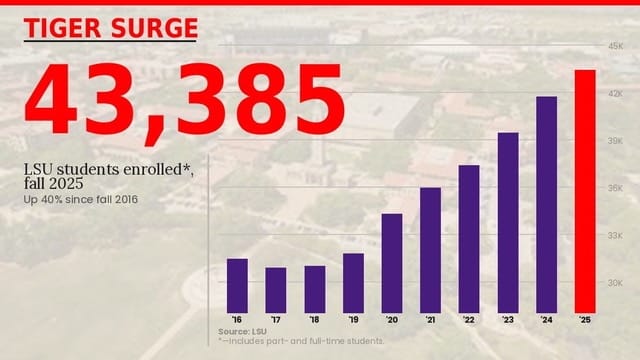
The resulting boom: More students meant more demand for housing, especially from out-of-state students who cannot simply live at home. The surge has been dramatic. LSU says more than 62,000 prospective freshmen applied this cycle, up from 18,122 in 2016.
Enrollment growth is now reshaping the area around campus.
By the numbers: More than 4,000 student beds are open, planned or under construction near South Gate and along Burbank.
- LSU’s South Quad project will add 1,266 on-campus beds by fall 2027.
- Park Place has been open for nearly a decade with about 800 beds.
- Flatiron opened last year with nearly 300 beds.
- Sterling Tiger Valley, with 845 beds, is under construction and set to open by fall 2027.
- Sterling Southgate, with 899 beds, is scheduled for fall 2028.
Why it matters: Students bring spending with them, between $1,500 and $2,800 per month on housing, food, entertainment and transportation. That money shows up quickly in sales tax collections, apartment construction and the restaurant economy. You can already see it around Lee and Burbank, where restaurant chains have piled in around an old standby, Mike Anderson’s.
The model: LSU did not invent this playbook. Alabama was there first.
Under former president Robert Witt, the University of Alabama turned itself into an enrollment machine, more than doubling its student body to 42,000 over two decades. It aggressively recruited the brightest of students in affluent out-of-state markets. Many early recruits came on scholarships. The students who followed often paid full freight—the national profile of Saban and a winning football program added to the marketing.
Today, about 60% of Alabama’s students come from out of state.
A lesson for Baton Rouge: Tuscaloosa did not just absorb that growth. It leveraged it. Mayor Tim Maddox says the city invested in infrastructure, reducing crime and improving the quality of life.
So the city grew alongside the university, from 98,332 residents to 114,288 over the past decade. University leaders say Alabama now supports nearly 14,000 jobs and generates $50 million in annual sales taxes.
The bottom line: Baton Rouge, which has struggled with population growth, has an opening here. Parish leaders can treat the LSU boom as a nice side effect and pocket the tax revenue. Or they can use the windfall to invest in infrastructure and quality-of-life projects around the university and elsewhere, giving students a reason to stay while drawing more people to the parish.