Join or die

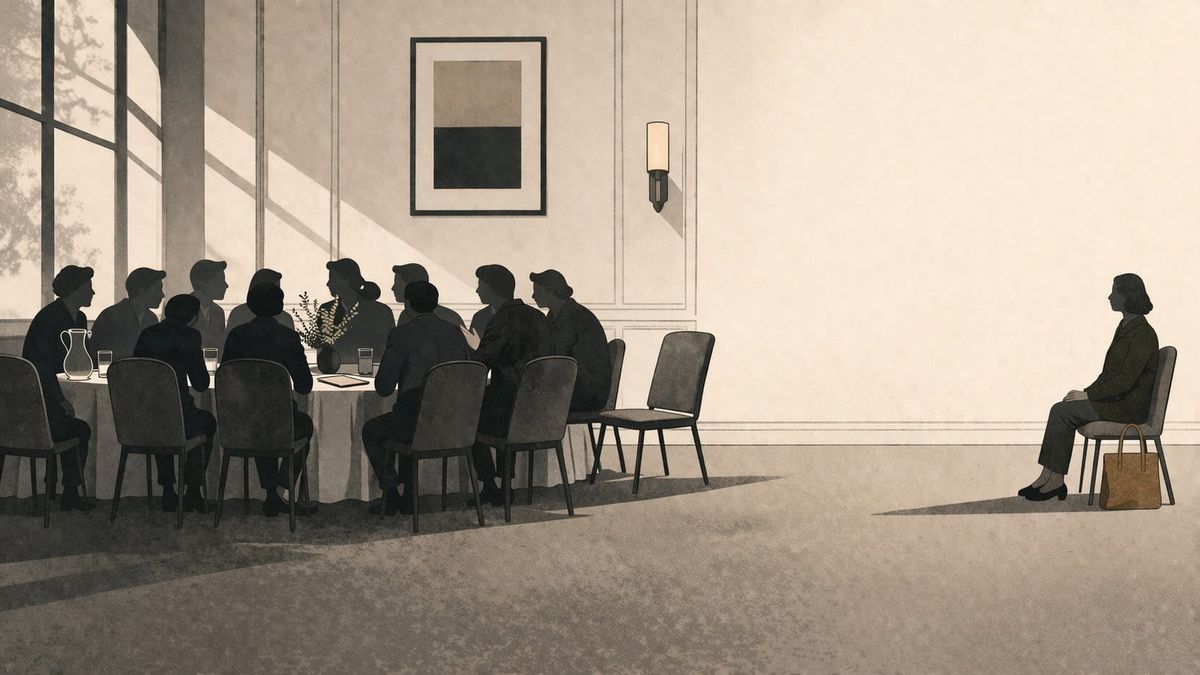
When a city can't make room for new voices, the people who carry them eventually stop showing up—or stop staying.

Join or die
(RedEye illustration)

They come for the jobs. Some come for LSU, stick around after graduation and decide to give it a shot. A few come because someone sold them on the potential, and Baton Rouge has always had potential to sell. They arrive optimistic. They try to plug in. They go to the events, join the organizations and show up to the meetings. And then, somewhere between the second and fifth years, they start doing the math.

The city they were told was on the verge of turning a corner looks pretty much the same as it did when they arrived. The rooms where decisions get made have the same people in them. The projects that were almost ready to break ground are still almost ready. They pack up and leave—not angry, mostly just finished waiting.

Baton Rouge has been cycling through that story for two decades. The city recruits talent, fails to integrate it and loses it. Then it funds another study on talent retention.

Why it matters: Every recruited professional who leaves takes their income, their networks, their civic energy and their tax dollars with them. Every college graduate who looks around after four years and decides there's nothing here for them is a compounding loss—not just of one person but of everyone that person would have connected, hired and built something with. Baton Rouge treats this as a pipeline problem. It isn't. It's a social capital problem.

Research says: Robert Putnam spent decades studying what makes communities work and what makes them fail. His conclusion: communities run on social capital—the networks, trust and reciprocity that allow people to cooperate toward shared goals. Not individual wealth or talent. Collective connection.

Putnam identified two kinds:

  • Bonding capital is trust within a group—family, church, neighborhood. It's how you get by.
  • Bridging capital is connection across groups—the acquaintance who doesn't look like you or vote like you but sits next to you on the library board or the civic committee. It's how a community gets ahead.

Baton Rouge has bonding capital in abundance. Deep church ties. Generational friendships. Old networks running thick through the business, political and civic communities. People here trust each other—within their circles—with a genuinely rare depth.

The problem is those circles rarely touch. And when someone shows up from outside them, the first question isn't what can you build here. It's where you went to high school.

Says it all: "The question of, 'Where did you go to high school?' That is such a shibboleth in this town," says Adrian Owen Jones, a partner at Success Labs and someone who wasn't born here, but moved here. "That question is not small talk here. It tells people, what are your family values? Where's your neighborhood? What's your socioeconomic class? When you are somebody who's from out of state, you don't fit into any known category, and that makes people really uncomfortable."

The room doesn't reject the outsider. It just gravitates back toward the people it can place. The transplant spends two years on the outside of conversations that were never designed to include them. Then they leave.

The Big Picture: This isn't a personality flaw. It's a structural condition—and it has a price tag.

"It is harder to build things here than anywhere I've ever lived," says Jones, who has also lived in Birmingham, Oklahoma City and Portland. Oklahoma City understood what Baton Rouge hasn't.

  • In the early 1990s, it was a comparable mid-sized Southern city dealing with the aftermath of an oil bust. In the years since, Oklahoma City has added roughly 236,000 residents and climbed into the top 20 largest cities in the country.
  • Baton Rouge added roughly 8,000.
  • The difference wasn't oil money or geography. It was MAPS—Metropolitan Area Projects—a citizen-driven civic investment initiative that went through multiple rounds and transformed the city's infrastructure, economy and civic identity. Oklahoma City decided to build things. Then it built them.

What makes Baton Rouge's pattern more than a social frustration is what it means for civic power:

  • The network expands out of habit, and out of interest. Every new voice at the table is a vote that doesn't automatically align with the status quo.
  • Bridging capital isn't just uncomfortable for the people who hold power here—it's threatening. To bridge is to share.
  • The people who have spent decades building access through the existing network have very little incentive to open the door.

The suburban incorporation movement is where this dynamic reaches its logical conclusion. Zachary, Central and now St. George—whatever their stated motivations—represent bonding capital taken to its endpoint:

  • Communities that chose to incorporate rather than engage.
  • A metropolitan area whose tax base and civic identity grow more fragmented with each new boundary drawn.
  • A city-parish left holding compounding costs while surrounding jurisdictions tend their own gardens.

City-Brooks Park is a smaller version of the same argument. A master plan debate about the future of a 154-acre park, driven largely by older, more established residents protecting what they know, while younger voices who showed up with ideas for gathering spaces and open access left asking, "What's the point?" One meeting. One park. One more data point in the compounding loss.

"Failing to attract and retain young professionals is a silent killer that chokes off the economy," said Adam Knapp, CEO of Leaders for a Better Louisiana, in 2022. The observation is three years old. The problem isn't.

The Bottom Line: Putnam's prescription is almost frustratingly modest: join things that include people unlike you. The book club that crosses a neighborhood line. The planning process where the outcome isn't guaranteed. But for the civic leaders most likely reading this, the ask is harder than that:

  • Bridging capital requires sharing power—pulling up a chair for someone who wasn't invited, who didn't go to school here and can't answer the sorting question.
  • It means building civic processes designed for contact rather than confirmation.
  • It means asking honestly whether the decisions you're making expand or contract the space where connection across difference can happen.

The fix exists in small doses. When Jenni Peters and Misti and Brumby Broussard wanted to better connect the Perkins Road Overpass area to surrounding neighborhoods, they didn't wait for city-parish government. They funded the design work themselves, built the coalition and pushed it through. Years later, it's finally moving. That's bridging capital at work—and the fact that it required that much private effort to accomplish what civic infrastructure should do automatically tells you everything about the gap this city still needs to close.

Cities that lose bridging capital don't decline gradually. They contract. The people with options leave. Smaller and smaller circles make decisions with shorter and shorter time horizons. Welcome to current-day Baton Rouge.

To reverse this, Baton Rouge must first decide—in park-planning rooms, in annexation fights, in civic organizations that have looked the same for 30 years—to embrace new voices and ideas. Become one city, finally. And then do the work.