
Here's your problem
Most people blame litterbugs. The real culprits are harder to fix.
Whenever some public official declares war—again—on litter in Baton Rouge, the trashy story is always the same: people who don't care, tossing fast-food bags out of car windows or letting trash fly from the beds of pickup trucks.
That's not wrong. It's just not the main problem.
Why it matters: Baton Rouge has spent years picking up litter without fixing the pipeline that produces it. Misidentifying the source means the problem never gets solved, increasing the risk and severity of flooding as stormwater drains and canals are dammed by trash.
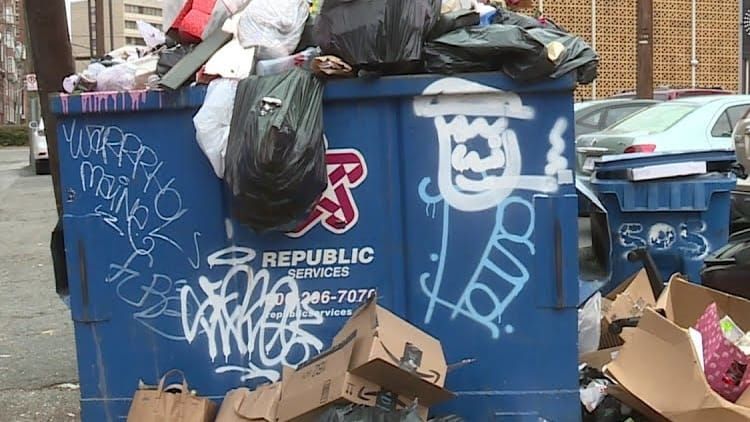
The culprits: The two leading contributors to East Baton Rouge Parish's litter crisis are systems designed to eliminate it, say Louisiana Stormwater Coalition co-founders Kelly Hurtado and Renee Verma and LSU AgCenter researcher Jeff Kuehny—overflowing commercial dumpsters and leaky garbage trucks.
The math on trash: Kuehny's research found roughly one piece of litter per two households after every collection run. Multiply that across 125,000 households, two pickups a week—one of the few places in the country that collects twice weekly—and the numbers compound fast.
Damaging consequence: Ugly is one thing, but loose litter makes flooding worse.
- Plastic bottles, styrofoam and loose trash become a stormwater blockade during the heavy rains that have become more frequent over the past decade, slowing drainage and exacerbating flood damage.
- Water that should move doesn't, and neighborhoods pay the price.
Some progress: The city-parish's contract renewal with Waste Management required newer trucks with better payload containment, a change pushed hard by Capitol Lake activist Marie Constantin, who spent years documenting the problem firsthand—trailing trucks through neighborhoods and showing up at contract negotiations to make the case.
New trucks help. The dumpster problem remains largely unaddressed.
The dumpster dynamic: It's not simply about convenience store and big-box owners not handling their trashy business—though that's part of it. Nearby residents play a major role by:
- Making their smelly problem someone else's, dumping the previous night's crawfish-party hangover into a commercial dumpster rather than smelling it up in their own bin.
- Unloading oversized boxes after the latest Amazon delivery haul.
When those containers overflow, rain does the rest—flushing loose trash into storm drains and on into Baton Rouge's bayous and lakes.
The enforcement gap: Ordinances exist to hold property owners accountable. Enforcement is essentially nonexistent—the parish lacks the staff and funding to inspect and cite violations at scale.
- The city-parish Litter Court and Code Enforcement division cover everything from overgrown lots to garbage containers and illegal dump sites.
- State law allows fines up to $1,000 for gross littering violations.
- The problem is scale. A small enforcement staff covering EBR's more than 450 square miles operates primarily on complaints rather than proactive inspections.
- Cited property owners can often beat violations by arguing they can't control what residents dump after hours.
The bottom line: Baton Rouge's litter problem isn't primarily a culture problem. It's an infrastructure and enforcement problem. Fixing it starts with being honest about the source.

Free RedEye readers get the news. Paid readers help ensure we do not have to sell scented candles to fund it.
Upgrade to a paid tier for breaking news when it matters, deeper reporting on the issues that shape life in Baton Rouge and, mercifully, no more RedEye ads.