
Amendments: Five shades of maybe
A small guide to big amendments, with much thanks to PAR
It’s Election Day, and you are trying to remember what, exactly, Amendment 4 does.
This is when many of us make the standard move: text the most politically informed person we know and ask how to vote. Democracy, outsourced to a friend with strong opinions, with a bit of community guilt on the side.
It does not have to be this way.
RedEye has summarized the amendments on the mid-May ballot. You can go deeper with the Public Affairs Research Council, which has a one-page guide and a detailed guide to the amendments. PAR, as it happens, also has its annual luncheon today. Civic duty comes with hotel chicken.
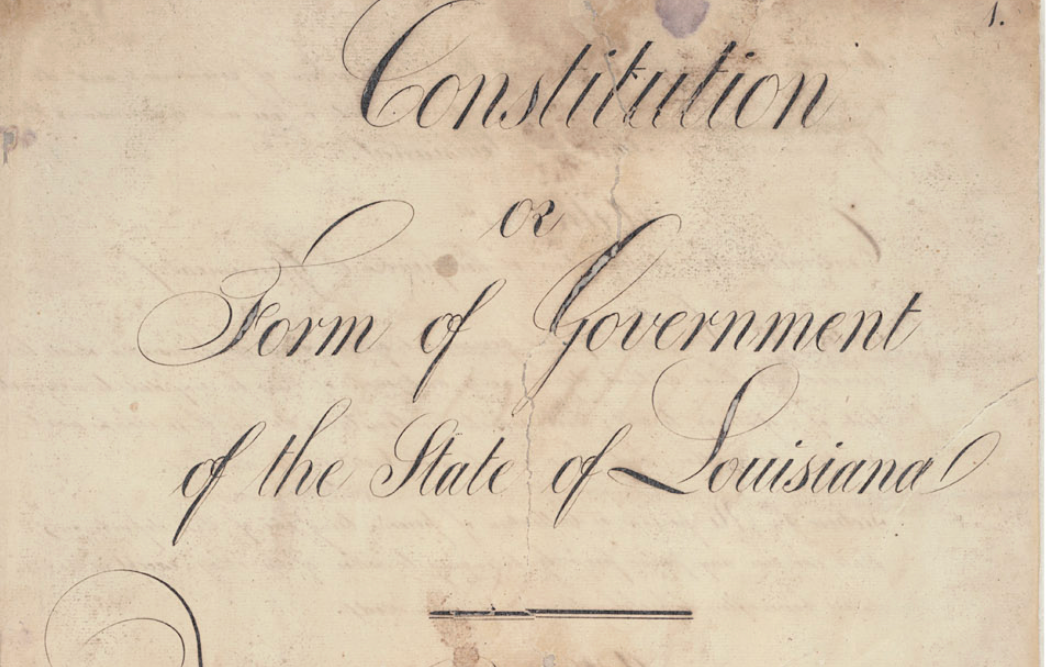
The backstory: Louisiana’s Constitution, adopted in 1974, has been amended 221 times. Attempts to replace it with something less complex have gone nowhere. So we keep doing this: voting on detailed policy questions that often require a lawyer for deciphering and a pot of coffee.
The details: There are five amendments on the May 16, 2026, ballot. They deal with civil service, St. George schools, teacher pay, inventory taxes and the retirement age for judges.
The big one for Baton Rouge: Amendment 2. It would allow the new City of St. George to create its own school district. We pay much closer attention to it.
🍎 Amendment 2: St. George School District
On the ballot: “Do you support an amendment to grant the St. George community school system in East Baton Rouge Parish the same authority granted parishes for purposes of Article VIII, Section 13 of the Constitution of Louisiana, including purposes related to the minimum foundation program, funding for certain school books and instructional materials, and the raising of certain local revenues for the support of elementary and secondary schools?”
What approval would do: Enable the new City of St. George to create its own school system. Unlike the other amendments, it’s only enacted if approved statewide and, separately, by East Baton Rouge Parish voters.
The details:
- The district would begin operating in July 2027.
- $107 million could be redirected from the East Baton Rouge Parish School System to the new St. George Community School System—assuming 6,200 students move from one district to the other, per the Legislative Fiscal Office.
- The governor would appoint an interim seven-member school board until elections could be held.
Our coverage: We’ve written three stories about it in the short time RedEye has been around. Per our reporting,
The case for: Supporters say EBR schools have had decades to improve and have not done enough.
They point to Zachary and Central as examples of smaller, local school districts that outperform the larger parish system. They frame the vote as a question of local control, parental accountability and self-determination for St. George.
St. George Mayor Dustin Yates has also pledged that at least $1 of every $2 the new district spends on public education would go directly into the classroom, with that share increasing over time. Supporters say that would be a contrast with EBR’s administrative spending.
The case against: Opponents say the breakaway would deepen racial and economic segregation in a school district that is already mostly students of color, most of them Black, and where many students are economically disadvantaged.
They warn St. George may not be the last community to leave. Each split would leave the remaining EBR system with less money and a harder job serving its most vulnerable students.
The other four amendments
💼 Amendment 1: State Civil Service Jobs
On the ballot: “Do you support an amendment to allow the legislature to remove or add officers, positions, and employees to the unclassified state civil service?”
What approval would do:
- Let the Legislature move some state jobs out of civil service without approval from the Civil Service Commission.
- Lawmakers have not said which jobs they might move. If voters approve the amendment, those decisions would come later in separate bills.
- Only the Legislature could move jobs back under civil service.
🍎 Amendment 3: Education Trust Funds, Pay Raises
On the ballot: “Do you support an amendment to fund a $2,250 teacher pay raise and $1,125 support staff pay raise by utilizing the remaining savings from paying down the debt of the Teachers’ Retirement System of Louisiana with monies from certain constitutional funds?”
What approval would do:
- Liquidate $2 billion in education trusts that provide income for public schools and colleges to finance priorities and initiatives.
- Use the liquidated funds to reduce retirement debt of schools and colleges, and permanently boost public school salaries—$2,250 per year for teachers, and $1,125 per year for support workers.
🚗 Amendment 4: Business Inventory Taxes
On the ballot: “Do you support an amendment to allow a parish to reduce or exempt property tax on property held as business inventory and to provide for the classification of Public Service Property?”
What approval would do:
- Pay $500,000 to $15 million to local municipalities if they get rid of or reduce inventory taxes by July 2027.
Note: Parishes levy up to 15% property tax on the market value of business inventory. The state has been crediting businesses to offset the local taxes, which are considered a burden on doing business.
An East Baton Rouge Parish document says the inventory tax generates about $50 million annually for all public agencies here.
⚖️ Amendment 5: Retirement Age for Judges
On the ballot: “Do you support an amendment to change the mandatory retirement age for judges from seventy to seventy-five, provided that a judge may continue to serve to complete a term of office?
What approval would do:
The amendment would raise the age limit for judges from 70 to 75. Anyone 75 or older could not run for judge. A sitting judge who turns 75 could finish the term but could not run again.