
Downtown living
Plan Baton Rouge III is betting that downtown can be a place where life happens, not just shared experiences.
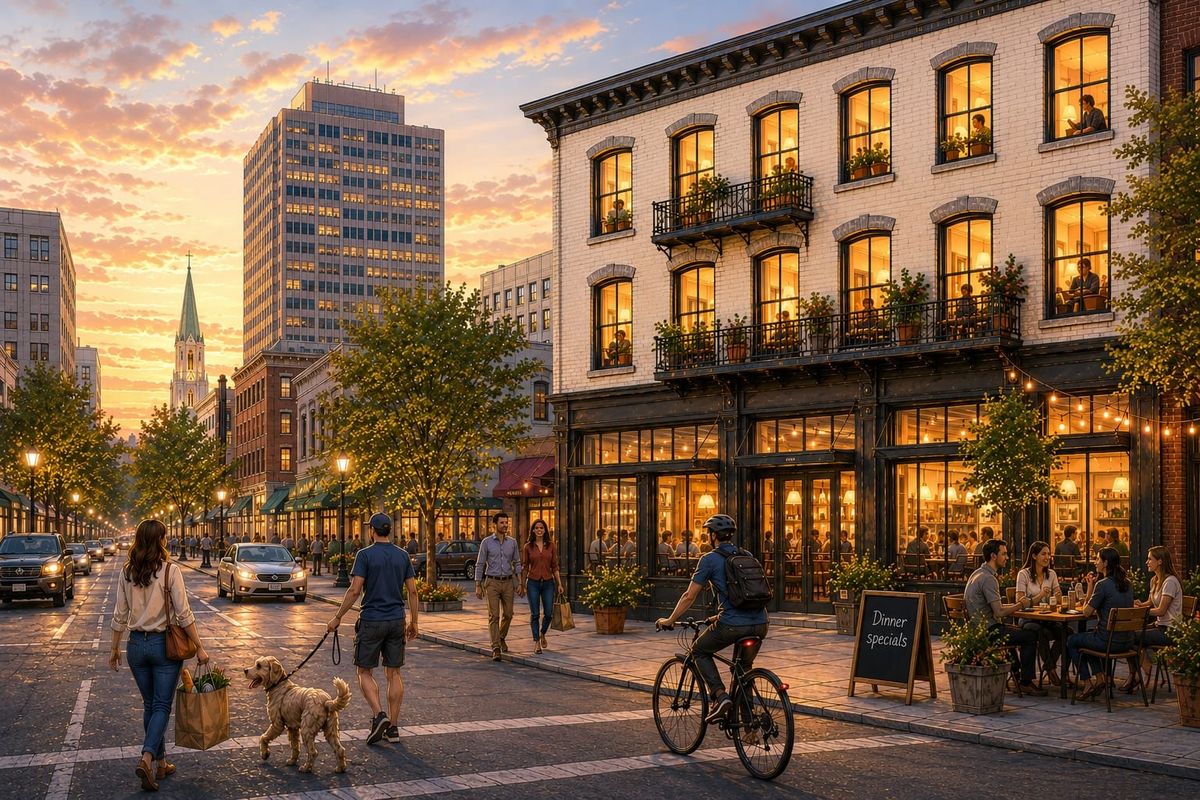
Downtown Baton Rouge has spent 25 years attempting to build a place people visit. Plan Baton Rouge III is the first downtown master plan to prioritize building a place where people live.
Why it matters: Downtown's success as a neighborhood—not just an event destination—directly affects the region's economic competitiveness and quality of life. This plan is the most ambitious attempt yet to close that gap. It also comes with substantial risks and questions.
The pattern: Downtown Baton Rouge runs on a predictable cycle—state workers arrive at 8 a.m., lunch brings a brief spike, and by 5 p.m. the core empties.
- Festivals, Live After Five and River Center events generate weekend crowds, but organic daily street life—the kind that sustains restaurants, retailers and small businesses year-round—is largely absent on a random Tuesday night.
- Urban planning advocates have argued that destination investments alone cannot sustain a downtown without a permanent residential population providing the daily activity that makes a neighborhood feel lived-in rather than programmed.
The target: Plan Baton Rouge III calls for adding 7,350 new residents over the next decade, tripling downtown's current population, with policy incentives to convert underutilized office buildings to residential and mixed-income housing targeted across multiple corridors. The plan's residential strategy was a centerpiece of its official rollout earlier this month.
- The plan leans heavily on student housing along the Nicholson Drive corridor and South Boulevard as a primary driver of residential development.
- LSU has not endorsed any downtown housing projects and cannot under its own policies until transportation connectivity is established between the university and downtown.
- Tiger Trails, LSU's private bus system, does not serve downtown and is unlikely to extend routes without a critical mass of student riders already in place—a problem the plan does not resolve.
- Land costs downtown are significantly higher than along the Burbank Drive corridor, and the vertical construction required puts industry estimates of per-bed rents at $1,200 or more, making it difficult to compete with new Burbank complexes charging $650-$800 per bed with a Tiger Trails stop at the front gate.
Not just a neighborhood: The plan does not abandon destination investments. A riverfront entertainment district, a tournament-scale youth sports complex and an expanded River Center convention complex are core objectives.
- The argument embedded in Plan Baton Rouge III is that destination investments and residential density reinforce each other—but the plan's explicit sequencing puts residents first, a meaningful departure from how downtown investment has historically been prioritized.
A different playbook: The residential push arrives with a fundamental shift in who is expected to pay for it.
- The two previous reinvention efforts drove roughly $3 billion in investment, anchored by approximately $500 million in public and philanthropic spending that created the demand for private investors to follow.
- Plan Baton Rouge III flips the script, relying almost exclusively on private-sector investment—more than $1 billion of the plan's $1.5 billion early investment target—with public, philanthropic and TIF-based sources projected to carry the remaining $500 million.
- It is an approach that carries higher risk in a market where downtown land costs have historically made attainable housing difficult to finance. Special financing tools—TIF districts and tax credits—will be key to making the math work.
The bottom line: Plan Baton Rouge III is the most serious attempt yet to turn downtown Baton Rouge into a place people live rather than a place they visit—the question is whether the private sector will do what public investment did for the previous two plans.