
Coffee shop cacophony
Why public places become loud, and how to quieten them
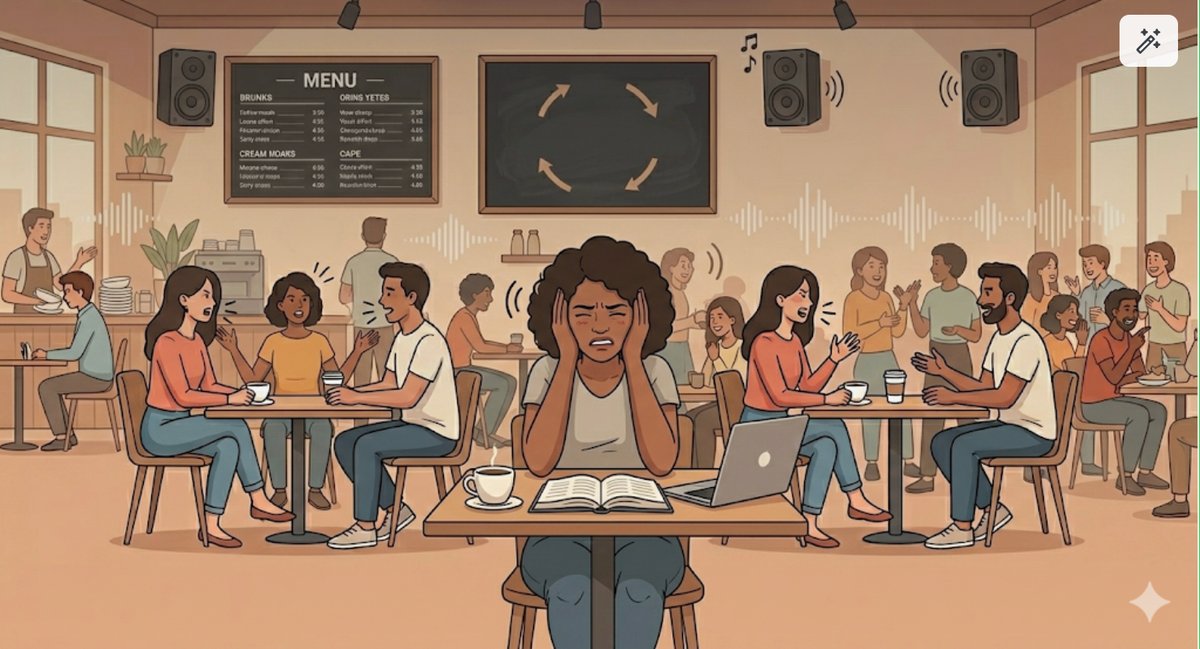
At 2:20 p.m. on schooldays, Baton Rouge Magnet High students spill into French Truck across Government Street. Backpacks hit the floor. Chairs scrape. Voices rise. What begins as a few private conversations quickly turns into a roar.
There’s a name for this: the Lombard effect, first described in 1911 by Étienne Lombard, a French otolaryngologist. When background noise increases, people instinctively talk louder to be heard. Everyone adjusts at once, creating a feedback loop. The same dynamic plays out in restaurants, public meetings and Tiger Stadium.
What’s notable is how easily it breaks. Someone calls out a name and the room experiences a collective Startle Response. The conversation ends; the room resets.
Next time you want to stop the noise, think of a clever interruption. Stand up briefly and sit back down without saying anything. The key isn't volume. It's surprise.