
Capital Region jobs hit record high
A construction boom is doing the heavy lifting. That's not the same as a diversified economy.
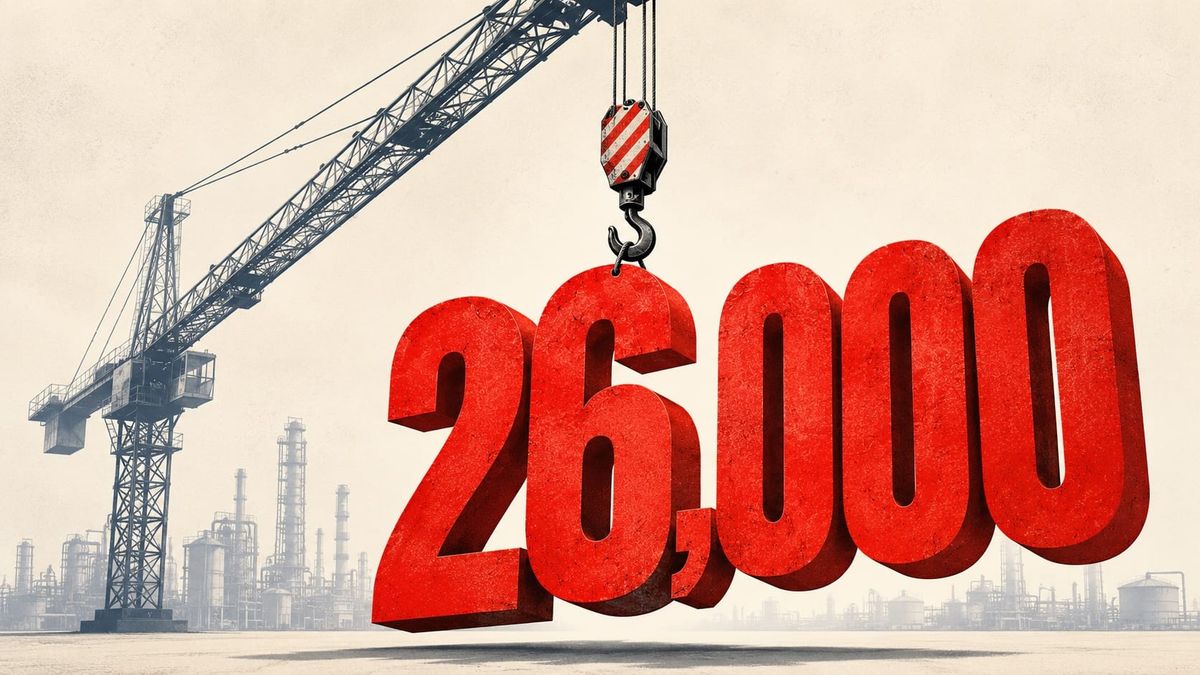
The Capital Region's economy opened 2026 with its strongest job numbers on record, according to the Greater Baton Rouge Economic Partnership's quarterly report. Nonfarm employment surpassed pre-COVID levels by more than 26,000 jobs, and the metro led all peer metros in job growth over the past year.
Why it matters: The numbers are real. But the story behind them is more complicated. A distinction that matters for understanding where the Capital Region's economy is headed.
What's driving growth: Industrial construction is doing the heavy lifting.
- The sector added 6,500 jobs over the past year out of 438,200 total nonfarm jobs—nearly twice the combined total of every other sector.
- The Hyundai Steel Mill, CF Industries' ammonia facility and the Linde Air Separation Unit all ramped up simultaneously. Those are massive, one-time industrial projects.
- Work on the I-10 expansion is ramping up, providing a boost.
Yes, but: By comparison, leisure and hospitality, health services and professional services combined to add just 3,700 jobs.
That shows an industrial construction spike, not broad economic diversification.
Details matter: Overall, the broader numbers were positive.
- Workers are earning more. The Capital Region climbed to first in Louisiana for private-sector weekly earnings at $1,254.86—driven by the region's industrial and petrochemical sectors.
- Higher education enrollment reached a record 68,528 students in 2025–26. And the region posted the second-highest growth among peers in residents with a bachelor's degree or higher.
- Housing affordability remains a relative strength, with the median home at 3.6 times the median household income.
The catch: The Capital Region carries the highest unemployment rate among peer metros at 4.2%—and it ticked up slightly even as jobless claims fell 42.7%.
- The report attributes part of that drop to Louisiana's 2024 decision to cut maximum benefit duration from 26 to as few as 12 weeks, which pushes workers off the claims count before they've necessarily found work.
Peer pressure: The comparison group includes Birmingham, Little Rock, Columbia, Knoxville and Greenville.
- The Capital Region leads all five in GDP per capita at $83,600 and ranks second among peers, behind Birmingham, in total economic output at $73.8 billion.
- It also has the highest unemployment rate in the group—a gap that has persisted even as the other numbers have improved.
The bottom line: The industrial pipeline is real and the earnings numbers are encouraging, but the region's broader economic health will be tested should the construction wave crest.