
Brutalist brouhaha
Baton Rouge's town hall is designed in a style that rankles people. So is Pennington Biomedical.
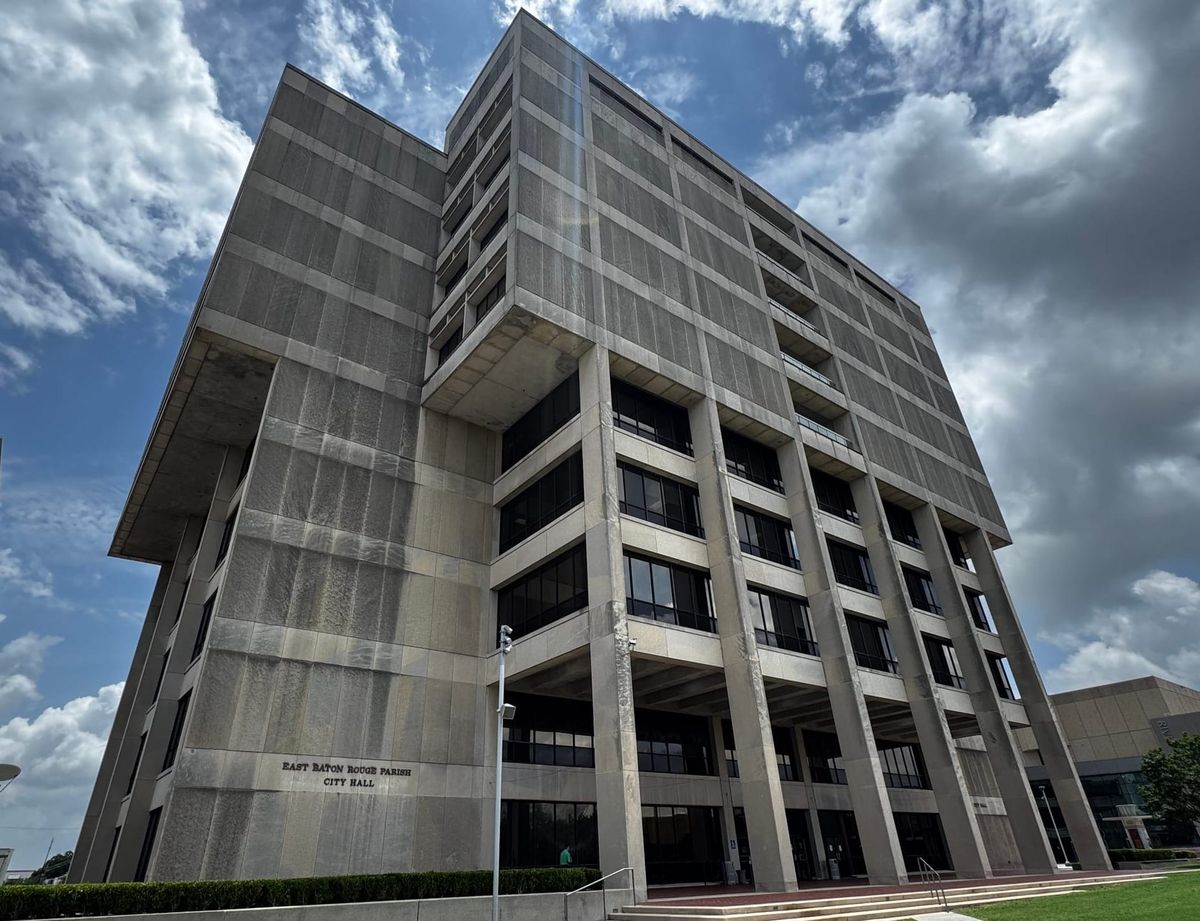
Baton Rouge has a building that can still split architecture critics into two angry camps. City Hall is brutalist, a style that took one of the world’s coldest materials—concrete—and made a design religion out of it.
Brutalism did not apologize. It came out of postwar Europe and spread around the world in the 1950s, ’60s and ’70s, giving us raw concrete, hard angles and buildings that did not care whether you liked them.
Buildings in the style were built to declare. Governments loved them because they looked permanent, serious and a little intimidating. The architecture practically told you to take a number and sit down.
Baton Rouge architect John Desmond led the design of City Hall and helped shape the civic spaces around it. You can see the same concrete bullying in Pennington Biomedical Research Center, another Desmond design. Downtown’s RiverMark Centre and its companion building also carry the brutalist family resemblance.
The style faded fast, and some critics would say not fast enough. For one, concrete does not always age gracefully. Public housing failures also damaged brutalism’s reputation. The 1970s energy crisis made massive concrete buildings expensive to maintain. Then postmodernism arrived, dragging back everything brutalism had rejected: ornament, warmth, color.
The buildings, however, remain—standing there in all their concrete certainty, still starting arguments.