
A model conservancy
Done right, a conservancy transforms City-Brooks and the University Lakes into a public asset that belongs to everyone.
Sasaki is recommending BREC adopt a conservancy model to oversee City-Brooks Park and the University Lakes system. The BREC Commission appears committed to moving in that direction. The annual operating budget under discussion: $6 million.
Why it matters: The governance decisions being made right now will determine whether City-Brooks and the University Lakes become a genuine community asset for all of East Baton Rouge—or another civic institution built by the usual suspects, for the usual suspects.
What's at stake: This is more than a parks story or a lakes story. It's about the far more important question of who Baton Rouge builds things for.
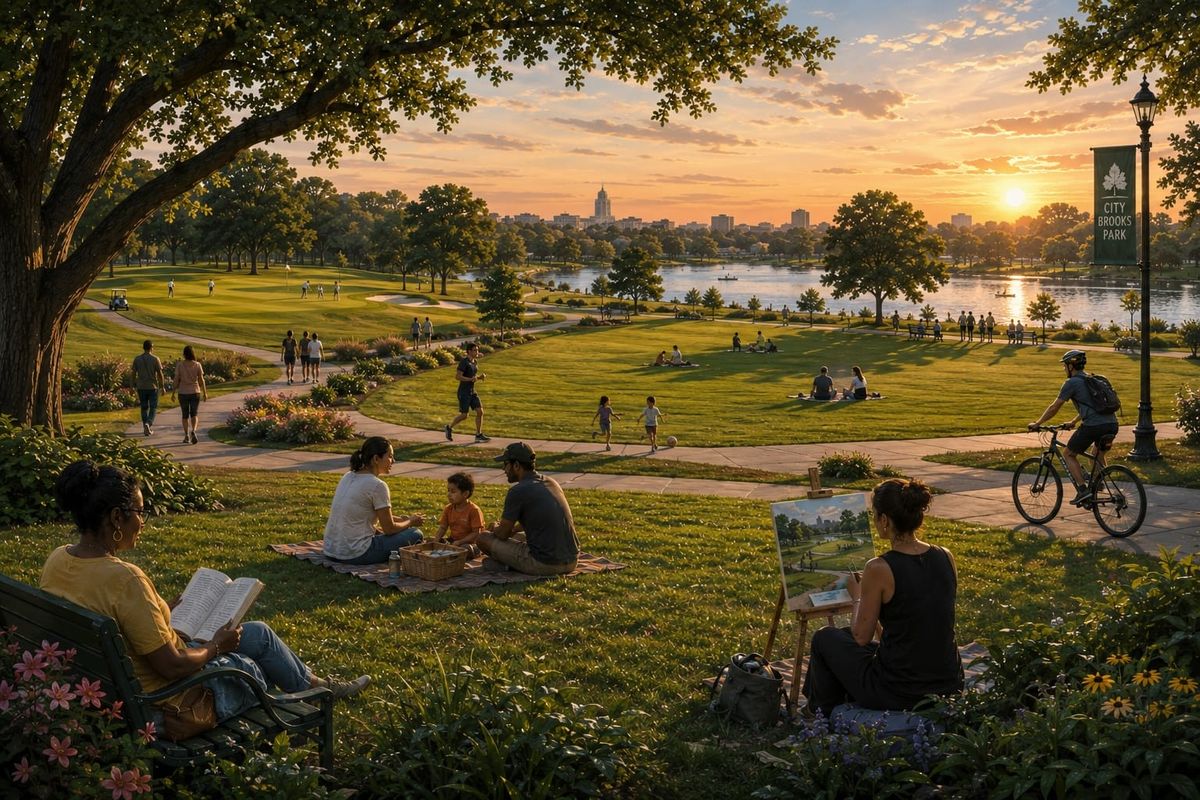
City-Brooks and the University Lakes aren't neighborhood amenities. They are the closest thing this parish has to a community front porch—where a grandmother from Baker, a young professional from Mid City and a family from Scotlandville, Central or St. George should all feel an equal claim. And, yes, those whose homes are nestled along the park or the lakeshore also have an ownership stake. Representatives from the on-site Knock Knock Children's Museum and the Baton Rouge Gallery also earn a seat at the table.
The conservancy model, done right, would be the first real mechanism for treating them that way.
Done wrong, it becomes just one more civic institution that looks like every other in this city.
The model exists: Houston's Buffalo Bayou Partnership has managed a 10-mile waterway corridor since 1986 with a board that reflects the diversity of the city it serves. Governmental stakeholders—the mayor, Harris County, city parks, county commissioners—hold ex officio seats. They're present. They're accountable. They don't vote.
- In San Antonio, the Brackenridge Park Conservancy was co-founded by the city and a civic nonprofit under a cooperative management agreement. The conservancy manages. It doesn't own. Worth noting: Chris Maitre, a finalist in the recent BREC superintendent search, is the conservancy's CEO.
- In Memphis, the Overton Park Conservancy manages a 342-acre urban park with real operational authority—a scale and mission that closely align with what's being proposed for City-Brooks. Its board includes partners from across the park's ecosystem—the Zoo, the Brooks Museum, the Metal Museum—alongside community volunteers, attorneys, healthcare professionals and university representatives.
None of those models handed governance to insiders and called it done.
Skeptics: Friends of City Park, a group that favors keeping BREC as the sole manager of City-Brooks, has circulated a 16-page document arguing against the conservancy model. Their central claims—that a conservancy for the park isn't legal and, even if it were, wouldn't be accountable to the public—deserve scrutiny.
A conservancy operating under a formal management agreement with a government agency, like BREC or LSU, is legally accountable to public entities that are themselves accountable to voters. BREC, for its part, has proven susceptible to organized political pressure over the years—a dynamic that the golf constituency has repeatedly and effectively exploited.
A conservancy board operates differently. That's not a weakness. It's a strength.
The real challenge: Baton Rouge has a specific and well-documented pattern. Major civic decisions are controlled through connected and philanthropic insiders and flow through a downtown-and-university-corridor cohort. Right or wrong, that perception is real—and durable.
- The BREC Commission faced years of criticism that it was too Baton Rouge-focused until state legislation last year changed the commission's board makeup.
- The "what about us in the suburbs" argument is playing out now with the library's tax proposal.
Any conservancy that launches looking like a product of that same cohort inherits the skepticism before it does a single thing.
What good looks like: The structure musts be designed to prevent capture—not just promise to avoid it.
- Board composition requirements are written into bylaws and enforced by an external nominating committee, not the founding institutions.
- Geographic distribution of seats across the parish—north, south, east, west—and not clustered around the Lakeshore corridor.
- Term limits, no exceptions.
- Finances and meeting records are public beyond what Louisiana law requires.
- Genuine public voice in governance design before the structure is locked.
Wealthy donors, elected officials and established civic organizations will all have a role. That's unavoidable at this scale. The question is whether the structure balances those interests against the rest of the parish—or ratifies them.
The bottom line: Baton Rouge has been talking about reimagining City-Brooks park for more than two decades; the conservancy is the best chance yet to build it for everyone and align it with the lakes project—but only if the people making governance decisions understand that everyone actually means everyone.