Can LSU afford to bring Will Wade home?
LSU Athletics and its donors have committed to spending lavishly across a wide range of sports.
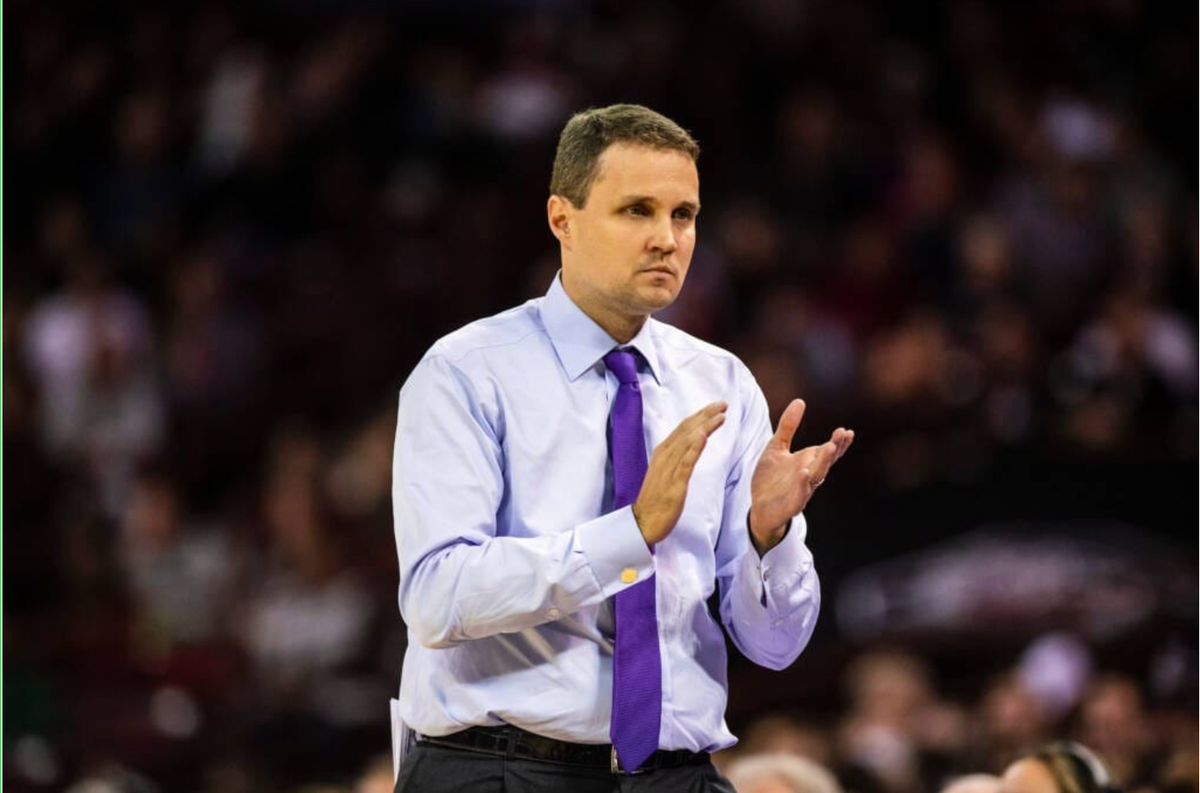
LSU men's basketball was headed to the SEC Tournament as one of the league's worst teams. The question of whether fourth-year coach Matt McMahon keeps his job has run headlong into a social media frenzy over a possible reunion with the coach before him—the one LSU fired four years ago.
Where things stand: McMahon's Tigers finished 15-15 and 3-14 in SEC play, tied for last. Four seasons. No NCAA Tournament appearances. Meanwhile, Will Wade has quickly turned NC State around in year one, with the Wolfpack trending toward a tournament bid.
The power shift that matters: This isn't just a basketball conversation.
- LSU's new president, Wade Rousse, hired Wade and championed him at McNeese State.
- New Board of Supervisors Chairman Lee Mallett is a close friend of Wade's—and the same person who pushed to re-hire Wade from McNeese before Wade took the NC State job.
- Then-AD Scott Woodward refused, angering Mallett and setting in motion Woodward's eventual dismissal after Kelly’s firing.
The NIL reframe: Wade was fired in 2022 following an FBI wiretapping investigation into recruiting violations. Supporters argue the landscape has changed. What got Wade fired—pay-for-play recruiting—is now essentially the legal framework of college sports. The violations that ended his LSU tenure would barely register today.
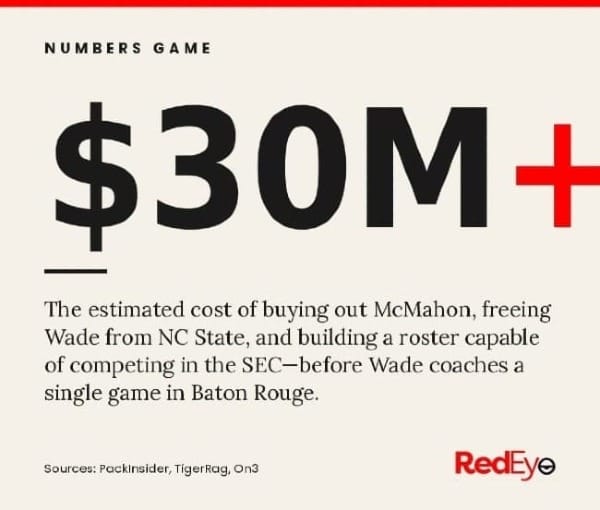
The math: Any Wade reunion carries a staggering entry fee.
- $10.3 million to buy out McMahon
- $5 million buyout to get Wade out of NC State
- That totals $15.3 million before a single conversation happens
And that's just to get to the table. Building a roster capable of competing in the SEC would cost an estimated $15 million-$20 million more—the going rate for programs serious about contending. Wade is reportedly unwilling to come back for anything less. A full Wade pivot—buyouts plus roster build—could run $30 million or more before his first game in Baton Rouge.
Heavy lifts: This is an athletic department already buried in football spending—$54 million to buy out Brian Kelly and $91 million over seven years for Lane Kiffin, plus a $40 million-plus investment in this year's football roster.
It doesn't stop there:
- Women's basketball coach Kim Mulkey has a running wish list.
- Baseball coach Jay Johnson has been vocal about the program needing greater investment.
- Add the demands of a championship-caliber women's gymnastics program and the needs of LSU's other varsity sports and the cash flow gets tight for an athletic department and a booster group already stretched thin by football's tab.
The booster split: Football and men's basketball draw from overlapping—but distinct—donor bases, and the divide is real.
- Some want McMahon gone after four years without an NCAA Tournament appearance. No debate, no extensions.
- Others argue he was dealt a poisoned hand. Wade's NCAA violations gutted the program before McMahon ever coached a game. Recruits avoided LSU during the sanctions period. The cupboard was bare from day one.
- Then some simply worry about the money—and whether LSU's athletic budget can absorb yet another expensive coaching move.
Worth noting: FMOL Health CEO E.J. Kuiper—LSU's official championship health partner and a member of the six-person committee that landed Kiffin—publicly backed McMahon in February, calling him "a good coach" who "deserves another chance." His voice carries institutional weight.
The reality check: AD Verge Ausberry has been blunt—"the decisions we make from now on, we have to think about them fiscally." Multiple sources close to NC State believe a Wade departure after one season is unlikely. The rumor itself originated from a message board post that mushroomed through social media into national coverage.
The bottom line: The Will Wade reunion story is equal parts basketball and institutional politics—with a cast of characters that is purely LSU. Mallett and Rousse sit at the top of the university. Ausberry controls the checkbook. Kuiper and the booster community are divided. And the SEC Tournament offers one last data point before a very expensive decision gets made.