The three miles that matter
Several planning efforts underway are converging along a corridor simultaneously.
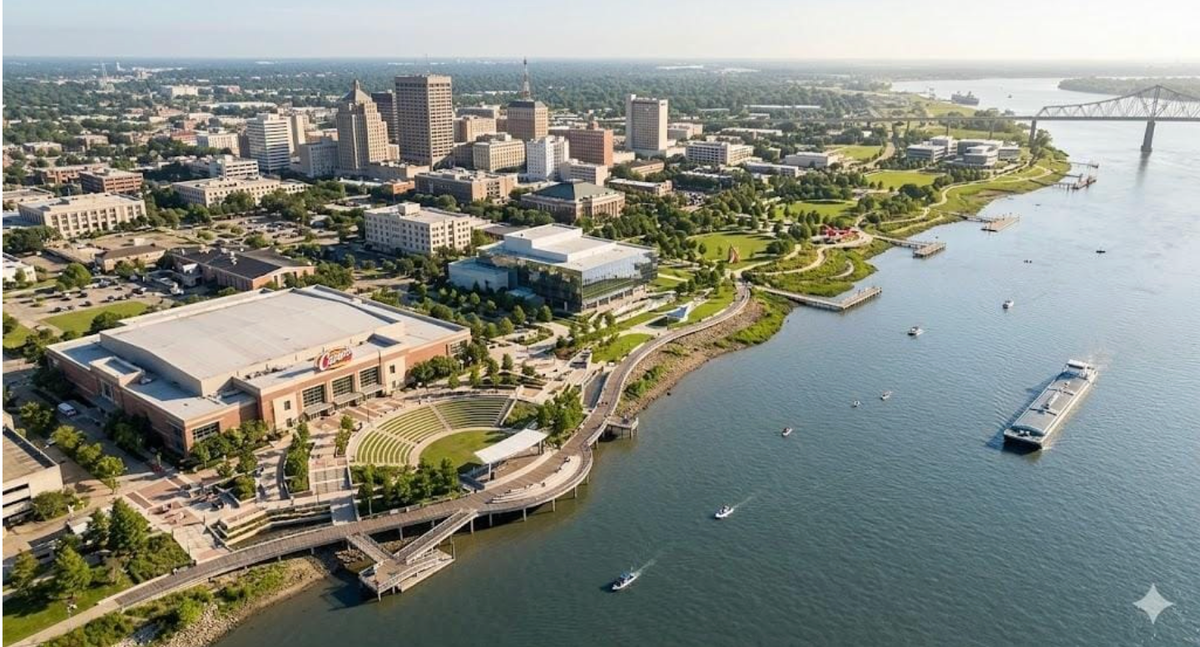
Look at a map of central Baton Rouge. Within roughly three miles—between downtown and LSU—lie four of the city's most significant public assets:
- The Mississippi River waterfront
- Downtown Baton Rouge and its historic bluff
- The University Lakes system
- City-Brooks Community Park
Why it matters: In many cities, that alignment would form the backbone of a defining urban corridor. In Baton Rouge, the pieces mostly function as separate destinations. Several planning efforts now underway are converging along this stretch simultaneously.
Downtown's moment: Plan Baton Rouge III is the latest chapter in a planning framework that helped spur downtown's residential revival and earlier riverfront improvements.
- Expect the plan to address housing, riverfront connections, infrastructure and cultural potential—with significant community input shaping the final vision.
- Baton Rouge sits on one of the highest natural bluffs along the lower Mississippi—roughly 30–40 feet above the river. It's why the Louisiana State Capitol and Old State Capitol were built where they are.
- Most Mississippi River cities sit on flat floodplains. Baton Rouge has elevation, river views and publicly controlled levee land. That advantage has gone largely unrealized.
The lakes transformation: Between downtown and City-Brooks, the University Lakes restoration is the most visible civic investment underway in Baton Rouge.
- The $79 million project is on track to complete dredging by the end of 2026, drawing from state capital outlay, city-parish funds, federal transportation dollars and a $14.5 million FEMA grant.
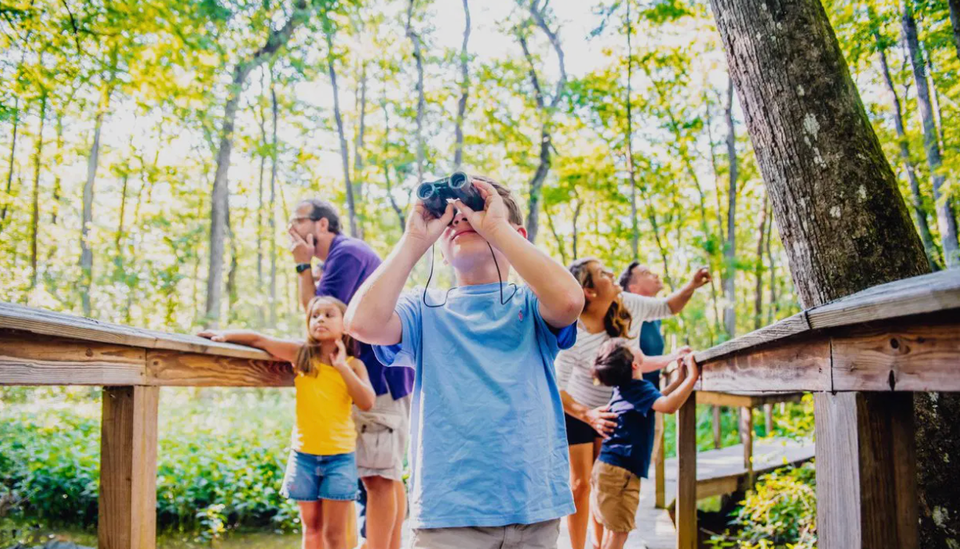
- The goals go well beyond cleaner water: restored wildlife habitat, improved flood control and new public access along six lakes spanning 275 acres in the heart of the city.
- "We've made significant strides in reshaping the landscape and improving water flow throughout the lakes system. The community is eager to see what's ahead," says Mark Goodson, principal and resilience practice lead at CSRS.
- When finished, the lakes could become one of the most attractive urban park landscapes in the South—and a direct physical link between LSU's campus and City-Brooks Park.
But: Not all residents along the lakes are satisfied.
- Complaints have centered on the pace of construction, an explosion of aquatic vegetation that has choked access for boaters and kayakers, and the expanding size of the bird sanctuary, which project leaders say is necessary to accommodate dredged sediment at a fraction of the cost of hauling it off-site.
- A key amenity called for in the master plan—dedicated multi-use paths encircling the lakes for pedestrians and cyclists—remains unfunded beyond May Street, leaving one of the project's most visible public benefits still on the drawing board.
The park rethink: BREC has engaged Sasaki—the same firm leading Plan Baton Rouge III—to develop a master plan for City-Brooks Community Park.
- The plan will address existing and future uses: museum expansions, golf course improvements, circulation and connectivity enhancements and other recreational assets.
- That includes finally confronting the long-running debate over the park's 9-hole golf course. Sasaki designer Josh Brooks has signaled the decision doesn't have to be "binary"—a sign that some form of golf likely survives in the redesign.
- Whether that satisfies either side of a debate that has stretched more than two decades remains to be seen.
- The park's rolling, sand-dune terrain gives it a rare physical character. Connected to the restored lakes and a stronger trail network, it could serve a far larger role for the city than it does today.
The connective opportunity: Here's what makes this moment different from prior Baton Rouge planning cycles.
- The same firm, Sasaki, is working on both Plan BR III and the City-Brooks master plan. The lakes restoration is already funded and underway. Public engagement is open now. The pieces are in motion simultaneously.
- Cities that connected similar assets—Atlanta's BeltLine, Indianapolis's Cultural Trail, Dallas's Katy Trail—didn't just create parks. They created economic catalysts that reshaped nearby development and became powerful tools for attracting residents and employers.
- For Baton Rouge and East Baton Rouge Parish, the argument is direct: stronger public spaces help retain LSU graduates, attract researchers and entrepreneurs and signal to the outside world that this is a city investing in its future.
The bottom line: "People love this city and they are proud of it," said John Spain, former vice president of the Baton Rouge Area Foundation. "But they are keenly aware of what needs to be improved." Baton Rouge already has the three miles. The question is whether it finally connects them.