
Sporting St. George
The new city wants to build a park, and an operator is exploring a sports facility between LSU and downtown
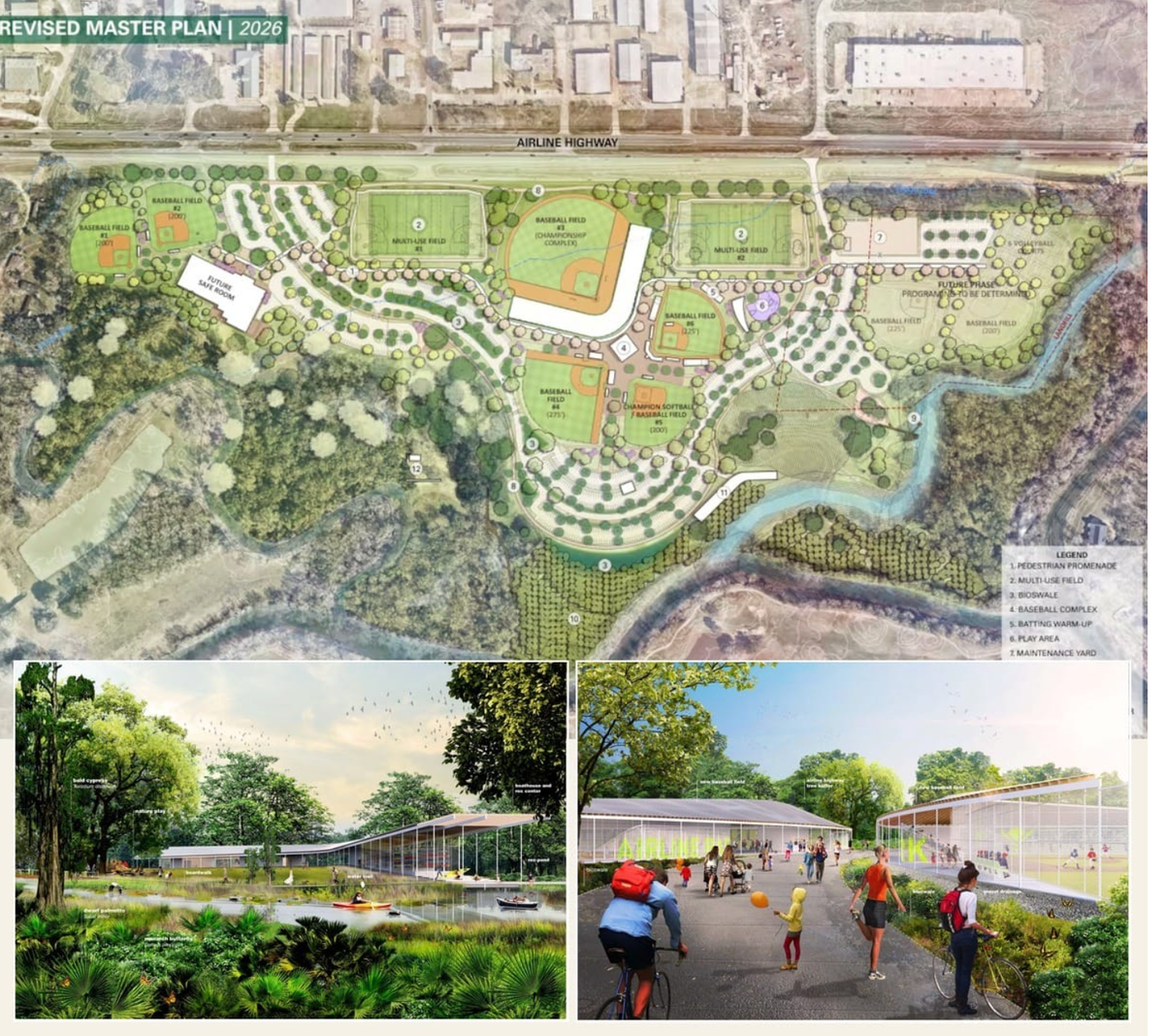
The City of St. George is playing offense in youth sports. BREC and St. George officials last week unveiled plans to transform the 133-acre Airline Highway Park into a regional sports destination. The $9 million to $12 million first-phase overhaul includes a large baseball complex, batting cages, a recreation center and indoor pickleball courts. Construction is slated to begin in 2027.
Mayor Dustin Yates is pushing further. He tells RedEye that the city is negotiating a cooperative endeavor agreement with BREC to run its own programming at the park—modeled on the deal under which the Baton Rouge Soccer Association operates at BREC's Burbank complex.
- St. George officials are also in early talks with a private group about building an indoor sports complex capable of hosting basketball and volleyball tournaments.
Why it matters: Sports are a civic religion in Baton Rouge. What the parish lacks is the kind of modern infrastructure—indoor courts, tournament-ready fields, enough space to keep traveling families and their spending local—that competing cities have already built. Such facilities also tend to attract hotels and retail development—both critical in a city that relies on sales taxes.
Everyone wants to play: At least two firms are exploring whether Baton Rouge can support a large standalone indoor sports facility between LSU and downtown, Visit Baton Rouge CEO Jill Kidder tells RedEye—with more details expected to emerge in late April.
- Private developers are also working with BREC to expand and improve the multisport complex at Olympia.
Big business: The numbers explain why everyone is moving at once:
- Youth sports tournaments generated an estimated $37 million in indirect economic impact across the parish in 2024.
- Between 2020 and 2024, Baton Rouge hosted more than 180 sporting events, drawing 107,700 attendees.
- Nationally, youth sports tourism is projected to hit $77.6 billion by 2026.
The bottom line: The athletes and the families are already here. The facilities haven't kept pace. That's the gap everyone is now racing to close.