12,000 out-of-state students, no plan to keep them
Baton Rouge must integrate students in the community to keep them here after graduation
12,000 out-of-state students, but no real plan to keep them
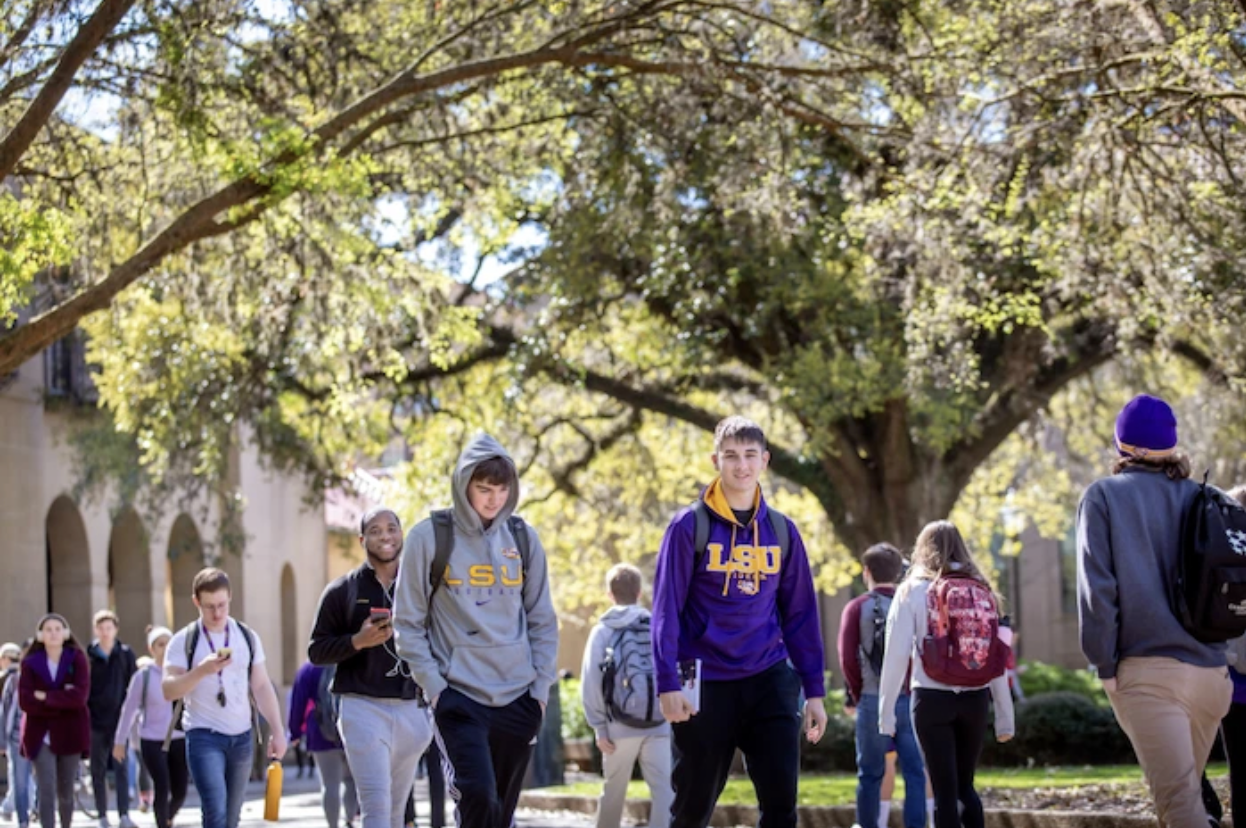
The big picture: LSU has become one of the fastest-growing magnets for out-of-state students in the country. Enrollment from the Northeast alone is up nearly 500% since 2014. Today, 40% of incoming freshmen are from outside Louisiana—over 12,000 out-of-state undergraduates on campus at any given time, drawn by warm weather, affordable tuition and a football culture that’s impossible to replicate north of the Mason-Dixon line.
Why it matters: About half of all college graduates end up working in the same metro area as their university. That makes LSU's enrollment boom an economic opportunity worth hundreds of millions in future taxes and business formation. Baton Rouge is mostly watching it walk out the door.
Sounds familiar: This isn’t new, and it’s not for lack of trying. Attracting and keeping young professionals has been a BRAC—now the Greater Baton Rouge Economic Partnership—priority for more than a decade. Its current five-year plan even puts the goal first: grow the region’s young professional population by 5%. Meanwhile, Forum 225, the region's go-to young professionals organization, traces its roots to 1994. The city has the infrastructure, the vocabulary, and the institutional will. What it has struggled to do is move the needle.
Reality bites: Part of the challenge is that Baton Rouge's pitch to young professionals is genuinely complicated. On jobs, the city is stronger than its reputation. Nonfarm employment is near an all-time high. Engineers, nurses, software developers, and sales professionals can find real opportunities here—in some cases, at salaries that beat Houston and Atlanta once cost of living is factored in. A recent analysis found that for several high-demand engineering roles, Baton Rouge had hundreds more job postings than actual hires in 2023, meaning the jobs exist, but the talent isn't staying to fill them.
On quality of life, the picture is more honest. The city offers affordability, a serious food culture, outdoor recreation, and a festival calendar that punches above its weight. Downtown is walkable by Baton Rouge standards—a walkability score of 79 compared to the city's overall 39—and has seen steady residential growth over the past decade.
But the rest of the city is car-dependent, transit is minimal, and the crime rate remains well above the national average. For a student from New Jersey or Maryland accustomed to rail access, walkable neighborhoods and major concert tours making regular stops, the adjustment is real. Baton Rouge is one of the worst metros in the country for major concerts per capita. A proposed tram line connecting LSU to downtown, approved in 2016, was scrapped two years later by then-Mayor Sharon Weston Broome.
The jobs are here, though not in the heavy concentration that historically attracts young professionals. The affordability is here. The culture—food, music, sports, festivals—is genuinely here. What's missing is the connective tissue between campus life and city life, and the sustained investment in making young people feel like Baton Rouge is choosing them back.
The retention problem, by the numbers:
- Over a 15-year study period, Baton Rouge gained nearly 18,000 residents under 25—largely because of LSU. But the city didn’t keep them. Over the same period, it lost a net 496 people aged 25-34 and 13,861 college degree holders.
- Between 2016 and 2018, roughly 44% of LSU engineering graduates and 57% of Southern's graduates left the state within one year of graduating—even though the jobs to employ them existed here.
What other cities figured out: Philadelphia's Campus Philly nonprofit throws a city-wide CollegeFest every fall—free museum access, transit passes, and a block party designed to make enrolled students feel claimed by the city, not just the campus. Pittsburgh's Passport program runs six weeks of free employer events, art nights, and outdoor activities for summer interns, and in its first two years boosted local job-offer acceptance rates by 30%. Both cities made a deliberate bet on building student attachment during enrollment, not after graduation.
What Baton Rouge is doing: The "Better in BTR" campaign, funded by $1 million in ARPA funds and launched in 2024, is building brand identity and connecting employers with students through the Handshake jobs platform. Forum 225 is running a young professional programming session. These are real efforts. But they are aimed either at people who haven't arrived yet or at graduates already on their way out.
Missing link: There is no city-sponsored welcome weekend for incoming students. No student discount pass for local restaurants and venues. No organized effort to pull enrolled students off the LSU bubble and into Baton Rouge's neighborhoods, food scene, music venues, and cultural institutions while they still have four years to fall in love with the place. Research from Pittsburgh and Philadelphia found the same thing: students don't leave because they dislike their college city. They leave because they never actually experienced it.
What needs to happen: A CollegeFest-style welcome weekend every fall. A year-round student city pass. A Pittsburgh Passport equivalent for summer interns. A peer network for out-of-state students anchored in the community. And one coordinating entity—a "Campus BTR"—to own the pipeline from freshman move-in day to first post-graduation job offer. Forum 225, Visit Baton Rouge, and the Greater Baton Rouge Economic Partnership all have pieces of this puzzle. None of them owns the whole board.
The bottom line: The flagship university is spending real money recruiting students from New York and New Jersey to fill LSU's classrooms, yet Baton Rouge is not spending comparable energy making those students want to stay. Philadelphia made that same mistake for decades before reversing course. Baton Rouge doesn't have decades. It has four years—the length of an undergraduate degree—to turn visitors into residents.