
If you build it, they'll drive-thru
Waffle House, Dutch Bros Coffee, Panda Express, Fuego, and then some on Burbank and West Lee
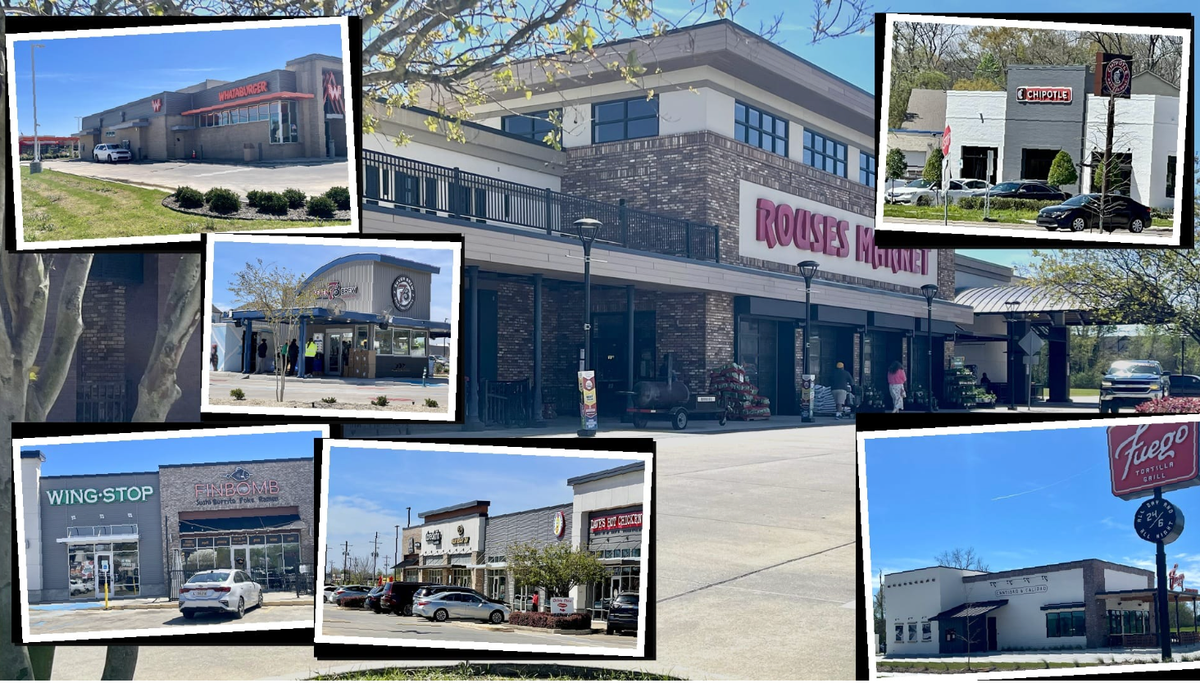
West Lee Drive, between Burbank Drive and Nicholson Extension, has become one of Baton Rouge's fastest-growing restaurant corridors. Whether that's exciting or just inevitable depends on your appetite for drive-thrus.
What's happening: Dutch Bros Coffee, Panda Express, Waffle House, 7 Brew Coffee and Fuego Tortilla Grill—the Texas-based taco chain's first Louisiana location—have all opened near the Burbank and West Lee intersection in the past 18 months. Starbucks and Dunkin' have plans filed with the parish Planning Commission for nearby parcels.
The anchor: Arlington Marketplace, the 93,000-square-foot Rouses-anchored center at the heart of the corridor, already counts Jason's Deli, Dave's Hot Chicken, Wingstop, Playa Bowls and CC's Coffee among its tenants. Add Whataburger, McDonald's and Raising Cane's on nearby pads and the corridor has roughly 15 restaurant and coffee concepts within a half-mile—dense for a suburban strip that didn't exist a decade ago. Not every concept has stuck—Chicken Salad Chick, an early arrival, has since closed.
Why here: Follow the housing. Commercial listings for the corridor cite more than 7,100 new student-housing beds and 550 single-family units within walking distance. West Lee carries more than 32,000 vehicles per day. For chains that live and die by drive-thru volume, the math is obvious.
The shift: LSU's everyday commercial center of gravity—historically anchored along Nicholson Drive and Highland Road—is drifting south, tracking the student housing boom that has reshaped Burbank and Brightside over the past decade. The new strip isn't nightlife. It's convenience, calories and caffeine, on demand.
Worth watching: The corridor drains into the Ward Creek watershed, already one of south Baton Rouge's most stressed drainage systems. State planners have warned that continued development in the watershed reduces natural infiltration and pushes more water downstream. Whether the elevated construction pads going up along West Lee are adequately accounting for that added load is a question the parish hasn't answered publicly.
The bottom line: West Lee is useful, unremarkable and still expanding—a corridor built by density, filled with chains and patronized by roughly 7,100 students who mostly just want coffee and a drive-thru lane.