
Going nowhere. Slowly
Motorists in Baton Rouge were stuck for nearly 30 million hours in traffic
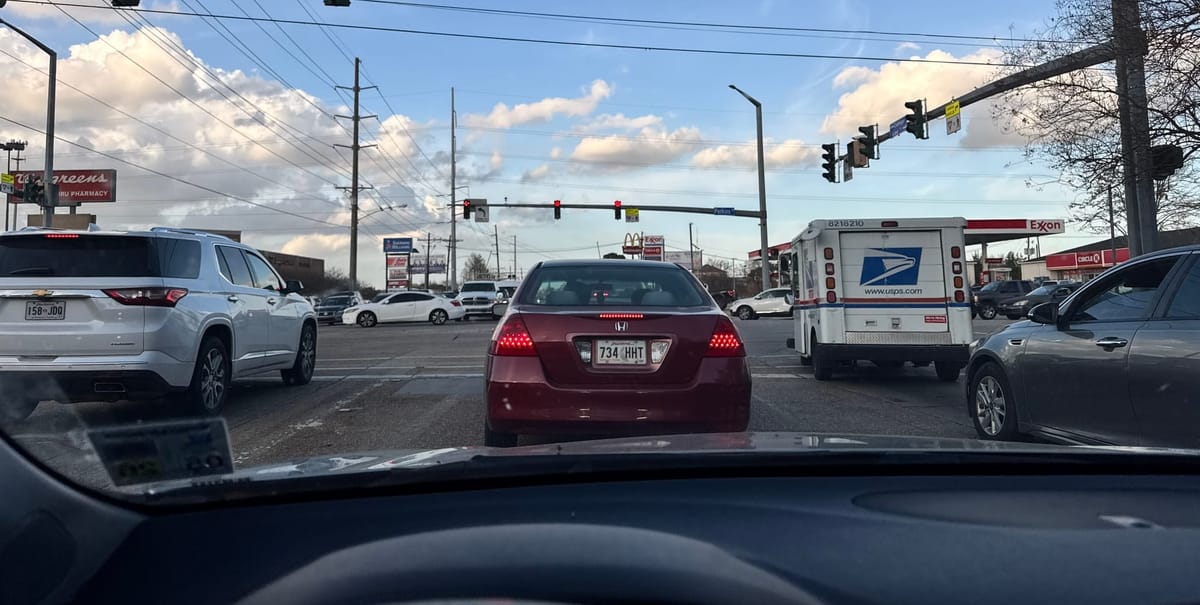
Motorists had ample time to catch up on podcasts and audiobooks in 2024, courtesy of the traffic congestion that remains Baton Rouge’s most reliable public service—efficient only in wasting time and fuel.
By the numbers: Baton Rouge drivers spent 29.3 million hours stuck in traffic in 2024 — up from 27.5 million in 2023, according to the most recent data from the Texas A&M Transportation Institute.
- The average BR region commuter lost 68 hours to congestion in 2024, ranking the metro 24th out of 101 U.S. metros for time wasted in traffic.
- The city now experiences congestion for about 3.4 hours each weekday, with afternoons from 2–5 p.m. being by far the worst stretch.
The problem: Baton Rouge’s traffic has long been among the worst for a city its size. Growth in suburban commutes, limited transit options, crosstown school busing and carpooling slow movement.
One big reason: Baton Rouge has no street grid in certain areas, so drivers are funneled onto the main roads instead of given the choice to take secondary routes to balance traffic. Blame the Planning Commission and DPW, which have allowed developers to build dead-end neighborhoods that don't connect to the grid.
What’s next:
- The I-10 widening project through downtown aims to ease future bottlenecks, but it won't improve conditions for long. In other cities, adding capacity hasn't worked, as new roads are quickly overrun by drivers, an idea known as induced demand. Building bigger roads can actually make traffic worse. (Wired)
- City leaders continue exploring alternatives such as synchronized signals and more connected local roads to absorb traffic from the interstates, and a Bus Rapid Transit line is being built from North Baton Rouge to LSU.
Fun fact: About 80% of the traffic on I-10 is local, meaning diverting trucks and cars to a new bridge won't decreas traffic on the interstate by much, if at all.
The bottom line: Baton Rouge may be inching toward mobility improvements, but for now, its traffic is moving in only one direction—slower.