Baton Rouge's third-place moment
Coffee houses are becoming places where the day actually unfolds.
Baton Rouge doesn't have the polished, morning-to-midnight cafés popping up in Brooklyn or Austin—the kind where espresso flows at 8 a.m. and natural wine appears at 8 p.m.
But something is shifting here.
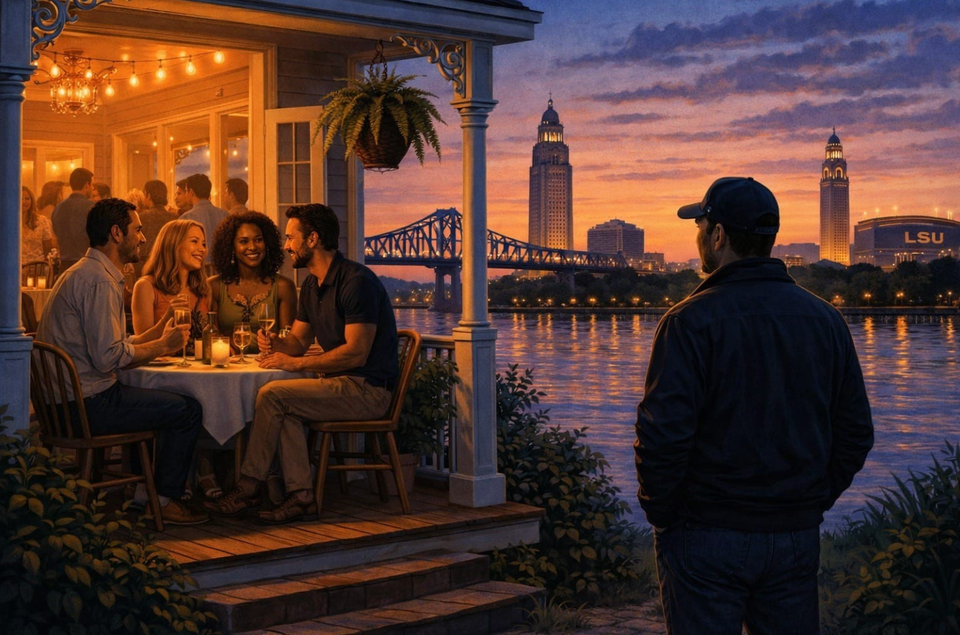
What’s happening: Across the city, a new generation of coffee bars and café hybrids is quietly becoming Baton Rouge's version of the "third place"—not home, not work, but where the day actually unfolds.
It's not European. It's not open until midnight. But it's real.
The national trend: The New York Times (🔐) recently chronicled the rise of the all-day café—spaces in New York, Austin and Los Angeles built to carry you from morning espresso through an afternoon work session to an evening glass of natural wine, without ever feeling like you should leave.
Zoom in: Baton Rouge isn't there yet—a car-dependent layout, a stretched hospitality labor market and a dining culture hardwired to the brunch-or-dinner binary make the economics difficult.
Familiar theme: The concept isn't new. Sociologist Ray Oldenburg coined the term decades ago to describe gathering spaces that anchor community life—barbershops, taverns, coffeehouses.
- What's new is the demand.
- Post-pandemic work has untethered thousands of jobs from traditional offices. A growing share of Baton Rouge's workforce—especially graduates orbiting LSU—can log in from anywhere.
- If the city wants them to stay, it needs somewhere for them to belong between 9 and 9.
What's emerging here: A handful of local spots are building that infrastructure, especially in the Mid City corridor:
- Magpie Cafe—Communal tables fill with remote workers by mid-morning. Seasonal menu. Natural light. Intentional sourcing. People linger.
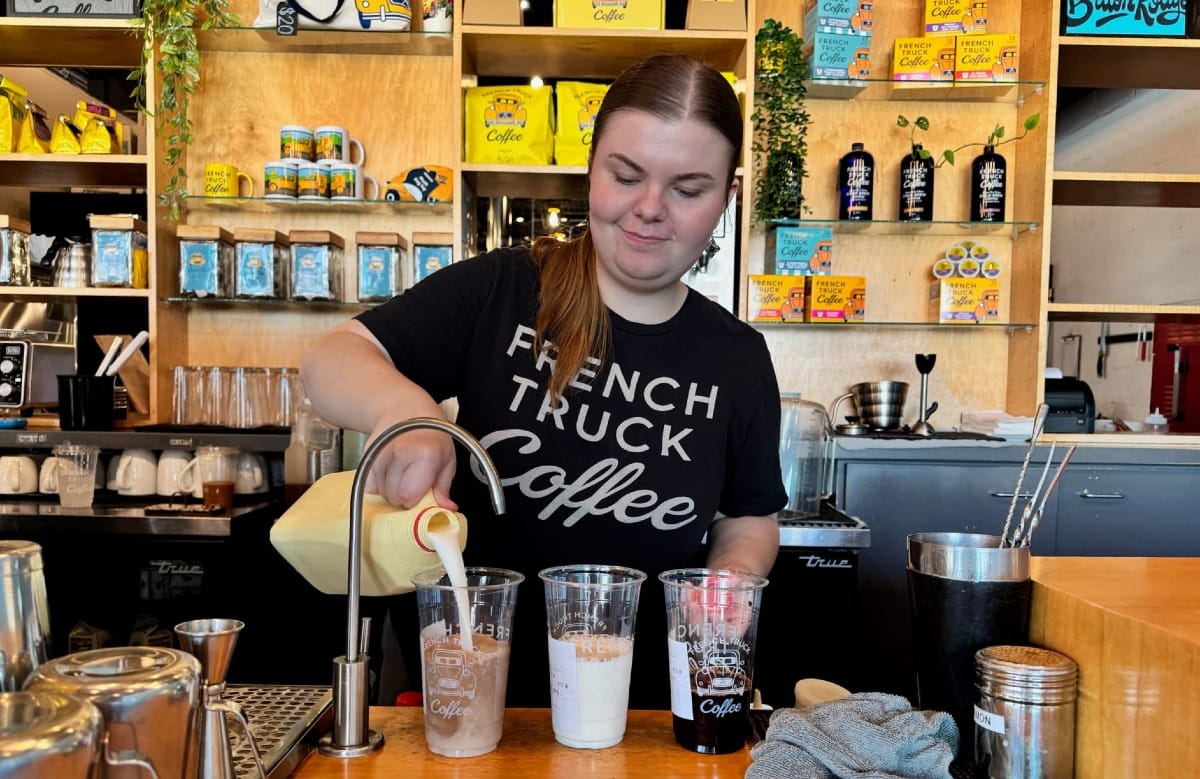
- French Truck Coffee—Laptops outnumber newspapers. Design-forward, remote-work heavy, built for the post-pandemic professional class. Breakfast and lunch are served there.
- City Roots Coffee Bar—Mission-driven space where meetings blend with community events. Leans hardest into the "third place" sociology. It's not just caffeine—it's a connection.
- Leola's Café & Coffee House — The day stretches from coffee to brunch to cocktails. Closest to the true all-day arc.
Back to the future: Coffee Call has functioned as a de facto third place for decades, attracting families, students, workers and friend groups cycling through at all hours. It’s less curated. More lived-in. But the function is the same: stay awhile.
The gap: Baton Rouge still flips from brunch to dinner, from coffee to cocktails, with little in between. Operators cite familiar constraints: staffing, slim margins, unpredictable late-day demand.
The clean handoff from espresso to small plates to wine—the true all-day arc seen in larger markets—hasn't fully landed here.
Bottom line: What's emerging is a hybrid model—coffee shops doubling as co-working hubs, brunch spots hosting casual business meetings, community tables functioning as informal civic space. It reflects a younger Baton Rouge carving out room to gather outside the bar scene and beyond the office. And in a city trying to retain talent, that matters.