Baton Rouge's next big choices
They're decisions that will shape how Baton Rouge competes for talent, investment and residents for the next generation.
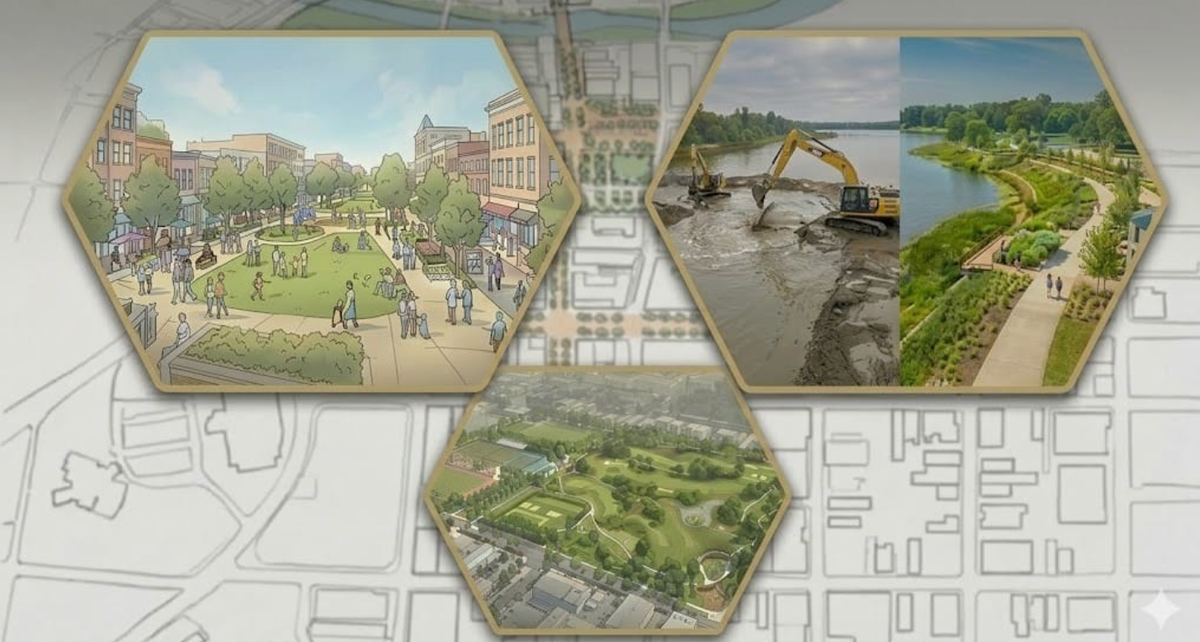
Three major planning efforts are about to put Baton Rouge's civic future on public display.
- The Downtown Development District and Baton Rouge Area Foundation are wrapping up Plan Baton Rouge III—the first update to the city's downtown master plan since 2009.
- BREC has launched a new master plan for City-Brooks Community Park—led by the planning firm Sasaki—and includes a long-overdue decision on the park's 9-hole golf course.
- The $79 million University Lakes restoration is on track to complete dredging by the end of 2026, with shoreline landscaping and public amenities to follow.
Why it matters: These aren't routine planning exercises. They're decisions that will shape how Baton Rouge competes for talent, investment and residents for the next generation.
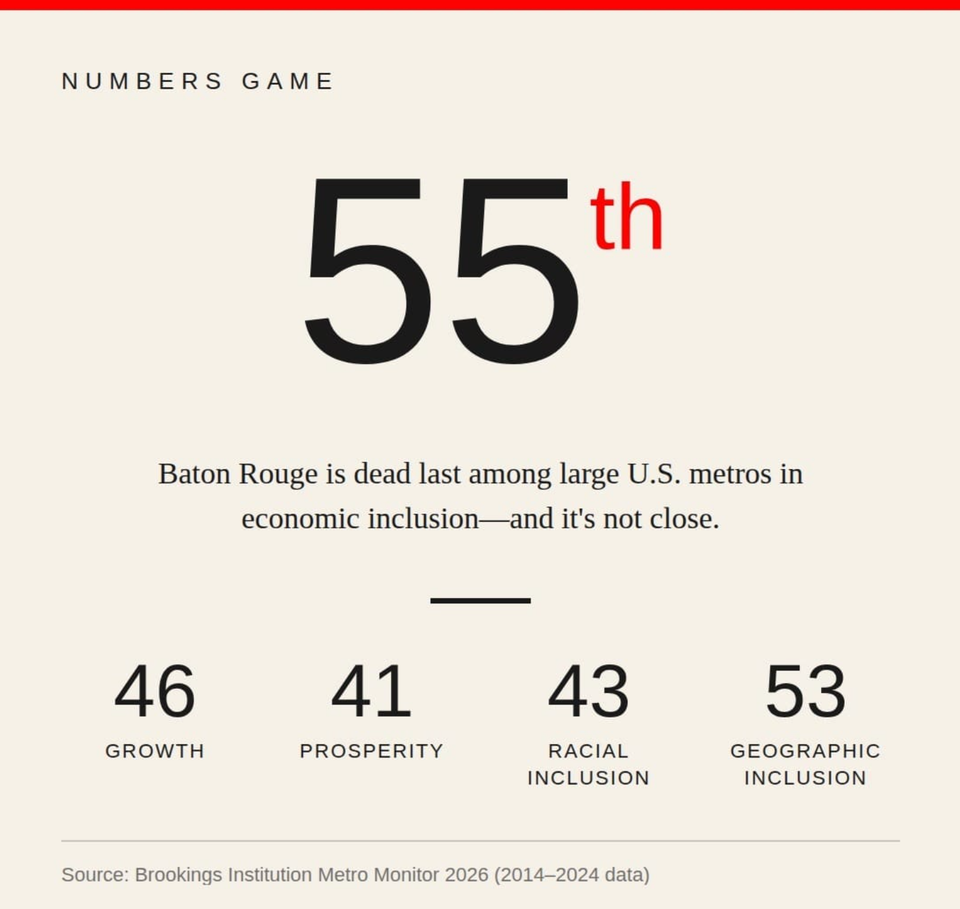
The civic gaps: Comparing Baton Rouge with peer university metros—Austin, Nashville, Raleigh, Columbus—several defining civic assets are consistently missing or underdeveloped. Urban planners and civic leaders point to five.
- A signature riverfront park. The plaza around the Raising Cane's River Center and the downtown levee exist. But they function as event spaces, not everyday parks. Compare that with Buffalo Bayou Park in Houston or the Lady Bird Lake trail in Austin—landscapes that became civic front yards. Baton Rouge's riverfront is largely untapped.
- A major cultural anchor. The Shaw Center for the Arts matters. But Baton Rouge lacks a nationally visible flagship institution—a major performing arts complex, a contemporary art museum or a signature Louisiana music venue.
- Nashville has the Country Music Hall of Fame. Austin has the Blanton Museum. Baton Rouge has no equivalent.
- A university innovation district. Despite LSU's research footprint, no large district connects university research to startups and venture capital.
- The Water Campus is the closest example, but it's specialized. Research Triangle Park, Cortex in St. Louis, Kendall Square near MIT—those ecosystems don't happen by accident.
- A regional youth sports complex. Travel youth sports is a major driver of tourism.
- Grand Park Sports Campus in Indiana and Rocky Top Sports World in Gatlinburg generate hotel nights and economic activity. Baton Rouge's location between major southern markets makes it a competitive option. No one has built it.
- There are those looking at property between LSU and downtown for a potential large-scale sports complex, say sources, and RedEye has learned St. George officials are in early-stage negotiations to bring a multi-sport facility to their nascent city.
- A citywide trail network. The Atlanta BeltLine. The Indianapolis Cultural Trail. The Katy Trail. These reshaped how residents move through their cities and spurred billions in nearby development. Baton Rouge has trail segments. It has no system.
A park with unusual potential: City-Brooks Community Park may be the most consequential decision in the current wave.
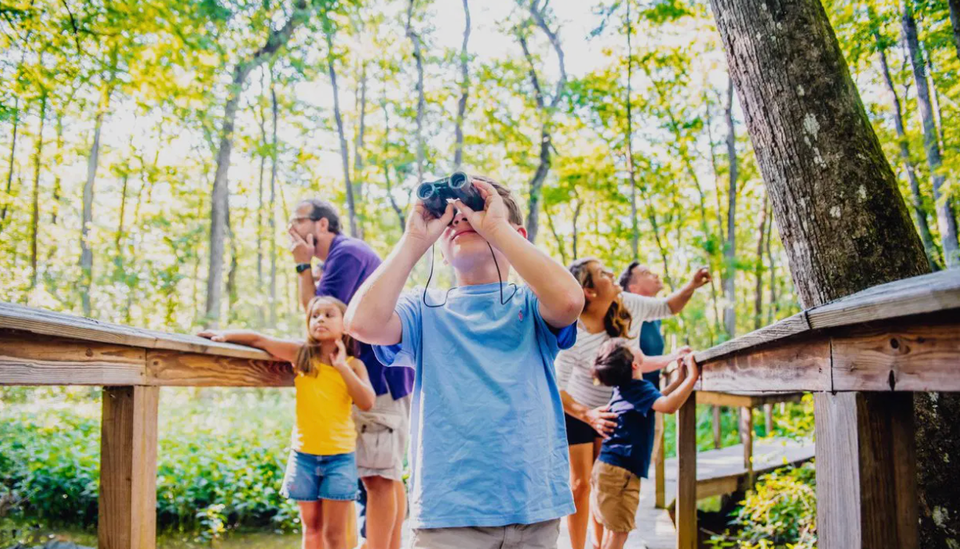
- At roughly 150 acres, it's one of Baton Rouge's largest public spaces. Its rolling hills—believed to be remnants of ancient Mississippi River dunes—are unusual terrain for south Louisiana.
- That topography creates rare possibilities: scenic trails, natural overlooks, amphitheater-style spaces and varied recreation zones. BREC's master plan process—led by Sasaki—will force a long-deferred answer on the golf course and set a long-term direction for one of the city's largest public spaces.
- The decades-long debate over the historic 9-hole course has never been simple. Golfers want it preserved. Park advocates want the acreage repurposed for broader public use.
- Sasaki designer Josh Brooks is signaling the decision doesn't have to be "binary"—suggesting some version of the golf course survives in the redesign.
- Don’t expect such framing to please either side. Golf purists may bristle at a reconfigured or shortened course. Park advocates may see a compromise as a missed opportunity to fully reimagine what the space could become.
Not in dispute: The park is underperforming its potential. The master plan is the best chance in decades to change that.
The stakes: Previous iterations of Plan Baton Rouge leveraged $500 million in public investment and more than $3 billion in private funding. Plan BR III is the first update since 2009. The decisions it produces will shape downtown for the next 15 years—and determine whether Baton Rouge finally treats its riverfront as an asset rather than an afterthought.
- "We are on the cusp of something truly transformative for downtown Baton Rouge," says Marty Engquist, co-chair of the Plan Baton Rouge III planning committee.
The bottom line: For young professionals, researchers, entrepreneurs and creatives deciding where to build a career and a life, public space matters. It signals what a city values. It shapes daily experience in ways that no corporate recruitment package can replicate. Baton Rouge has the ingredients. The question is whether it will use them.